




Dish with Peacock Design
CA0404 · Visual art · Iznik, present-day Türkiye; early 17th century
Historical / contextual reference
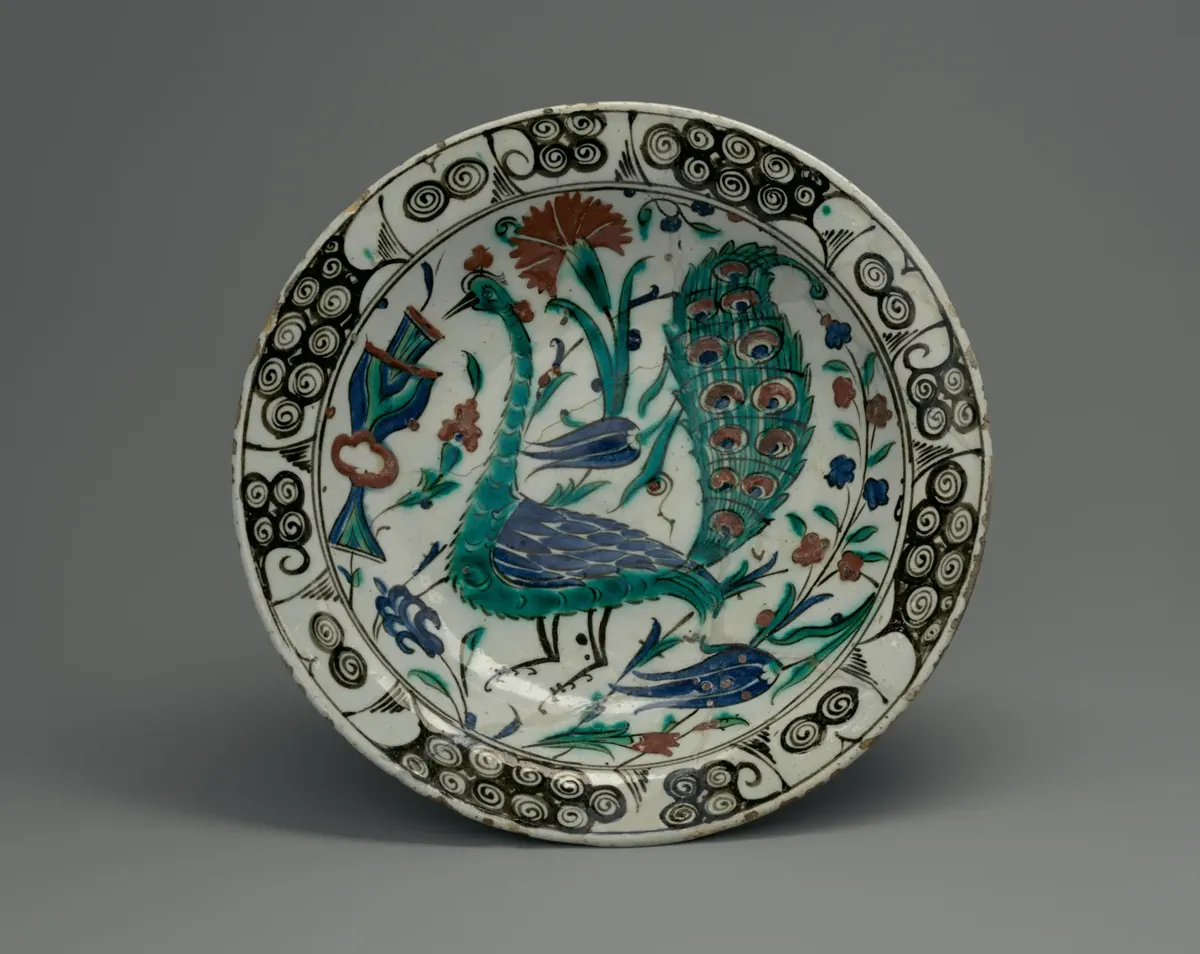
Photograph of the specific selected museum object; identity checked by object ID and accession.
Credit: Unidentified artist / The Metropolitan Museum of Art. Gift of Edward J. Wormley, 1965
Rights: Public domain; Met Open Access
A peacock occupies the centre of this painted stonepaste dish from Iznik. Its patterned body and surrounding ornament turn a familiar bird into a design fitted to a circular surface, while the transparent glaze integrates the painted colours with the vessel. The Metropolitan Museum dates the dish to the early seventeenth century and distinguishes it from objects intended for royal use. That modest distinction is a reason to preserve it, not a reason to overlook it. Culture also takes form in vessels that bring skilled decoration into less exalted settings. The dish offers a way to discuss pleasure, repetition, and workshop production without assuming that cultural significance always requires a unique imperial commission.
Why preserve it: Curatorial interpretation: Everyday or nonroyal decorative objects can reveal a culture’s visual pleasures as clearly as elite commissions.
Keep in mind: The museum’s nonroyal classification does not identify the original owner or prove a specific household use. Do not assign a single fixed symbolic meaning to the peacock without further evidence.