



If you opened a vault in 4026, what should be inside?

2,000 things people should still be able to see in 2,000 years: the songs, dances, foods, games, art and traditions that show who we were, the profound and the goofy. These are the first 60 illustrated picks, each with a picture, the story behind it and the sources to check.

AI research teams proposed the candidates and voted on the 2,000. Each pick is checked against the sources linked on its card, and every picture is credited with its license. It is a starting point, not a ranking of cultures.

Categories ▾

Read it on Apiary ↗

60illustrated picks3kinds of culture2,000in the full ark (in progress)

Highlights

Gangnam Style
MusicCA0001

Gangnam Style

South Korea and global online circulation; 2012 · East Asia

Gangnam Style is a Korean-language pop song and music video by PSY, released on YouTube on 15 July 2012. Its exaggerated movement and comic performance made a filmed dance something viewers could recognize, repeat and circulate. YouTube records that it became the first music video on its service to reach one billion views, on 21 December 2012. For this collection, the important object is not simply a hit recording: it is the combination of a song, a bodily gesture, a shareable video and a global audience. The official upload is linked rather than copied, so future readers can distinguish the original performance from later imitations and commentary.

Why keep it · what to know

Why future people learn something: it offers a compact lesson in how language, visual humor and participation could travel together across borders through a privately operated platform.

Keep in mind: A view count measures platform activity, not unique people or universal approval. One viral work does not represent all Korean culture. The recording, choreography and video are not supplied as reusable assets.

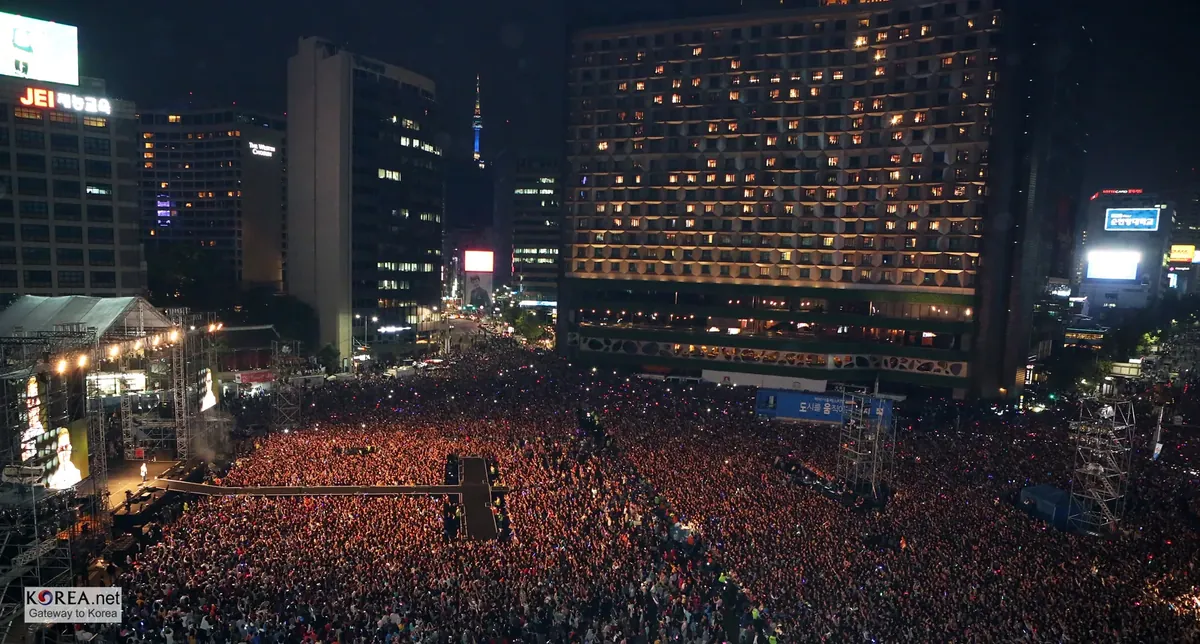
Crowd at PSY Gangnam Style Concert for Fans, Seoul Plaza, 4 October 2012; not a still from the music video.

Image: Korea.net / Korean Culture and Information Service (Jeon Han) · CC BY-SA 2.0 · original
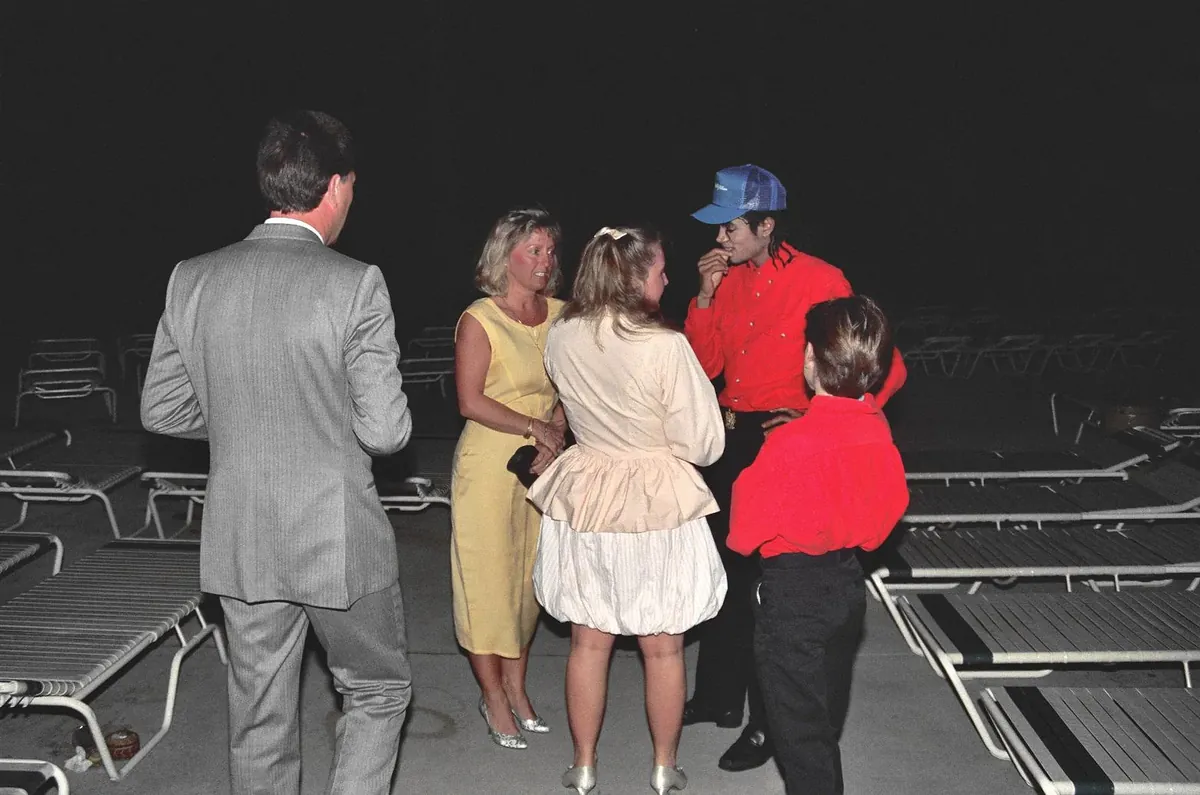
Michael Jackson’s Thriller short film
More cultureCA0002

Michael Jackson’s Thriller short film

United States; 1983 · North America

Thriller joins a performed pop song to a dramatic short film, using dance, makeup and special effects rather than presenting a concert alone. The Library of Congress catalogs the 1983 production and identifies John Landis as director, Michael Jackson and Ola Ray as performers, Michael Peters and Jackson as choreographers, and Rod Temperton as the title-song writer. These credits matter: a familiar star image can hide the collaborative labor that makes a filmed performance possible. The catalog also identifies the physical film format. Preserving that information alongside a viewing link helps a future audience understand both the cultural experience and the material object that once carried it.

Why keep it · what to know

Why future people learn something: compare what a song communicates through sound with what a film adds through narrative, bodies, costume and effects. The entry also demonstrates why archives retain production credits.

Keep in mind: This entry concerns the 1983 short film, not the whole album. Its fictional horror can be frightening. Inclusion is not endorsement of every aspect of its makers. No film frames, music or choreography are licensed here.

Michael Jackson with fans in 1988; not a Thriller video still.

Image: photo by Alan Light · CC BY 2.0 · original

Reggae music of Jamaica
MusicCA0003

Reggae music of Jamaica

Jamaica, especially Kingston; later twentieth century onward · Caribbean

Reggae is a Jamaican musical tradition with roots in communities that included marginalized people in western Kingston. UNESCO describes its development through earlier Jamaican styles and wider Caribbean, North American and Latin influences. It documents a progression through ska and rocksteady, alongside later musical exchanges. Reggae carries more than one mood or purpose: social criticism, spiritual expression, affection and pleasure all belong to its cultural life. Its continuation depends on people learning, performing and listening, including in schools and at festivals. This selection preserves a living practice rather than pretending that one famous performer, one record or one sound can stand for the whole tradition.

Why keep it · what to know

Why future people learn something: it shows how music can make room for pleasure and political speech at the same time, and how local experiences can become audible far beyond their place of origin.

Keep in mind: Reggae is not all Jamaican music. Individual recordings retain their own rights. UNESCO recognition in 2018 is a safeguarding milestone, not a date of invention or a certificate granting reuse.

Contextual documentary image, not a reproduction of any linked recording or film.

Image: Igbochild · CC BY 3.0 · original

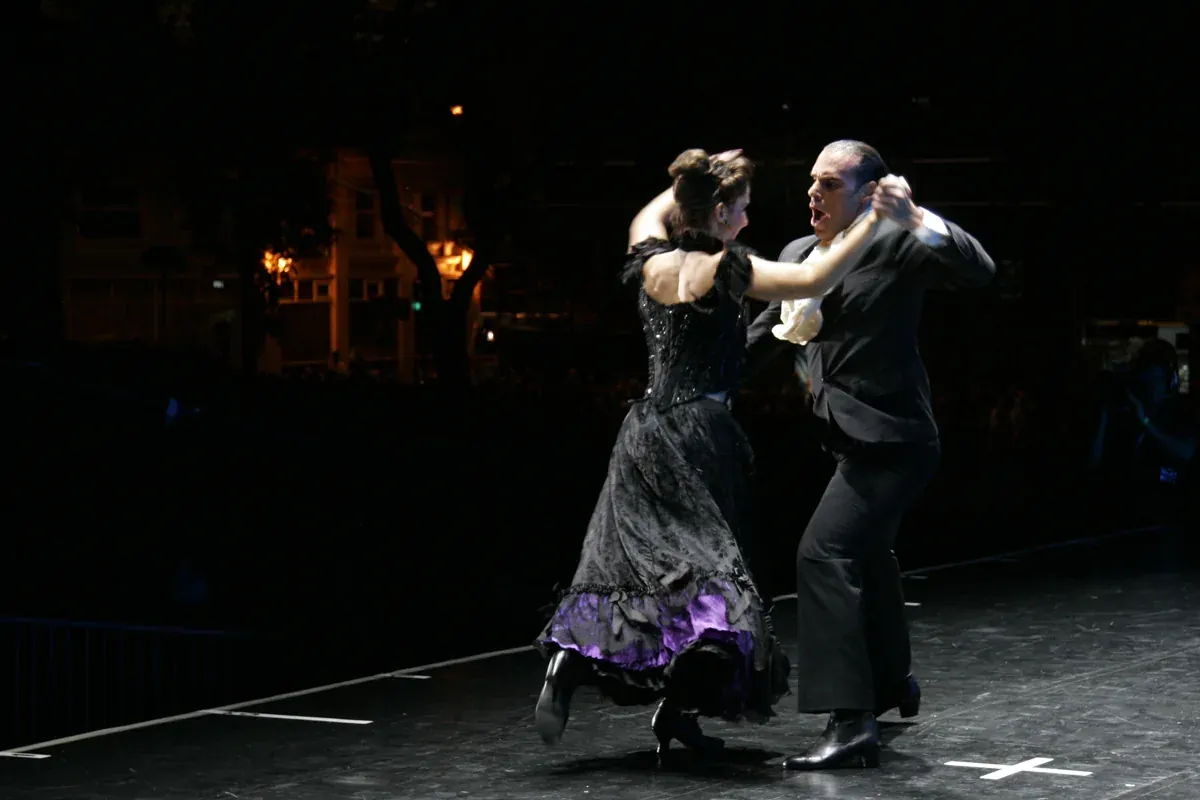
Tango of Argentina and Uruguay
More cultureCA0004

Tango of Argentina and Uruguay

Buenos Aires and Montevideo; urban tradition continuing into the present · South America

Tango brings music, dance and poetry into a shared urban tradition of Argentina and Uruguay. UNESCO locates its formation among popular communities in Buenos Aires and Montevideo, where European migrants, descendants of enslaved Africans and local-born populations lived together. It is therefore better understood as a cultural meeting and continuing practice than as the invention of one person. Social dance settings known as milongas are part of that story, alongside professional performance, teaching and composition. The catalog preserves both countries in the title because a border-only label would obscure the connected Río de la Plata world in which the tradition developed and continues to be renewed.

Why keep it · what to know

Why future people learn something: tango can help future readers examine migration, mixed cultural inheritance, urban sociability and the difference between dancing with others and performing for spectators.

Keep in mind: Do not reduce tango to a single stage pose or treat one choreography as universal. Its histories include African-descended communities. UNESCO inscription in 2009 is not its origin date.

Contextual documentary image, not a reproduction of any linked recording or film.

Image: Gobierno de la Ciudad de Buenos Aires · CC BY 2.0 · original

Gamelan
MusicCA0005

Gamelan

Indonesia; centuries-old traditions continuing today · Southeast Asia

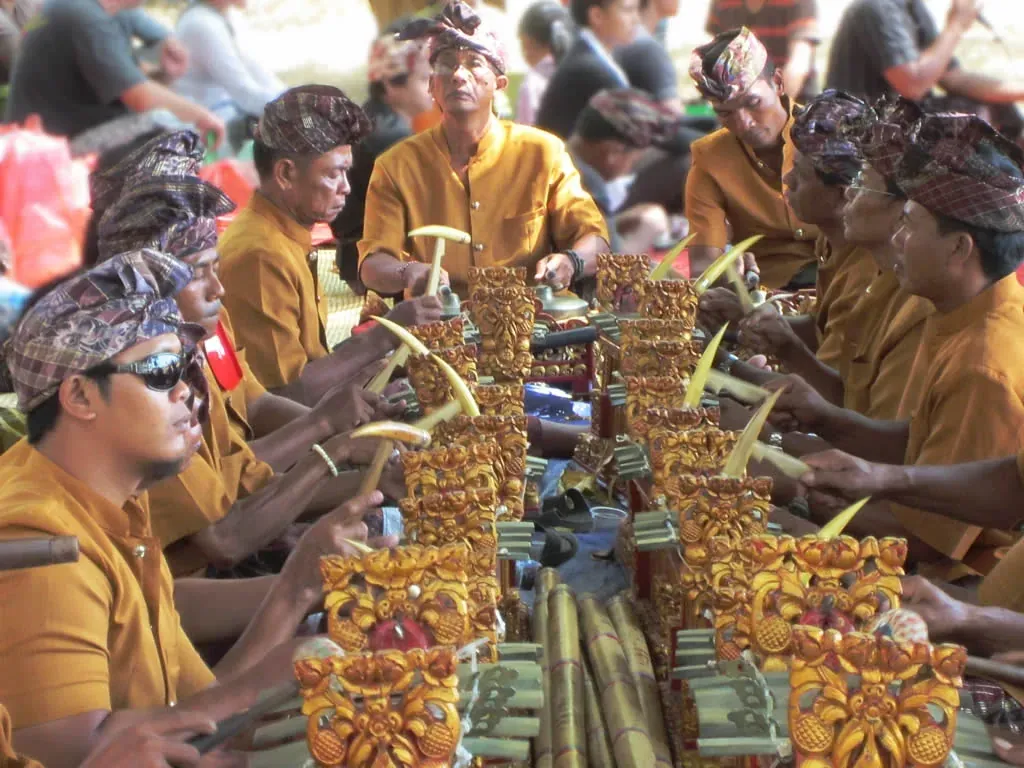
Gamelan names both a traditional Indonesian ensemble and its instruments. UNESCO describes a percussion-centered grouping that may include gongs, gong-chimes, drums and xylophones, as well as strings and bamboo flutes. The music follows learned conventions of tone, structure and rhythm, so a photograph of instruments alone cannot preserve the practice. People must also pass on ways of playing together. UNESCO documentation places gamelan in religious rituals and public events and describes transmission through schools, families and workshops. The selection invites future listeners to encounter ensemble relationships and community learning, rather than treating unfamiliar instruments merely as decorative objects or assuming that every Indonesian ensemble sounds alike.

Why keep it · what to know

Why future people learn something: gamelan shows why cultural preservation needs makers, performers, teaching and occasions of use as well as objects. It encourages listening for a group rather than only a solo star.

Keep in mind: This is an umbrella entry, not a claim that all regional traditions share one repertory or instrument set. Ritual contexts deserve respect. UNESCO inscription in 2021 does not release recordings or photographs for reuse.

Contextual documentary image, not a reproduction of any linked recording or film.

Image: David Stanley from Nanaimo, Canada · CC BY 2.0 · original

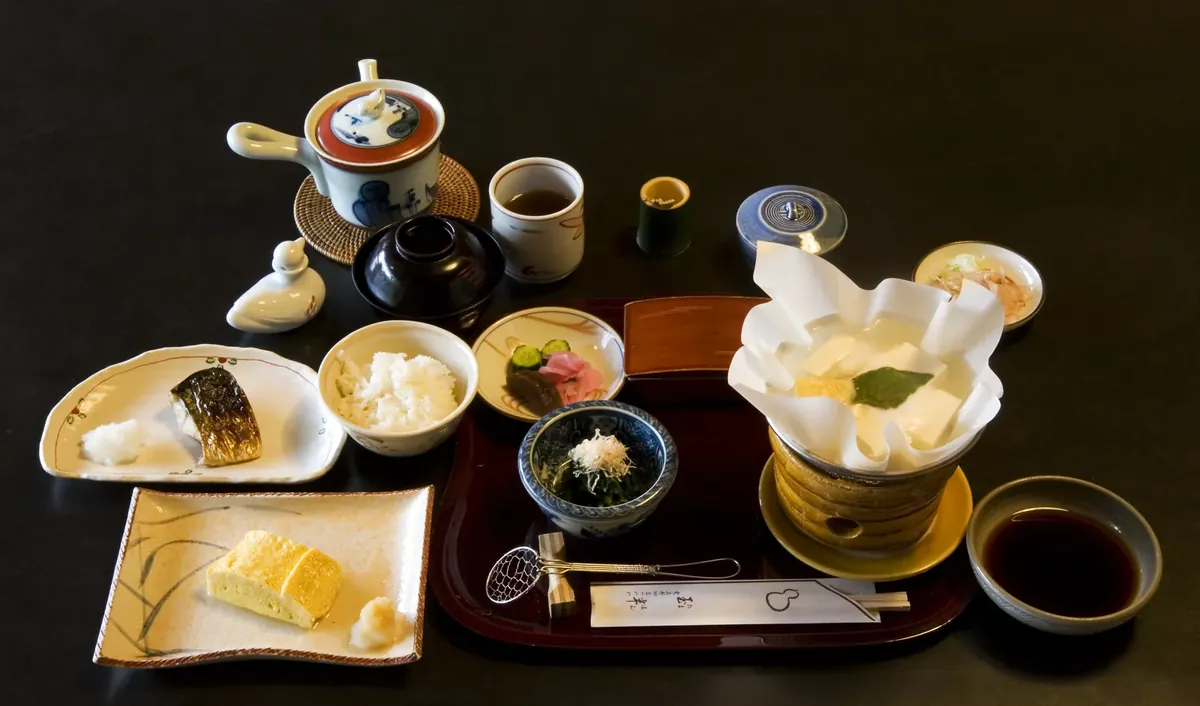
Washoku and Japanese New Year food traditions
More cultureCA0006

Washoku and Japanese New Year food traditions

Japan; living food tradition, UNESCO inscription 2013 · East Asia

Washoku is more than a menu of famous Japanese dishes. It includes the knowledge used to select ingredients, prepare meals, arrange food and share it with others. New Year celebrations make these relationships particularly visible: rice is pounded into cakes, symbolic foods are prepared, and special tableware helps turn eating into a shared occasion. The UNESCO account emphasizes locally available ingredients, including rice, fish, vegetables and wild plants, and the passing of skills through family meals and education. A future reader should look at the arrangement of a table as well as the contents of a bowl. Both can reveal how people connected seasonal change, hospitality, family relationships and ideas about nature.

Why keep it · what to know

Why future people learn something: It shows how an everyday necessity could also carry seasonal symbolism and intergenerational teaching.

Keep in mind: Washoku does not describe every meal eaten in Japan. Regional and household practices differ; heritage recognition is not proof that a tradition is unchanging or that all its foods are sustainable.

Contextual ryokan breakfast, not a depiction of every washoku tradition.

Image: MichaelMaggs · CC BY-SA 3.0 · original

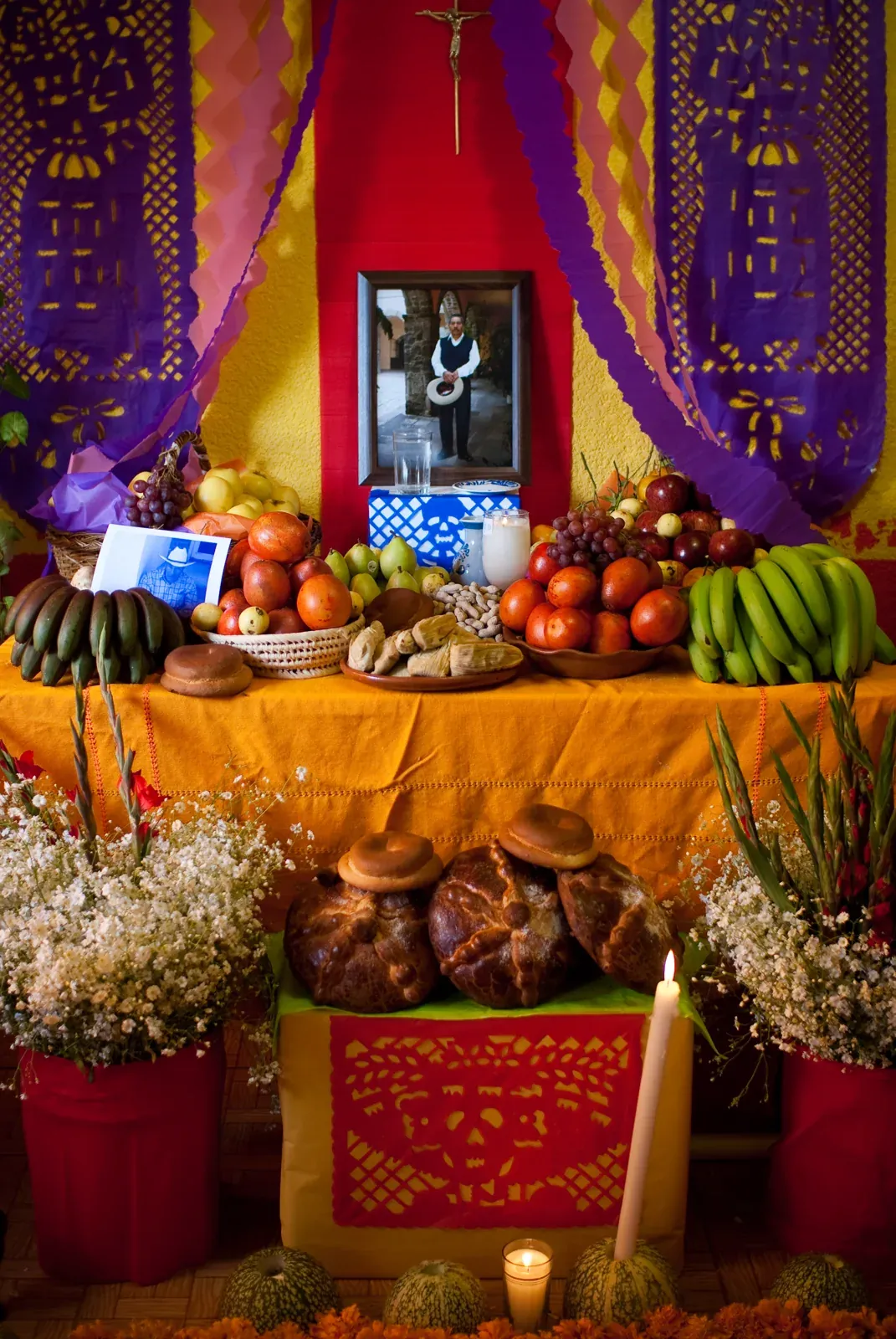
Día de los Muertos in Indigenous communities of Mexico
More cultureCA0007

Día de los Muertos in Indigenous communities of Mexico

Mexico; living annual observances around late October and early November · Latin America

Día de los Muertos joins remembrance to the practical work of preparing food, decorating spaces and receiving loved ones. In the Indigenous celebrations described by UNESCO, families welcome the temporary return of deceased relatives through offerings, flowers, candles and favourite dishes. Activities link homes and cemeteries, while the seasonal setting also connects remembrance to the maize-growing cycle. The celebration brings Indigenous belief systems into relationship with Catholic feast days introduced during colonial rule. Preserving this practice means preserving differences between communities, not only a familiar image of a decorated skull. A future visitor should ask who is remembered, who prepares the offerings and what a family believes its obligations to the dead include.

Why keep it · what to know

Why future people learn something: It reveals grief and memory as shared cultural work rather than only private emotion.

Keep in mind: This entry concerns diverse Indigenous observances, not a single uniform national ritual. Accounts of origins are debated; do not present the modern festival as an unchanged pre-Hispanic survival.

Contextual documentary image, not a reproduction of any linked recording or film.

Image: Eneas de Troya · CC BY 2.0 · original

Kente weaving
More cultureCA0008

Kente weaving

Ghana; living textile practice, UNESCO inscription 2024 · West Africa

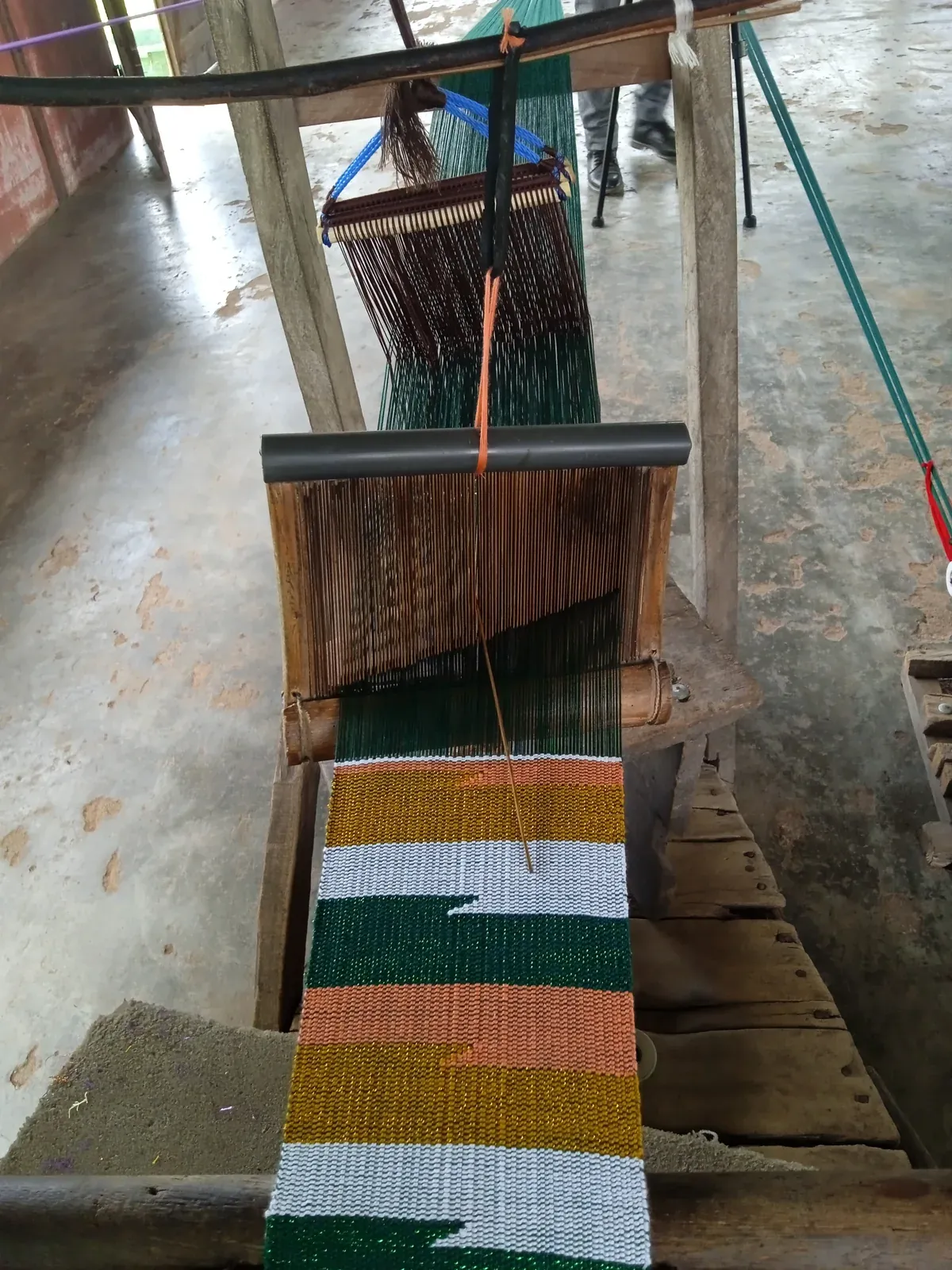
Kente is a woven textile assembled from narrow strips made on horizontal looms. Its materials may include cotton, silk or rayon, while its colours and designs communicate more than decoration. UNESCO describes named cloths associated with proverbs, sayings and social situations, and choices influenced by the wearer’s circumstances. Learning involves families, apprenticeships, institutions and public cultural events. The cloth therefore records both skilled handwork and systems for passing knowledge between people. A useful future archive would retain a weaver’s explanation alongside a photograph of a finished cloth. Without that explanation, viewers might admire the geometric surface while missing the histories, social relationships and messages that make a particular textile meaningful.

Why keep it · what to know

Why future people learn something: It makes clothing legible as communication, skilled labour and community history.

Keep in mind: Identify the specific weaving community and cloth whenever possible. Do not assign universal meanings to colours or treat a generic printed pattern as equivalent to handwoven kente.

Contextual documentary image, not a reproduction of any linked recording or film.

Image: Warmglow · CC0 · original

Yoga as a cultural and philosophical practice
More cultureCA0009

Yoga as a cultural and philosophical practice

India and international transmission; ancient roots and living practices, UNESCO inscription 2016 · South Asia

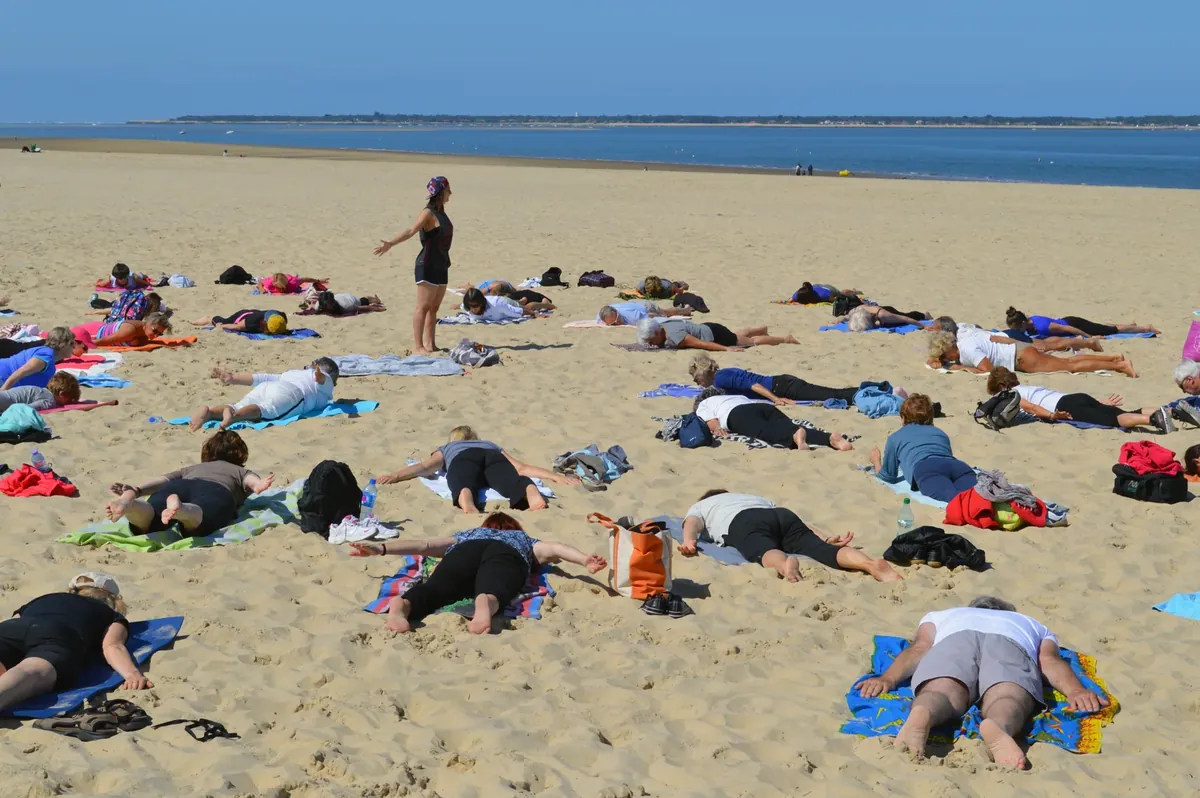
Yoga belongs in a cultural archive because it connects ideas about the person with disciplined practice and teaching. UNESCO’s account includes bodily postures, meditation, breathing practices and chanting, together with aims of self-realization and liberation. It also records the importance of relationships between teacher and pupil, alongside learning through ashrams, schools, books and newer media. A photograph of a posture captures only a small portion of this heritage. Future readers should also encounter the language, texts and explanations through which practitioners understood what they were doing. This entry documents yoga as cultural expression and philosophical inquiry, rather than offering a routine to follow or making claims about medical treatment.

Why keep it · what to know

Why future people learn something: It shows how people joined bodily action, attention, spiritual aspirations and systems of authority in teaching.

Keep in mind: Yoga encompasses differing traditions and modern adaptations; no single pose represents them all. Historical or spiritual aims are not clinical evidence. This is not exercise instruction or health advice.

Modern postural-yoga class on a French beach, 2015; illustrates international adaptation, not all Indian yoga traditions.

Image: DimiTalen · CC0 · original

Turkish coffee culture
More cultureCA0010

Turkish coffee culture

Türkiye; living tradition, UNESCO inscription 2013 · West Asia

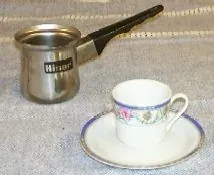
Turkish coffee combines a distinctive preparation with ways of spending time together. Finely ground roasted coffee is slowly heated with water, and sometimes sugar, to create a foamy drink served in small cups. The cultural object is not just the liquid: cups, coffee pots, conversation and the obligations of a host form part of the experience. UNESCO describes coffeehouses as places to exchange news and read, and coffee as a feature of engagements, holidays and visits between friends. Some participants interpret the remaining grounds as fortunes. For a future reader, the important question is how a modest drink could organize social time and provide an accepted invitation to talk.

Why keep it · what to know

Why future people learn something: It illustrates hospitality and public conversation through an ordinary shared beverage.

Keep in mind: This is one regional coffee tradition, not a claim of ownership over all coffee preparation. Fortune-telling is described as a cultural practice, not a reliable prediction method.

Contextual documentary image, not a reproduction of any linked recording or film.

Image: JX Bardant at French Wikipedia · Public domain · original

Katajjaniq throat singing of Nunavik
MusicCA0011

Katajjaniq throat singing of Nunavik

Nunavik, northern Québec, Canada; living oral tradition, Québec designation 2014 · Arctic North America

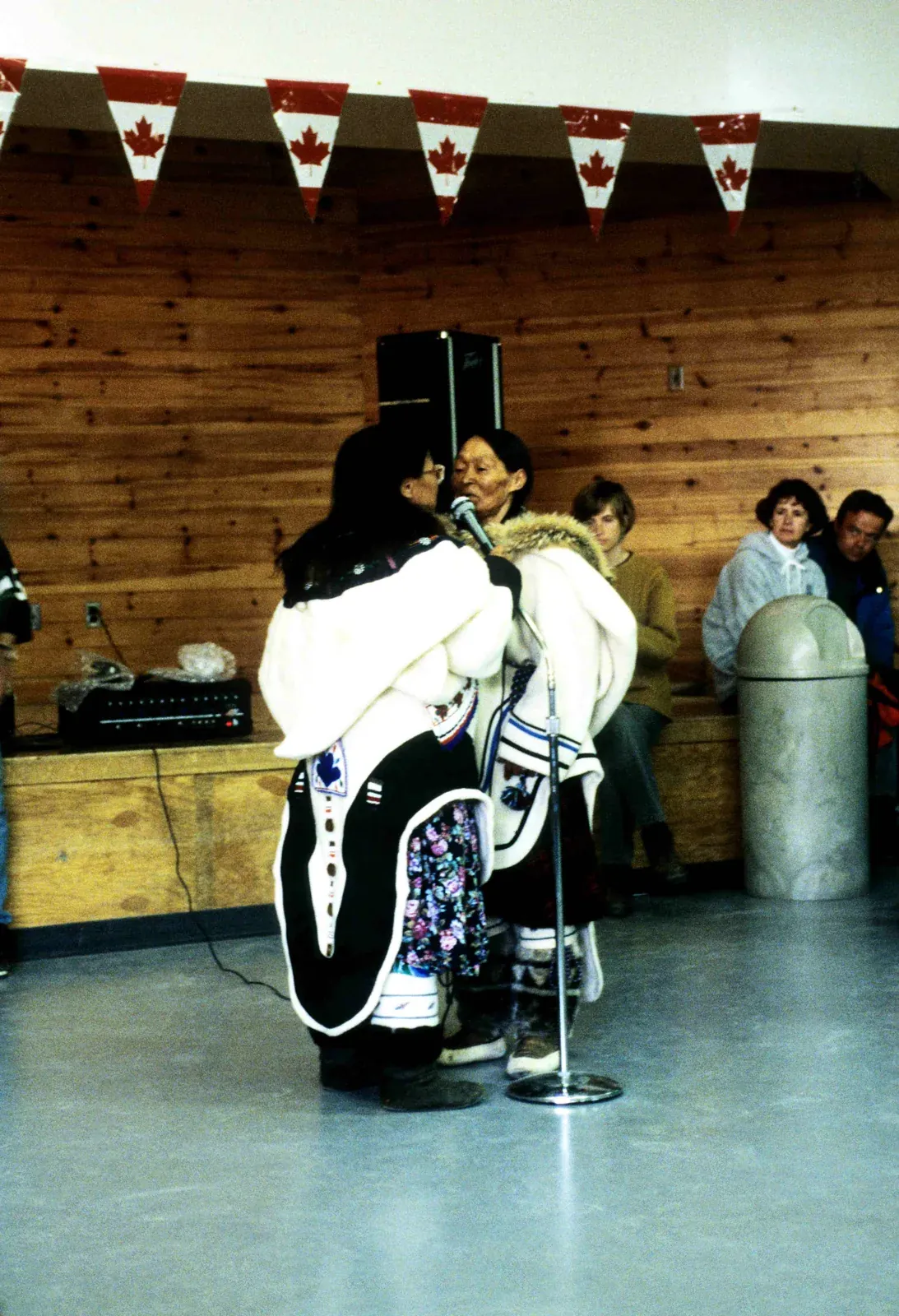
Katajjaniq is a Nunavik Inuit vocal practice in which two performers, most often women, face one another and exchange interlocking sounds. It is frequently a friendly game: the sequence can end when one participant laughs or runs out of breath. Vocal patterns may evoke animals, wind, water and other familiar sounds. The Inuit-led Avataq Cultural Institute describes its importance as inherited knowledge and a source of identity across Nunavik’s communities. A future archive should preserve the performers’ names and explanations, not classify the sounds merely as an unusual musical effect. The encounter between singers is central: listening, timing, humour and shared experience are as important as the audible result.

Why keep it · what to know

Why future people learn something: It preserves a form where music, play, environmental knowledge and social relationship overlap.

Keep in mind: This is specifically the Nunavik practice, not every Inuit vocal tradition. Its precise origin is not known. Respect performers’ consent and community protocols; an explanatory link is not permission to sample a recording.

Contextual documentary image, not a reproduction of any linked recording or film.

Image: Ansgar Walk · CC BY-SA 2.5 · original

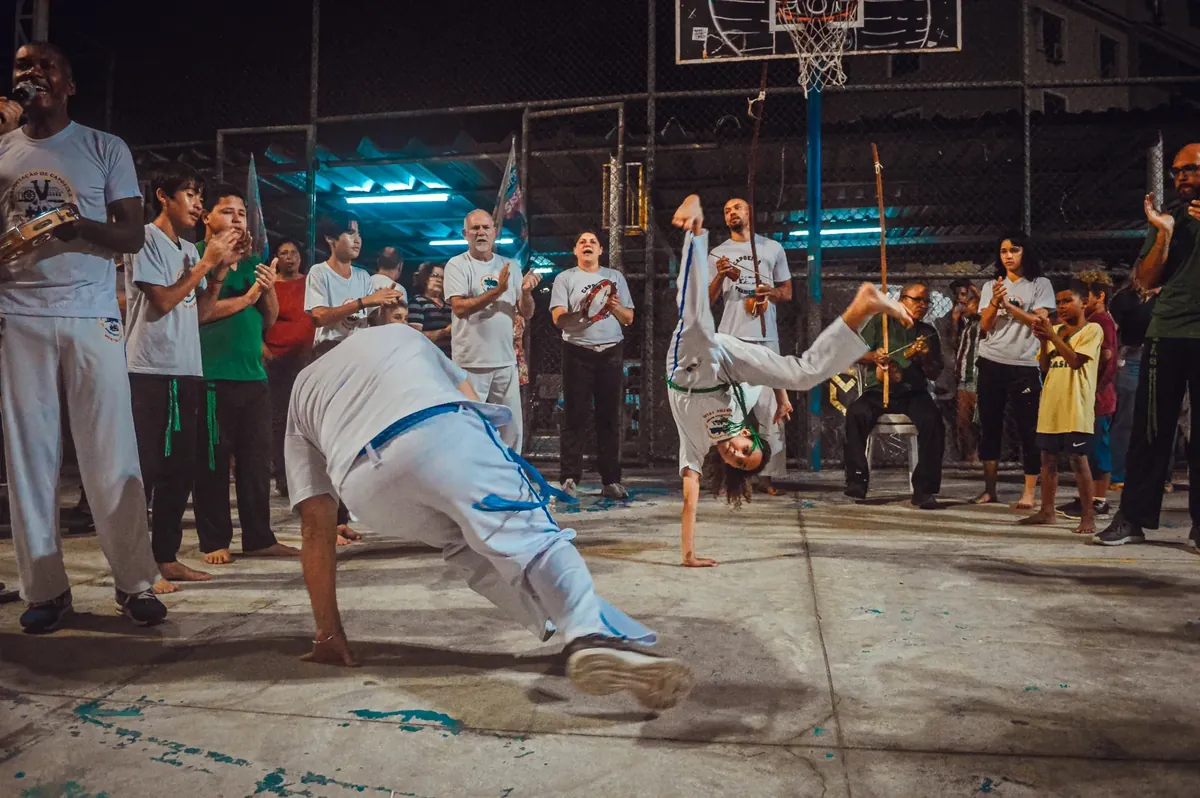
The capoeira roda
More cultureCA0012

The capoeira roda

Brazil; living practice with international communities, UNESCO inscription 2014 · Latin America

In a capoeira roda, two players move in relationship at the centre of a circle while others sing, clap and play instruments. The activity cannot be fully separated into dance, combat, music or sport: its meaning emerges from their combination. UNESCO describes the master’s responsibility for transmitting knowledge, setting rhythm and maintaining a shared code of conduct. Participants learn by observing and joining the circle, including its songs and instruments as well as movements. For future readers, an isolated photograph of an acrobatic pose would leave out much of the event. The surrounding people, musical leadership and expectations of respect explain how individual skill becomes a communal cultural practice.

Why keep it · what to know

Why future people learn something: It reveals embodied teaching and the memory of resistance through an art sustained collectively.

Keep in mind: Keep its Afro-Brazilian history and memory of oppression visible. Styles and groups differ. This descriptive entry is not a combat or acrobatic training guide.

Contextual documentary image, not a reproduction of any linked recording or film.

Image: Estela Neto · CC BY-SA 4.0 · original

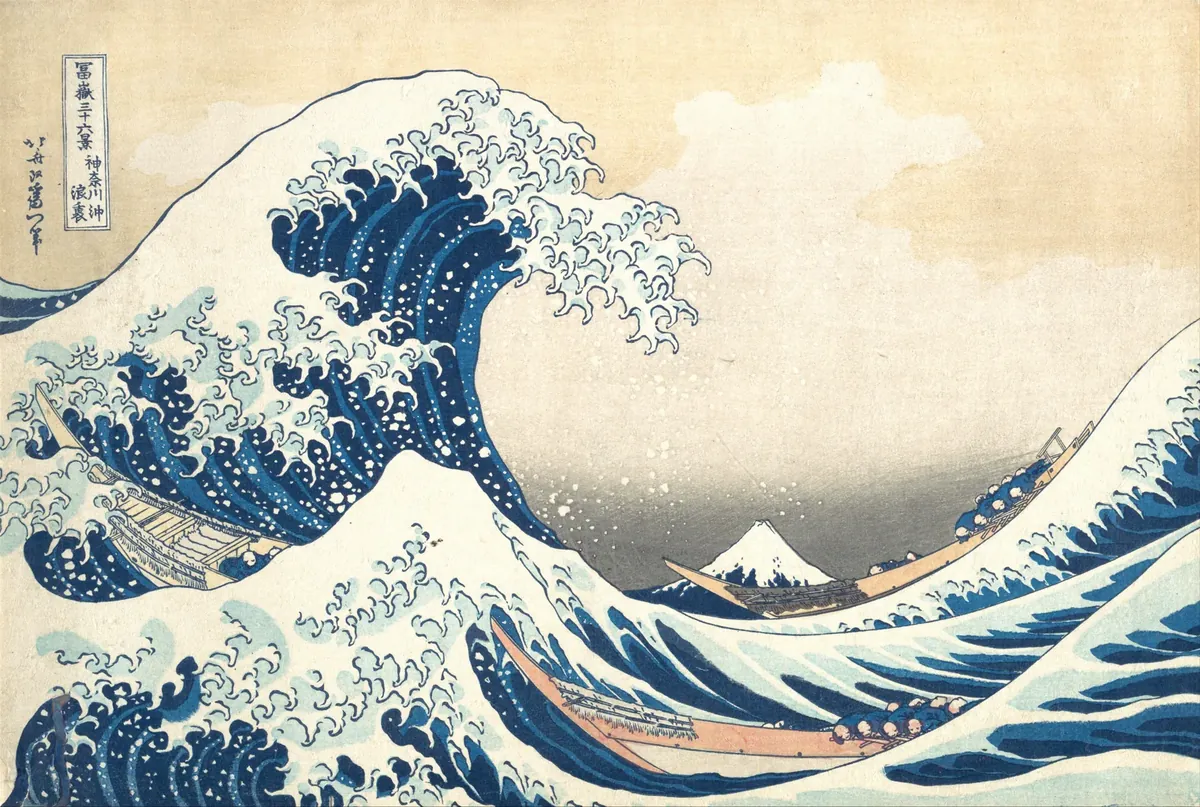
The Great Wave off Kanagawa
Visual artCA0013

The Great Wave off Kanagawa

Japan, approximately 1830–1832, Edo period · East Asia

Hokusai’s color woodblock print places a curling sea above small boats, with Mount Fuji appearing far away beneath the wave. It belongs to Thirty-six Views of Mount Fuji, so the apparent main subject is also a frame for looking at the mountain. The Metropolitan Museum dates its impression to about 1830–1832 and identifies its medium as ink and color on paper. The image rewards slow looking: the mountain’s compact triangle contrasts with the spreading water, while the people remain small within the composition. Preserve an identified museum impression rather than an uncredited modern redraw, so future readers can distinguish the historical print from the many later pictures inspired by it.

Why keep it · what to know

Why future people learn something: It makes landscape, scale and perspective intelligible through a single image, while the print medium invites discussion of art made in multiple impressions rather than one unique painting.

Keep in mind: Dates and condition vary between impressions. This entry identifies the Met’s JP1847, not every surviving print. Do not confuse an old underlying artwork with automatic permission for every modern reproduction.

Reproduction of the selected artwork, Met impression JP1847.

Image: Katsushika Hokusai / The Metropolitan Museum of Art. H. O. Havemeyer Collection, Bequest of Mrs. H. O. Havemeyer, 1929 · Public domain; Met Open Access · original

Epic of Gilgamesh
More cultureCA0014

Epic of Gilgamesh

Ancient Mesopotamia; selected witness is a seventh-century BCE tablet from Nineveh, in present-day Iraq · West Asia

The Epic of Gilgamesh tells of a ruler of Uruk and his search for immortality. It survives through written witnesses rather than a single original book. One particularly useful object is the Flood Tablet, the eleventh tablet of the epic, preserved from the library of the Assyrian king Ashurbanipal at Nineveh. In it, Gilgamesh meets Utnapishtim, who describes surviving a divinely sent flood. The British Museum’s record explains that versions of the epic circulated across the ancient Near East. For the ark, pair the story with a description of the clay witness: readers should understand both an imagined world and the physical copying that allowed it to outlast its makers.

Why keep it · what to know

Why future people learn something: This offers a long comparison for human fears about mortality and remembrance. It also shows that literature can survive through fragmentary objects, translations and repeated scholarly reconstruction.

Keep in mind: The seventh-century BCE date belongs to this surviving tablet, not the origin of the entire epic. Ancient stories are not literal eyewitness records. Modern translations and museum photographs may remain copyrighted.

The image depicts Tablet V; the entry’s Flood Tablet is Tablet XI. Do not label this object as Tablet XI.

Image: Osama Shukir Muhammed Amin FRCP(Glasg) · CC BY-SA 4.0 · original

Pather Panchali
More cultureCA0015

Pather Panchali

India, 1955; Bengali-language cinema · South Asia

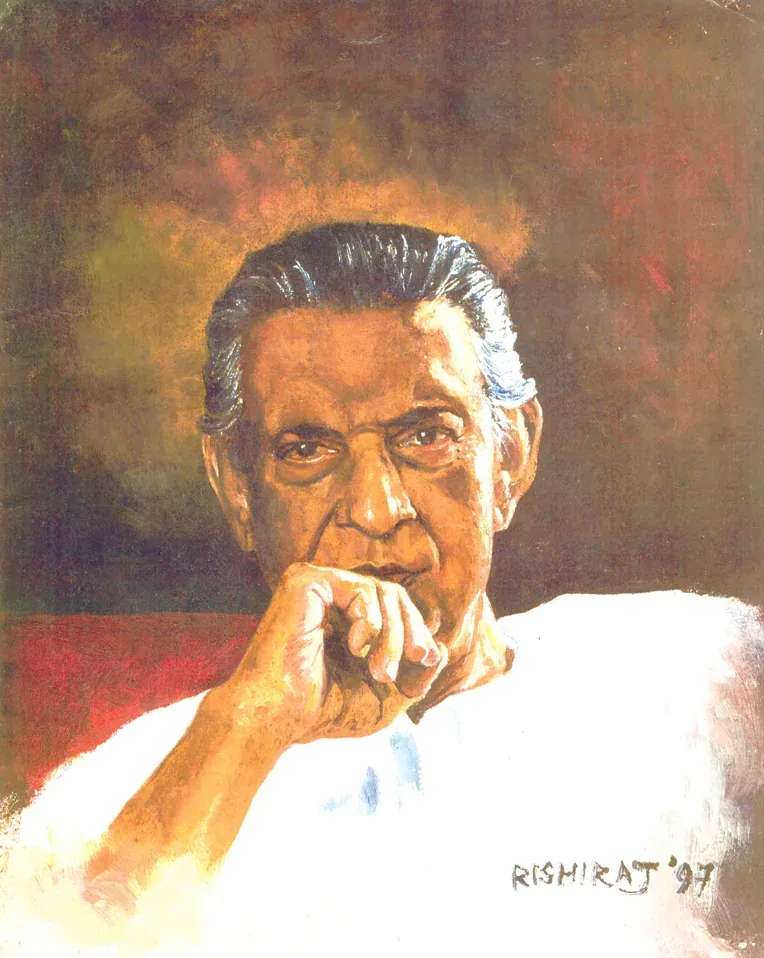
Pather Panchali is Satyajit Ray’s first film and the beginning of the Apu trilogy. Its rural Bengali family includes the child Apu, his sister Durga, their mother Sarbajaya and the elderly Indir. The film makes their relationships and everyday surroundings central rather than treating ordinary life as background for a spectacle. Criterion identifies it as a 1955 Bengali-language, black-and-white film running 125 minutes, adapted from Bibhutibhusan Banerjee’s novel. Subrata Mitra’s photography and Ravi Shankar’s music are important parts of the work alongside Ray’s direction. Preserve the credits and language information with any viewing reference: film is a collaboration, and a translated title cannot convey everything about its setting.

Why keep it · what to know

Why future people learn something: A future viewer can encounter an artistic representation of childhood, family obligations and rural life while comparing how cinema directs attention through time, framing, sound and performance.

Keep in mind: A fictional film is not a neutral record of all Bengal or India. Its poverty should not become the sole lens through which viewers understand the culture. Viewing availability varies by location; no full film is included.

Portrait painting of filmmaker Satyajit Ray by Rishiraj Sahoo, 1997, edited 2009; not a film still.

Image: Rishiraj Sahoo · CC BY-SA 3.0 · original

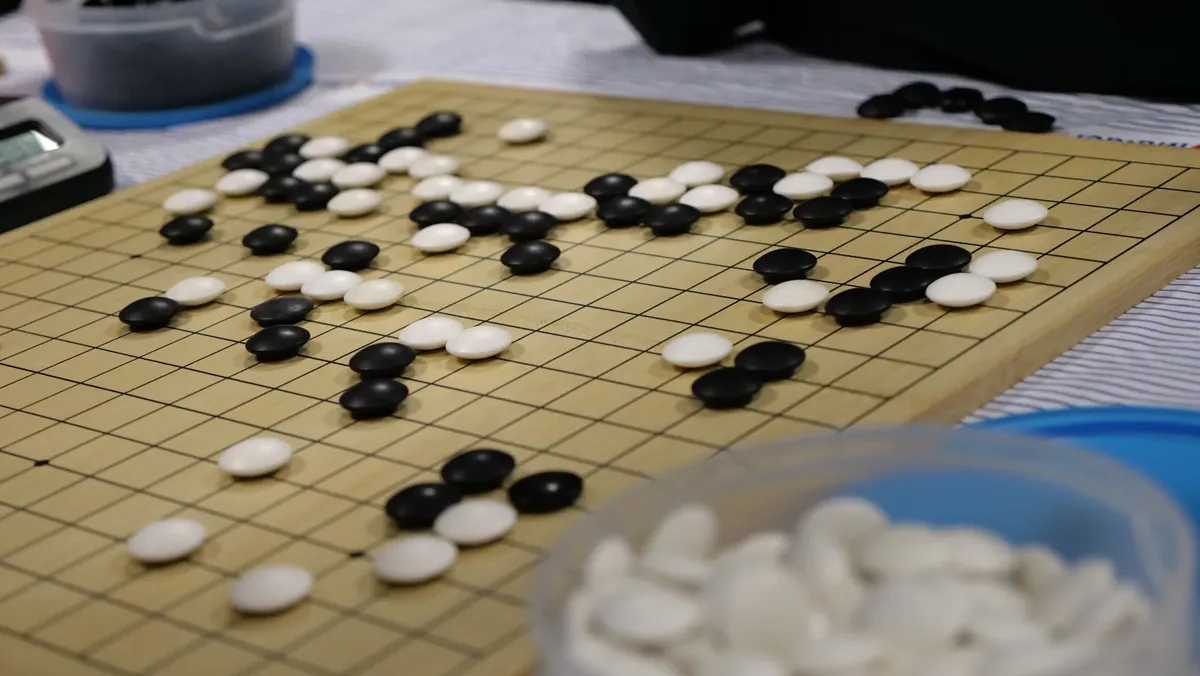
Go, also called Weiqi and Baduk
More cultureCA0016

Go, also called Weiqi and Baduk

Originating in ancient China; long-established East Asian and modern global practice · East Asia

Go is a board-game tradition whose long history links China, Korea and Japan. The Japanese name Go is widely used in English; Weiqi and Baduk are the Chinese and Korean names. The British Go Association describes the game’s precise origins as unknown, separating historical uncertainty from legends that attribute its invention to an emperor. Its account traces the game’s movement through East Asia and later growth in Europe and elsewhere. For a cultural ark, preserve more than a picture of stones on a board: include a clear rules reference, names in several languages and examples of how communities teach and discuss play. A game is a repeatable social activity, not merely its equipment.

Why keep it · what to know

Why future people learn something: Go provides a way to experience inherited culture directly by playing. Comparing local names and organized communities reveals how a shared activity can travel without becoming culturally uniform.

Keep in mind: Do not present a legendary inventor or a precise ancient founding year as established fact. Historical estimates are approximate. Later rulesets and scoring conventions should be documented explicitly if game records are added.

Material example of the board game.

Image: Culture Japon · CC BY-SA 4.0 · original

Great Mosque of Djenné
More cultureCA0017

Great Mosque of Djenné

Djenné, Mali; present mosque reconstructed in 1906–1907 within a much older urban and religious setting · West Africa

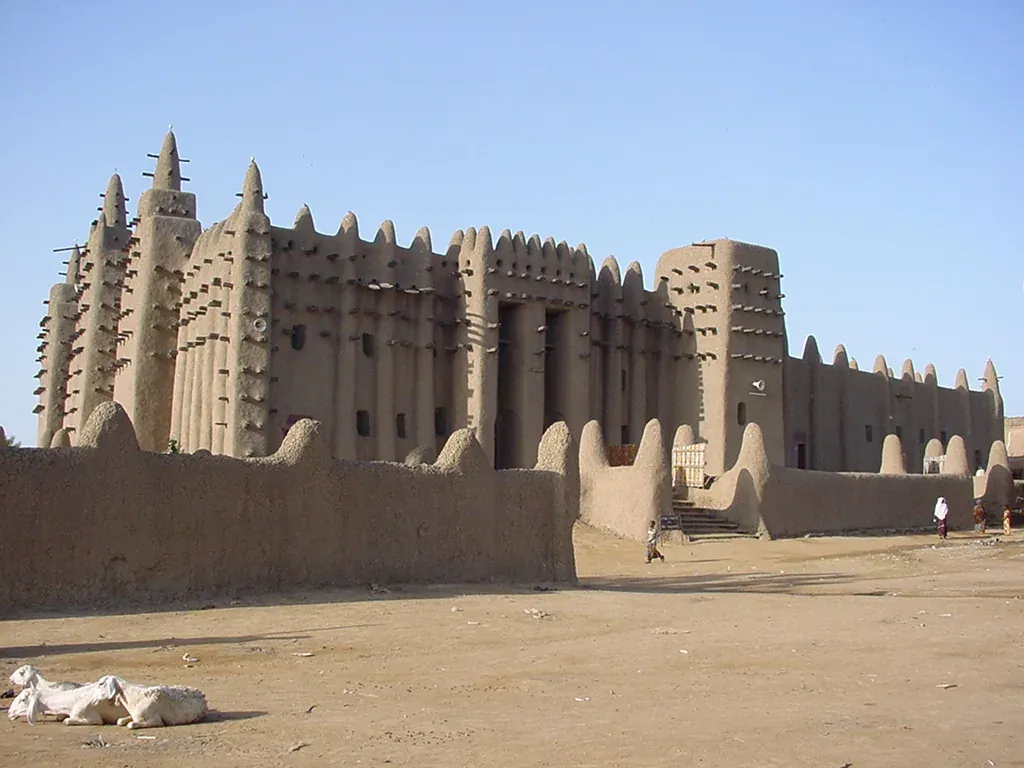
The Great Mosque belongs to Djenné’s living townscape, not an isolated collection of ruins. UNESCO’s account places the town within trans-Saharan trade and the regional spread of Islam, and identifies the mosque’s 1906–1907 reconstruction as an expression of local religious architecture. Earthen buildings connect its monumental forms with the materials and skilled work of the surrounding settlement. The useful cultural object is therefore both a building and its relationship to a town. Preserve photographs with dates, architectural explanations and local accounts of care, rather than reducing the mosque to an exotic silhouette. Its history also reminds future readers that reconstruction can form part of heritage rather than automatically erase it.

Why keep it · what to know

Why future people learn something: It demonstrates that architectural value can lie in earth, skilled upkeep, religious use and a coherent urban setting, not only in expensive permanent materials or isolated masterpieces.

Keep in mind: Do not date the current mosque to antiquity merely because Djenné has an ancient history. Accounts of the reconstruction’s colonial context differ; avoid an unsupported single-person authorship claim. This is a religious place, not a public stage.

Photograph of the selected building.

Image: Andy Gilham · CC BY-SA 3.0 · original

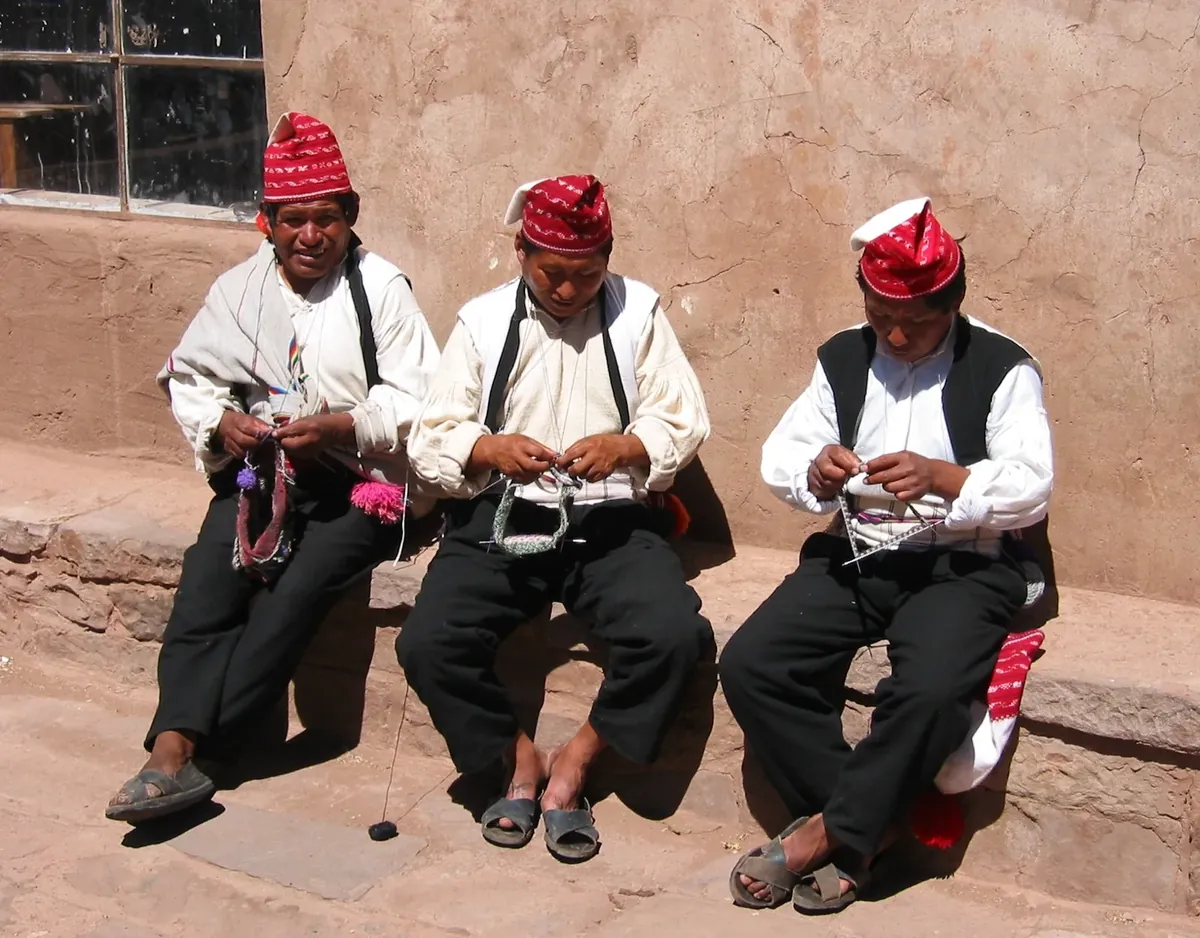
Taquile textile art
More cultureCA0018

Taquile textile art

Taquile Island, Lake Titicaca, Peru; living Andean tradition with pre-Hispanic roots · South America

On Taquile, textile making is not reserved for a detached category of professional artists. UNESCO describes it as an everyday activity involving men and women across ages, with the resulting clothing worn by community members. The island lies in Lake Titicaca on Peru’s high Andean plateau, and its weaving traditions carry connections to earlier Andean societies. This selection should keep the maker, wearer and setting together: a pattern removed from a garment loses information about how people use it. Peru’s cultural center also provides a reference to a book on traditional Taquile textiles and a weaving video, offering ways to go beyond a single attractive image toward practice and explanation.

Why keep it · what to know

Why future people learn something: Taquile helps future readers understand clothing as shared knowledge and daily social participation, rather than only fashion purchased from distant producers.

Keep in mind: This is one specific island community, not a substitute for all Andean textile traditions. Heritage listing is recognition, not the practice’s beginning. Reusing documentation or designs requires attention to maker credit and community context.

Textile-making community practice; knitting, not a weaving demonstration.

Image: Original uploader was Bcasterline · Public domain · original

Emoji in everyday digital conversation
More cultureCA0019

Emoji in everyday digital conversation

Japan-origin mobile communication, late twentieth century onward; global digital culture · Transregional

Emoji are picture characters used within written communication, including images of faces, food, animals, places and activities. Unicode traces their association with Japanese mobile phones and explains how incompatible carrier systems created obstacles to exchanging messages. Standardization helped characters travel between devices, but the character and its drawn appearance are not identical things. That distinction matters for preservation: an archive should record a message’s date, platform and intended context instead of assuming a tiny symbol always had one meaning. Emoji also differ from older text emoticons such as a smile assembled from punctuation. Together they reveal efforts to bring facial expression, tone and playful ambiguity into brief written exchanges.

Why keep it · what to know

Why future people learn something: Future readers can see how ordinary communication combined language, pictures and shared conventions. It is a useful case of everyday culture shaped jointly by users and technical institutions.

Keep in mind: Emoji are not a universal language with fixed meanings. Platform artwork can carry separate rights; Unicode’s charts do not grant unrestricted commercial reuse of vendor illustrations. Preserve examples with context and verified artwork licenses.

One openly licensed contemporary emoji rendering; not a Unicode-owned universal glyph or a proprietary vendor emoji.

Image: OpenMoji contributors · CC BY-SA 4.0 · original

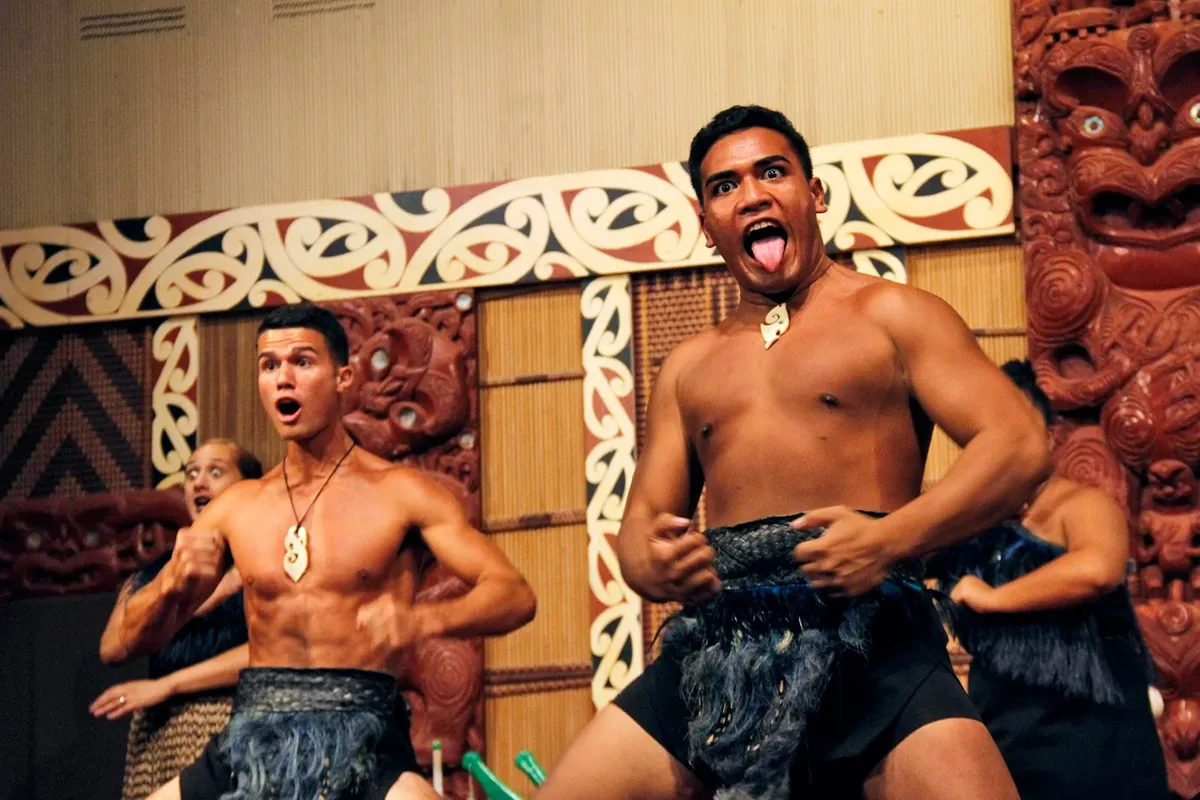
Māori haka
More cultureCA0020

Māori haka

Aotearoa New Zealand; continuing Māori performance traditions · Oceania

Haka are varied Māori performances involving collective movement and voice, not one dance belonging only to a rugby team. The New Zealand Police’s cultural explanation describes forms connected to iwi identities and occasions including welcome, achievement, weddings and funerals. It also notes participation by both women and men and the place of haka within kapa haka performance. A useful ark entry should therefore introduce the category without pretending that one recording represents every form. When selecting a particular example, preserve its name, composer where known, affiliated community, words, translation and occasion. Those details make the performance intelligible as an expression of identity and relationship rather than a sequence of impressive gestures.

Why keep it · what to know

Why future people learn something: Haka illustrates how coordinated performance can express welcome, remembrance, identity and political feeling. It challenges the tendency to interpret unfamiliar bodily expression only as aggression or entertainment.

Keep in mind: Do not flatten haka into a generic 'war dance' or treat all examples as interchangeable. Learn from appropriate Māori custodians before reenacting. Specific compositions, recordings and cultural obligations require their own attribution and reuse assessment.

A documented performance, not an illustration of every haka tradition.

Image: Raymonst3 · CC BY-SA 4.0 · original

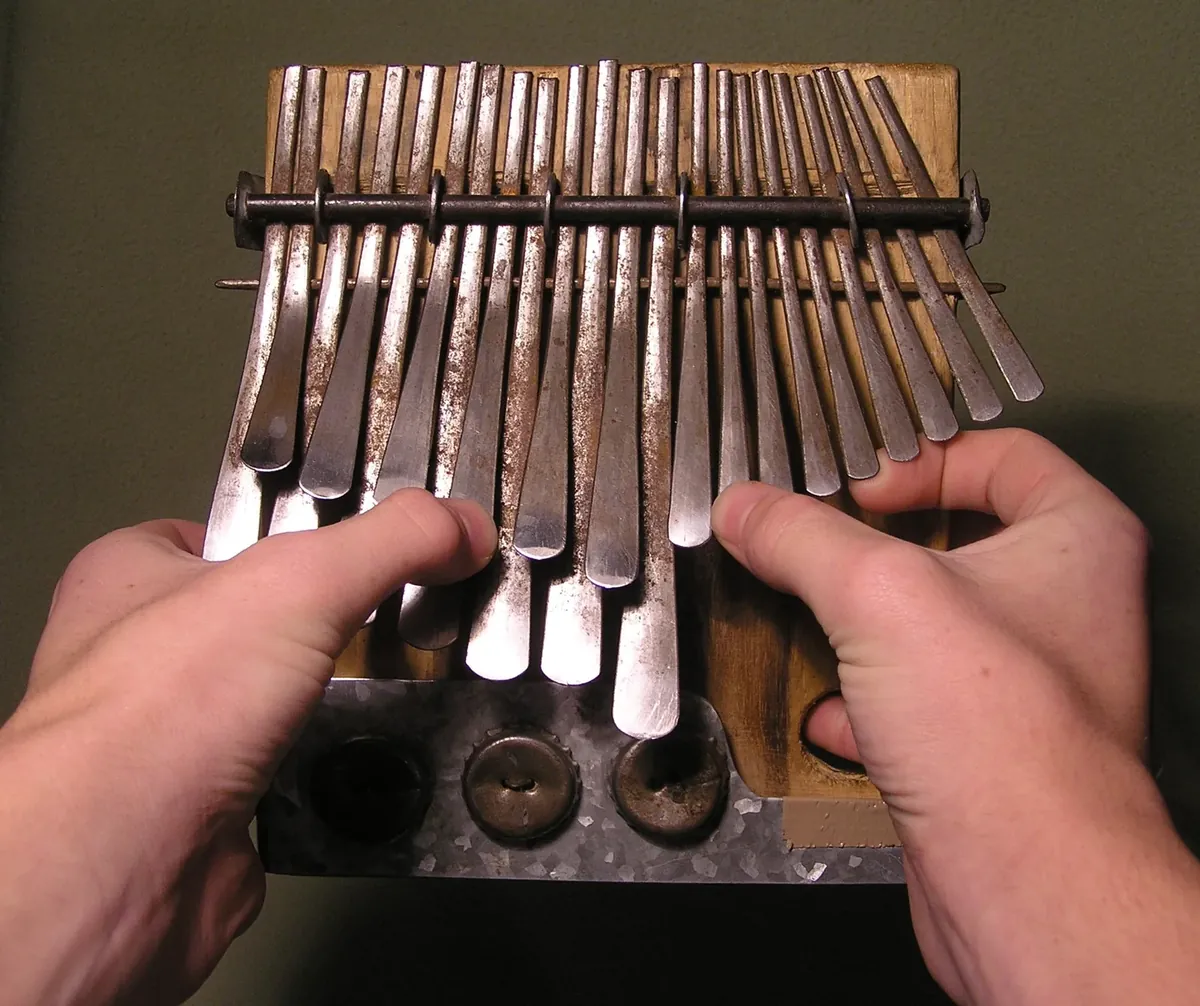
Mbira and Sansi making and playing
MusicCA0021

Mbira and Sansi making and playing

Malawi and Zimbabwe; intergenerational living practice · Southern Africa

A wooden board fitted with metal keys becomes an instrument when its keys are plucked with thumbs or fingers. Some mbira and sansi instruments add a resonating vessel. UNESCO describes music built from recurring themes whose repetitions change subtly and contain interwoven melodies. The art includes making as well as playing: available metal can be adapted into sounding keys, while learners acquire musical knowledge through family apprenticeship and formal teaching. Songs may carry accounts of past events or judgments about community behavior. This entry therefore connects an apparently small object with memory, skill and social commentary rather than treating it as a novelty instrument.

Why keep it · what to know

Why future people learn something: Listen for change inside repetition, and consider how material improvisation and musical invention support one another.

Keep in mind: The shared entry does not make all regional instruments or repertoires interchangeable. Sacred or community-specific uses need their own context.

Specific contextual photograph or object image; not a license to reproduce any musical recording.

Image: Alex Weeks · CC BY-SA 3.0 · original

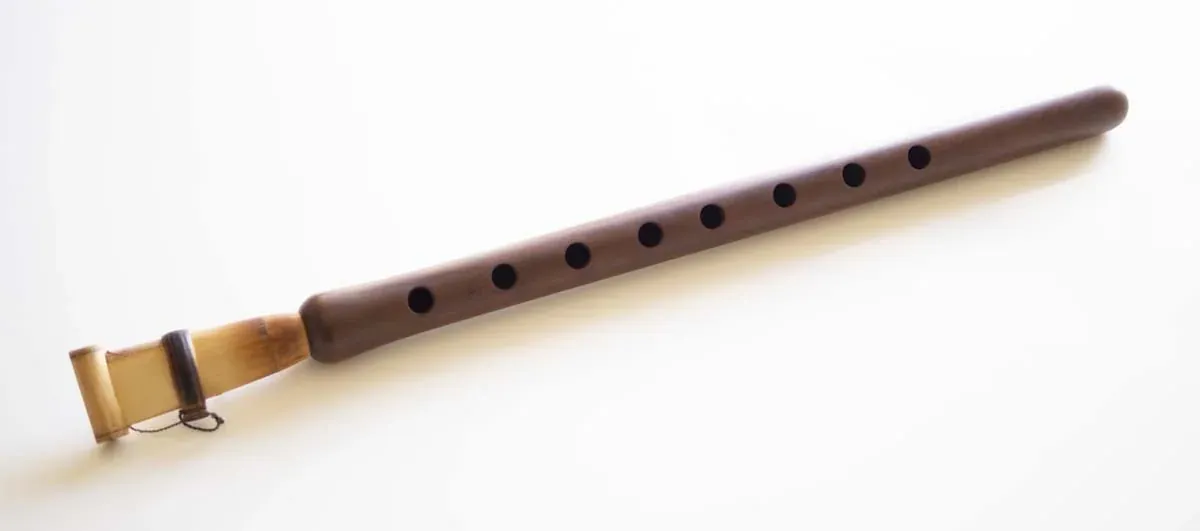
Duduk and its music
MusicCA0022

Duduk and its music

Armenia; historical tradition continuing today · Caucasus

The duduk is an Armenian double-reed wind instrument whose wooden body is commonly made from apricot wood. Its music accompanies songs, dances and occasions including weddings and funerals. UNESCO describes a frequent pairing in which one musician sustains a drone while another shapes a melody and improvises. Circular breathing helps the accompanying player sustain the musical background. Such an arrangement makes cooperation audible: the foreground line depends on another person maintaining continuity. Different instrument lengths support different registers and moods. Keeping the instrument together with its social settings avoids reducing a living musical practice to a vaguely melancholy sound used outside its context.

Why keep it · what to know

Why future people learn something: A two-player performance demonstrates how an apparently solo melody can depend on another musician’s less conspicuous labor.

Keep in mind: Related regional wind instruments should not be collapsed into one national category. The source’s old estimates of decline are not presented as current statistics.

Specific contextual photograph or object image; not a license to reproduce any musical recording.

Image: DudukFromJapan · CC0 · original

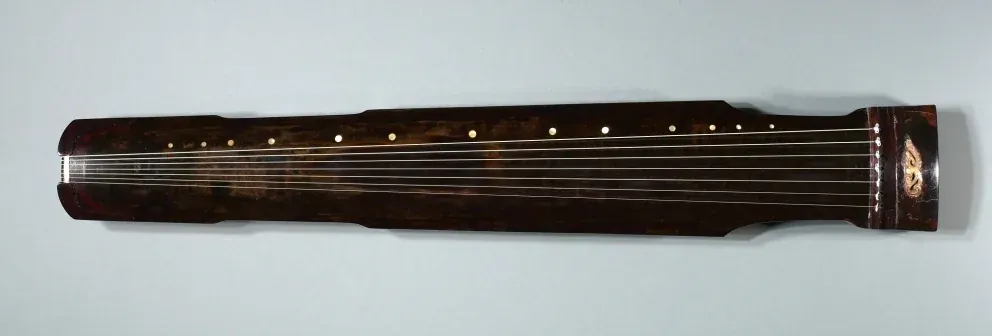
Guqin and its music
MusicCA0023

Guqin and its music

China; long historical tradition, continuing today · East Asia

The guqin is a seven-string zither associated with Chinese intellectual and musical history. UNESCO describes an art cultivated in intimate settings by scholars and noblemen, alongside calligraphy, painting and board-game learning. Its sound changes through open strings, stopped strings and harmonics, with sliding and ornamentation adding further expressive detail. A listener expecting only loudness or spectacle could miss the importance of touch and subtle color. This entry preserves the instrument as a practice of attention, not merely a prestigious antique. It also asks future readers to notice that the historical social standing of an art can shape who gets to learn and perform it.

Why keep it · what to know

Why future people learn something: Compare different ways of producing one pitch and ask what a culture values when it prizes an intimate musical encounter.

Keep in mind: Historical elite associations do not define every present-day player. Dated UNESCO performer counts are deliberately omitted.

Specific contextual photograph or object image; not a license to reproduce any musical recording.

Image: The original uploader was CharlieHuang at English Wikipedia. · CC BY-SA 3.0 · original

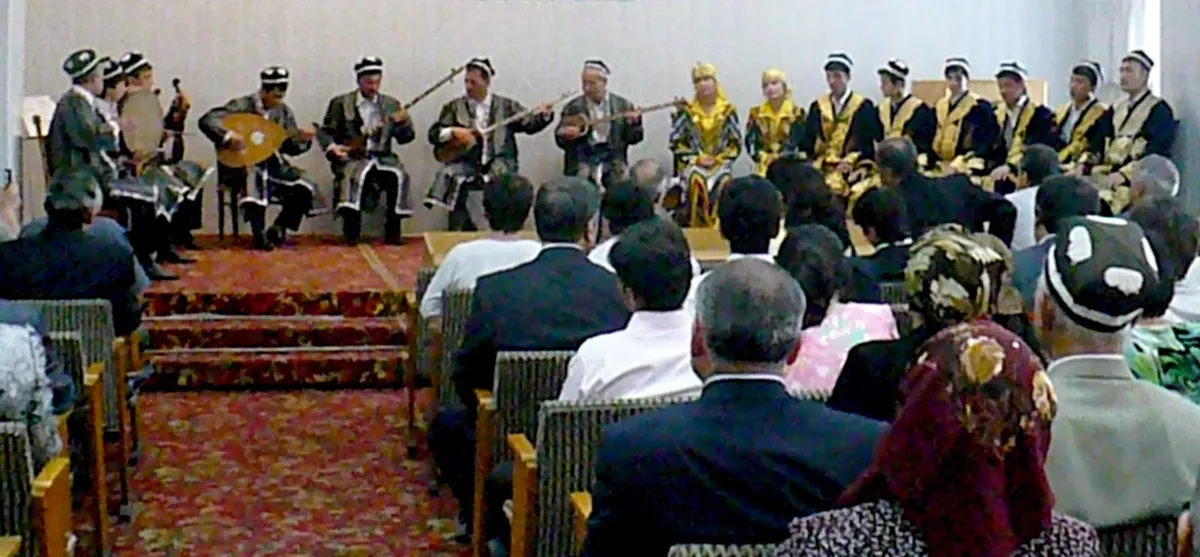
Shashmaqom
MusicCA0024

Shashmaqom

Central Asian urban centers; centuries-long classical tradition · Central Asia

Shashmaqom is a classical Central Asian tradition joining sung poetry with instrumental and rhythmic organization. Its name refers to six maqoms. UNESCO identifies its historical region with places now in Tajikistan and Uzbekistan and describes ensembles including lutes, fiddles, frame drums and flutes. The written score does not fully capture its interpretive detail, so teaching from master to pupil is central. Performers have also carried the tradition into diaspora communities, including Israel and the United States. This selection preserves a musical world that crosses modern borders and cannot be understood only by reading notes on a page or assigning it to one national label.

Why keep it · what to know

Why future people learn something: The gap between notation and performance reveals how much knowledge lives in demonstration, listening and memory.

Keep in mind: A shared regional tradition contains local styles; conservatory versions are not the only historical models.

Specific contextual photograph or object image; not a license to reproduce any musical recording.

Image: Шухрат Саъдиев · CC BY-SA 4.0 · original

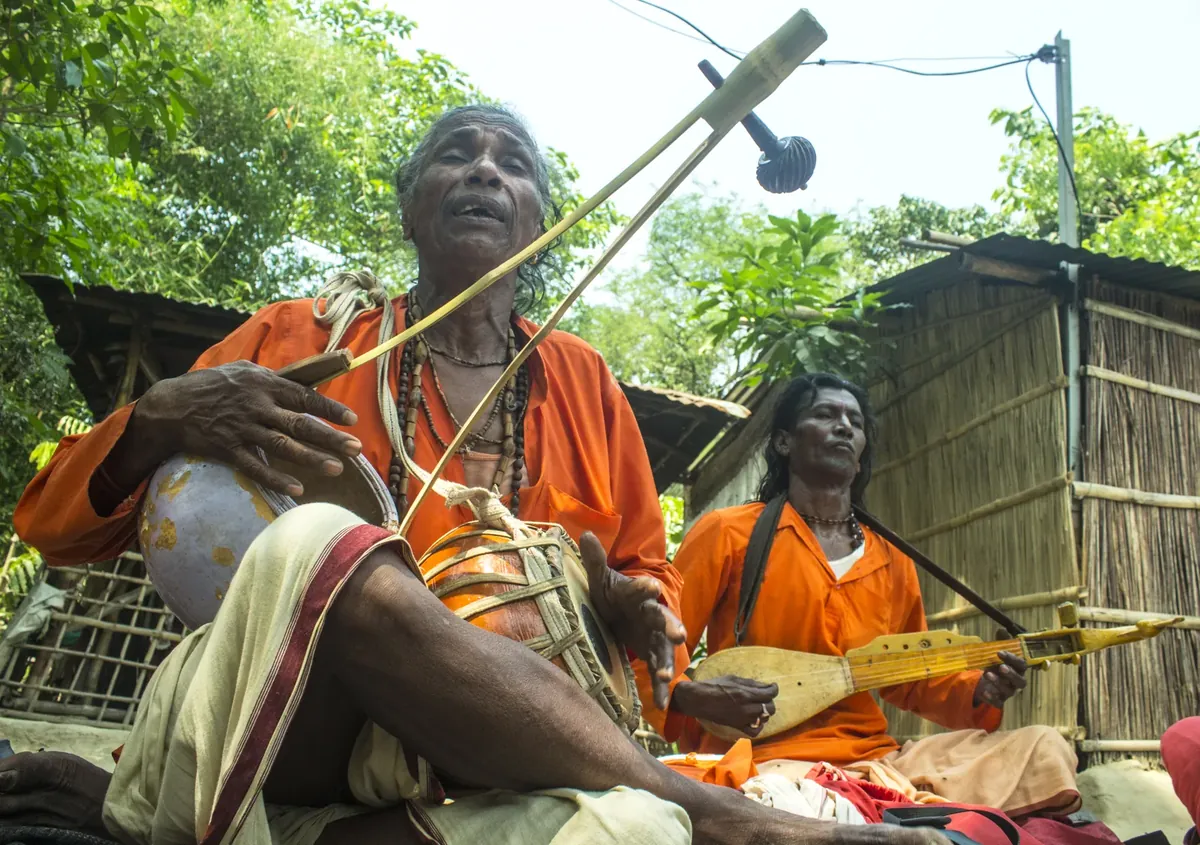
Baul songs
MusicCA0025

Baul songs

Bengal; devotional songs with historical literary attestations · South Asia

Baul songs belong to singers whose music, poetry and ways of living have influenced Bengali culture. UNESCO describes performers who may travel between villages and earn a living through singing. Their spiritual teaching emphasizes the human body and resists conventional religious and caste boundaries. The songs are not simply entertainment detached from a philosophy: transmission also occurs through relationships between gurus and apprentices. UNESCO’s safeguarding project focused on workshops and documentation in Bangladesh, including the Kushtia region associated with Lalon Shah. This entry preserves the connection between musical expression and the people who sustain it, including the economic circumstances that make continued practice possible.

Why keep it · what to know

Why future people learn something: A song can transmit an argument about how to live, while its survival depends on livelihoods as well as recordings.

Keep in mind: Bangladesh’s UNESCO nomination does not erase Baul communities in India. Avoid portraying all practitioners as identical or timeless wanderers.

Specific contextual photograph or object image; not a license to reproduce any musical recording.

Image: Debavasya · CC BY-SA 4.0 · original

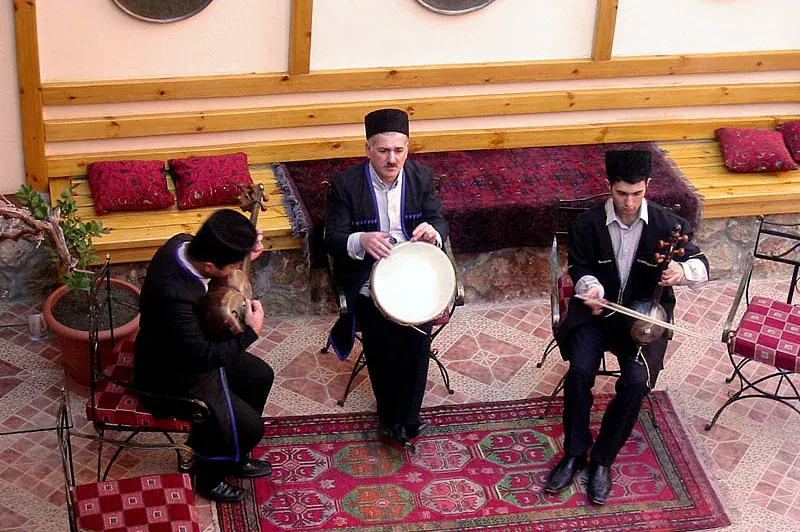
Azerbaijani Mugham
MusicCA0026

Azerbaijani Mugham

Azerbaijan; classical and popular performance contexts · Caucasus

Mugham is an Azerbaijani musical form in which learned conventions and improvisation work together. A singer may be accompanied by tar, kamancha and daf, creating a performance that cannot be fixed completely in a single written version. UNESCO describes connections with neighboring modal traditions while also locating the practice in Azerbaijani weddings, private gatherings and other settings. A skilled performance is therefore neither a mechanical repetition nor invention without rules. The catalog keeps this balance in view: listeners should hear individual interpretation within a shared musical language, and understand that teachers transmit judgments about phrasing and expression as well as melodies.

Why keep it · what to know

Why future people learn something: Improvisation demonstrates how creativity can depend on extensive inherited knowledge rather than freedom from all constraints.

Keep in mind: Related maqam and radif traditions are not synonyms. Historical source comments on stylistic change are not objective rankings of authenticity.

Specific contextual photograph or object image; not a license to reproduce any musical recording.

Image: User:Azeri · Public domain · original

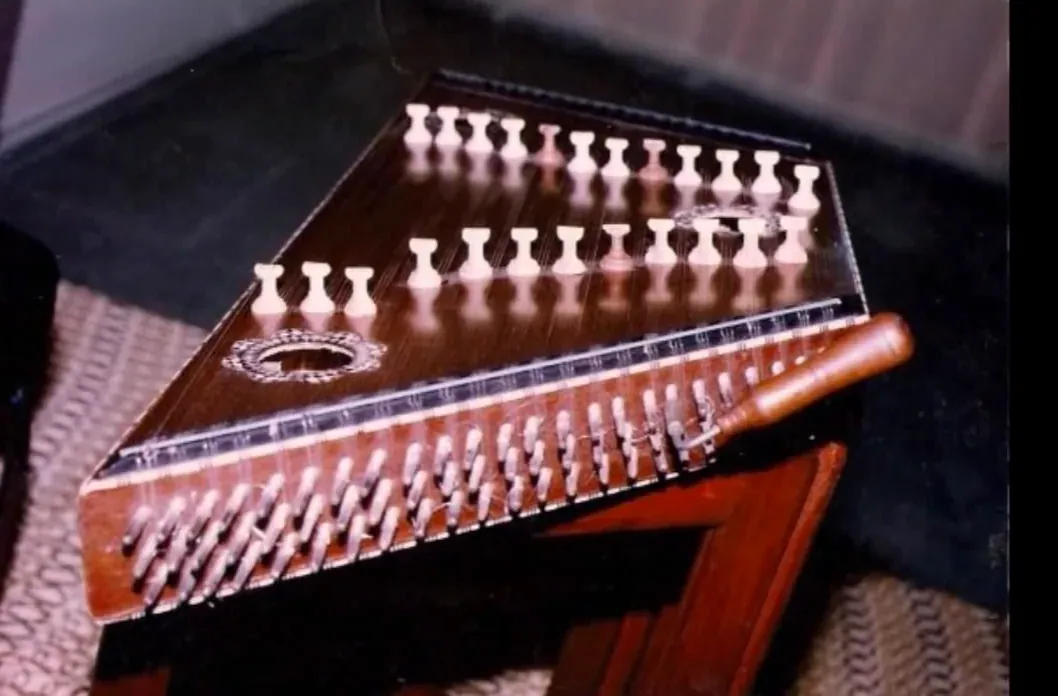
Iraqi Maqam
MusicCA0027

Iraqi Maqam

Iraq; classical vocal tradition with continuing diaspora performance · West Asia

Iraqi Maqam combines an extensive song repertory with highly developed vocal interpretation. UNESCO describes a lead singer, or qari, interacting with an accompanying ensemble rather than merely singing over an interchangeable backing. Instruments can include the santur, jawzah, dumbak and daff. Classical and colloquial Arabic poetry provide verbal material, and performances have taken place in private gatherings, coffeehouses and theatres. This entry preserves the relationship among musical modes, poetry and the social act of listening. It also distinguishes a specific Iraqi tradition from the broader family of modal practices to which it is related across neighboring regions.

Why keep it · what to know

Why future people learn something: A performance can carry literary registers, urban gathering habits and musical history together in one event.

Keep in mind: Do not treat an old source’s description of political conditions as a present-day security assessment. Recording rights remain separate.

Specific contextual photograph or object image; not a license to reproduce any musical recording.

Image: Santuurchi · CC BY-SA 4.0 · original

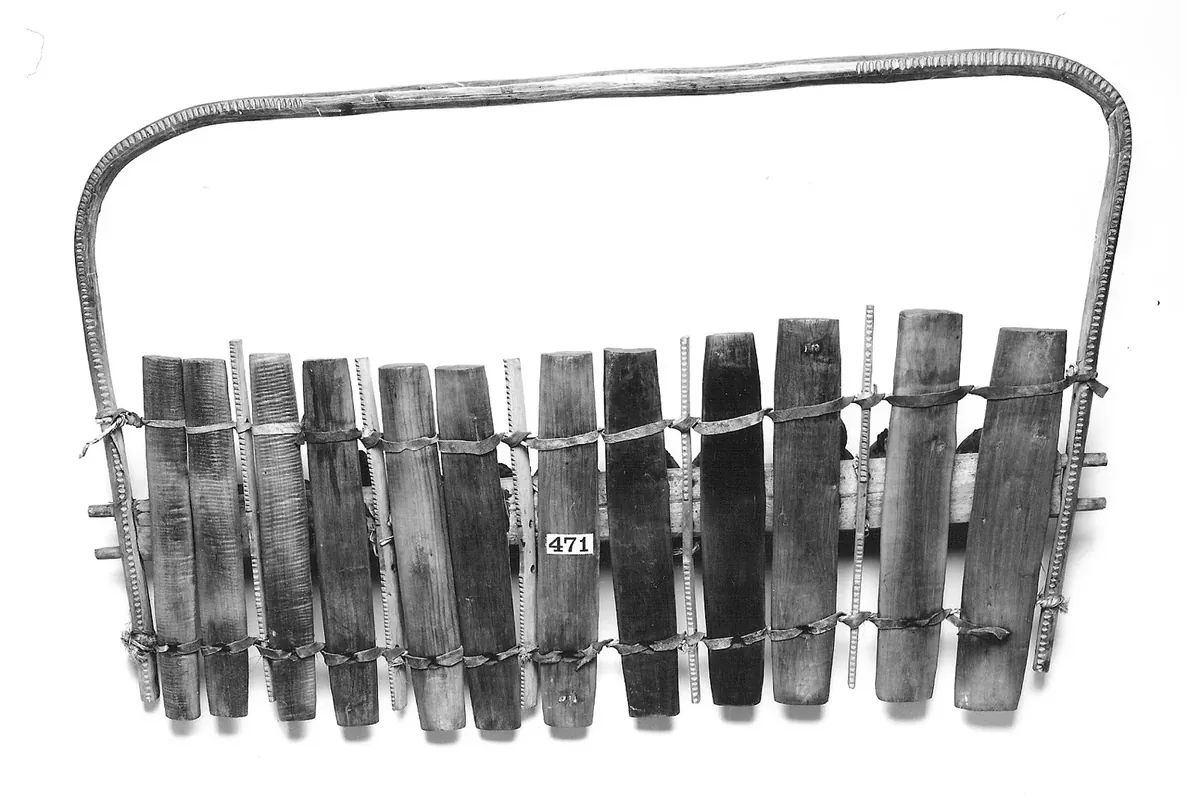
Chopi Timbila
MusicCA0028

Chopi Timbila

Southern Inhambane, Mozambique; intergenerational practice · Southern Africa

Chopi timbila orchestras bring together wooden xylophones of different sizes and pitches. UNESCO describes finely made instruments with resonators beneath the wooden keys and ensembles containing both experienced players and learners. The repertory is not frozen: new compositions address community life, and songs can use humor or sarcasm to comment on social issues. Music and dance are closely connected, with passages that give singers space to be heard. This entry foregrounds local composition and public commentary rather than presenting the instruments as an anonymous traditional sound. It also preserves the dependence of musical materials on particular woods and the environments in which makers obtain them.

Why keep it · what to know

Why future people learn something: An orchestra can function as a community chronicle, combining aesthetic skill with the right to comment on shared affairs.

Keep in mind: The indexed UNESCO URL has a mismatched textual slug; the displayed title and nomination number 00133 identify Chopi Timbila. Do not infer image permissions.

Specific contextual photograph or object image; not a license to reproduce any musical recording.

Image: The Metropolitan Museum of Art; The Crosby Brown Collection of Musical Instruments, 1889 · Public domain; Met Open Access · original

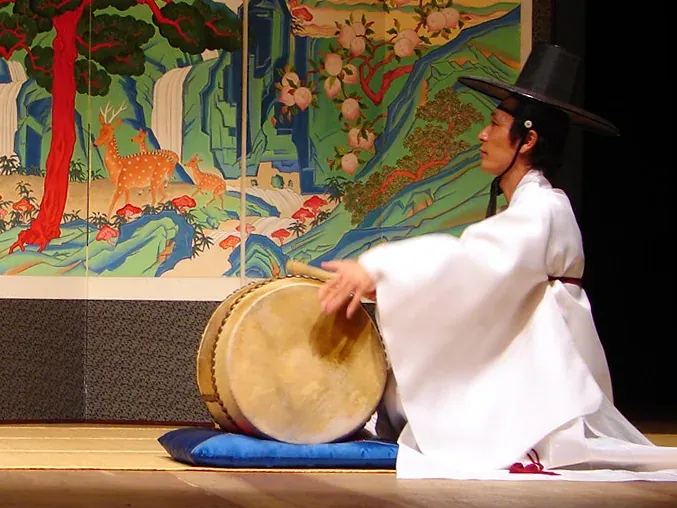
Pansori epic chant
MusicCA0029

Pansori epic chant

Southwestern Korea from the seventeenth century; continuing performance · East Asia

Pansori is Korean musical storytelling performed by a singer with a drummer. The vocalist moves among expressive singing, stylized speech and gesture, developing characters and situations rather than delivering only a short song. UNESCO traces the tradition to southwestern Korea in the seventeenth century and describes performances that can last many hours. Mastery requires sustained training and a large remembered repertory, but interpretation is also personal. Its history raises a preservation dilemma: writing down and standardizing a performance can help protect a repertory while narrowing opportunities for spontaneous invention. The selection therefore keeps the relationship between disciplined learning and live creativity visible.

Why keep it · what to know

Why future people learn something: Storytelling can make one voice carry multiple characters, and preservation can change the flexibility of what it preserves.

Keep in mind: UNESCO describes a historical tendency toward standardization, not proof that no contemporary performer improvises.

Specific contextual photograph or object image; not a license to reproduce any musical recording.

Image: derivative work: Caspian blue (talk) Korea-Busan_3404-06_Pansori.JPG: Steve46814 · CC BY-SA 3.0 · original

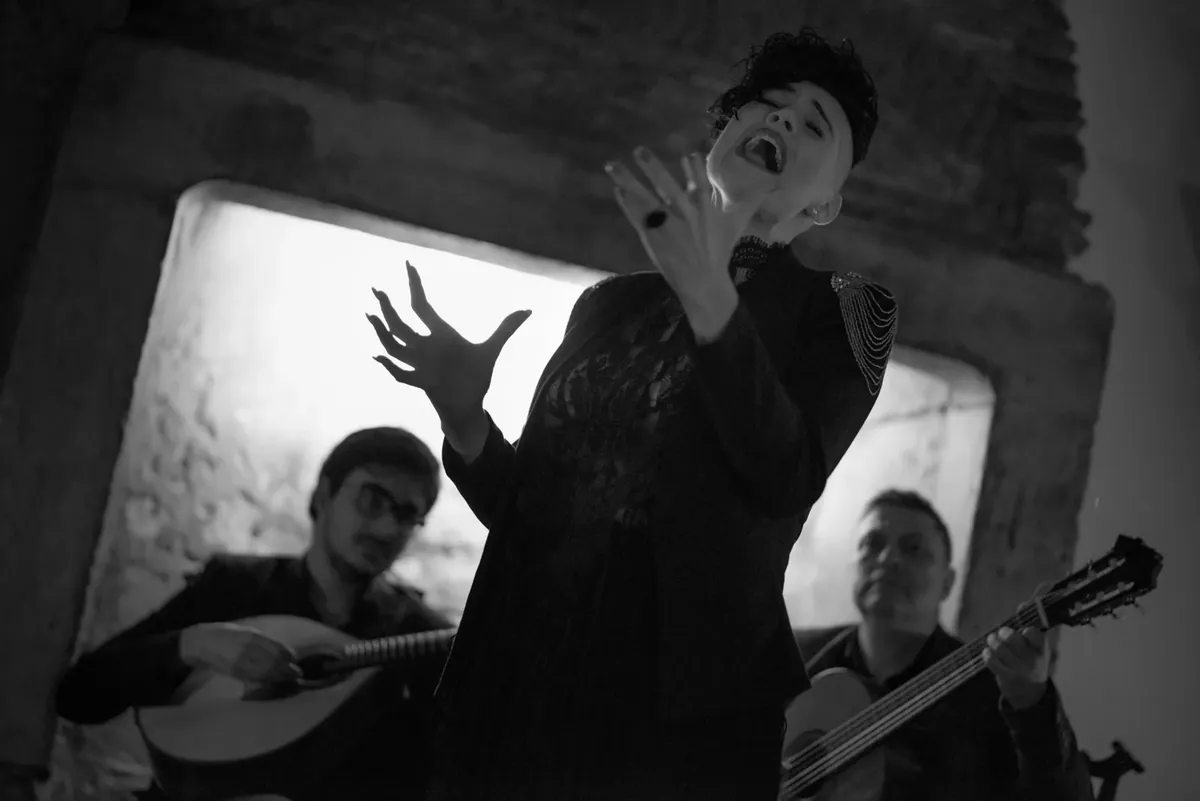
Fado
MusicCA0030

Fado

Portugal; urban genre shaped in the nineteenth century and afterward · Europe

Fado brings poetry and solo singing into conversation with guitar accompaniment. UNESCO describes its formation through a mixture of Afro-Brazilian, local, rural and cosmopolitan urban musical influences. The Portuguese guitarra, a pear-shaped twelve-string cittern, is a characteristic partner to the singer. Fado exists in professional venues and concerts, but also in neighborhood associations and informal teaching relationships. Emigration has carried it into additional settings abroad. This entry resists the idea that a national musical symbol must have an isolated or pure origin: the practice shows how exchange and movement can become central to a strongly felt sense of belonging.

Why keep it · what to know

Why future people learn something: A national emblem can emerge from migration and mixture rather than cultural separation.

Keep in mind: This Lisbon-centered account does not claim to summarize every Portuguese singing tradition or every regional fado practice.

Specific contextual photograph or object image; not a license to reproduce any musical recording.

Image: Jimmy Baikovicius from Montevideo, Uruguay · CC BY-SA 2.0 · original
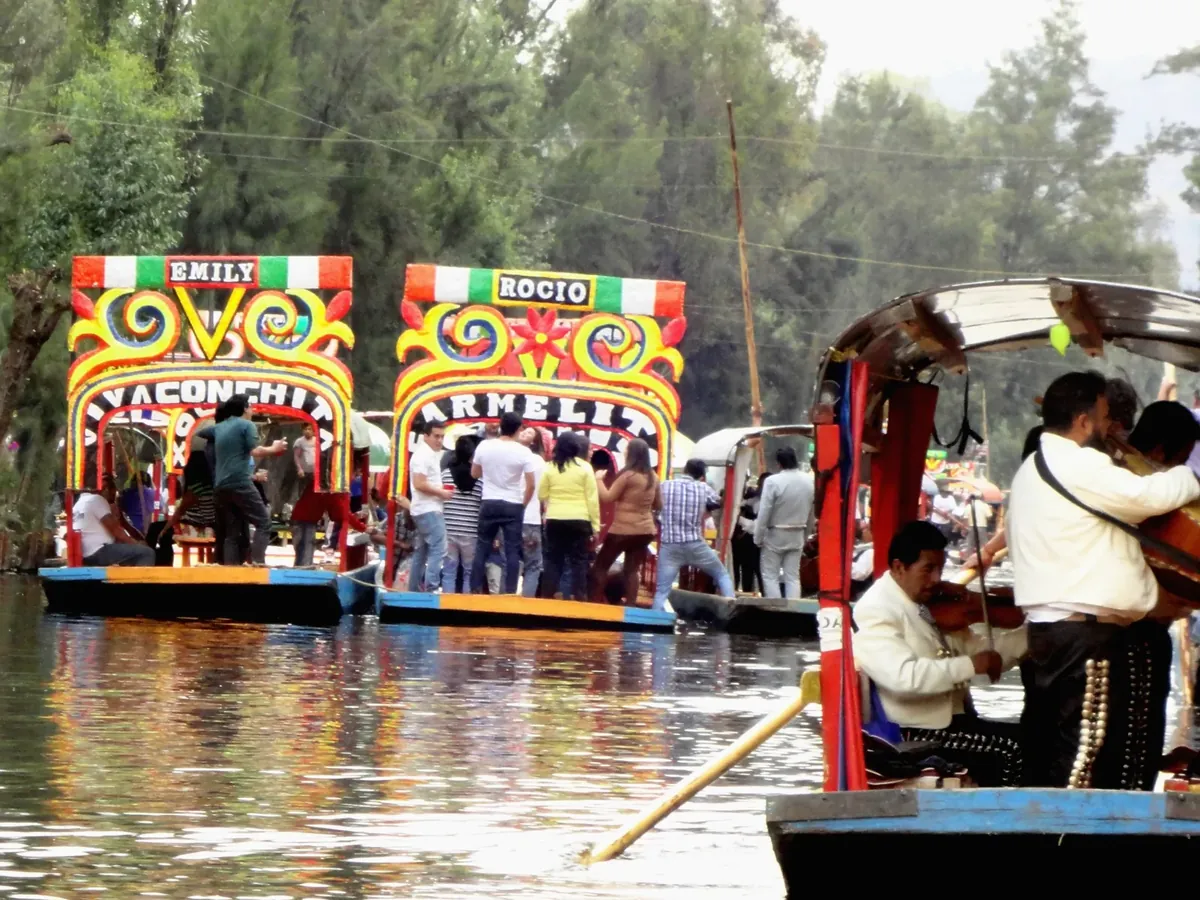
Mariachi
MusicCA0031

Mariachi

Mexico and diaspora; traditional and modern ensemble practices · North America

Mariachi is a Mexican ensemble tradition with a broad and changing repertory. UNESCO distinguishes string-centered traditional groups from modern groups that can include trumpets, violins, vihuela and guitarrón. Performers interpret regional songs, serenades and narrative ballads as well as styles absorbed over time. Learning by ear and participation in festive, religious and civic occasions have helped transmit the practice. Keeping these distinctions matters because a familiar costume or trumpet sound can otherwise substitute for understanding. This entry preserves ensemble variety, local histories and the social work of performance instead of using mariachi as a generic soundtrack for an entire country.

Why keep it · what to know

Why future people learn something: Listen for the different roles inside the ensemble and how an adaptable repertory can still sustain a recognizable tradition.

Keep in mind: Traditional and modern are source categories, not rankings. No individual recording, costume design or arrangement is licensed by this entry.

Specific contextual photograph or object image; not a license to reproduce any musical recording.

Image: Juan Carlos Fonseca Mata · CC BY-SA 4.0 · original

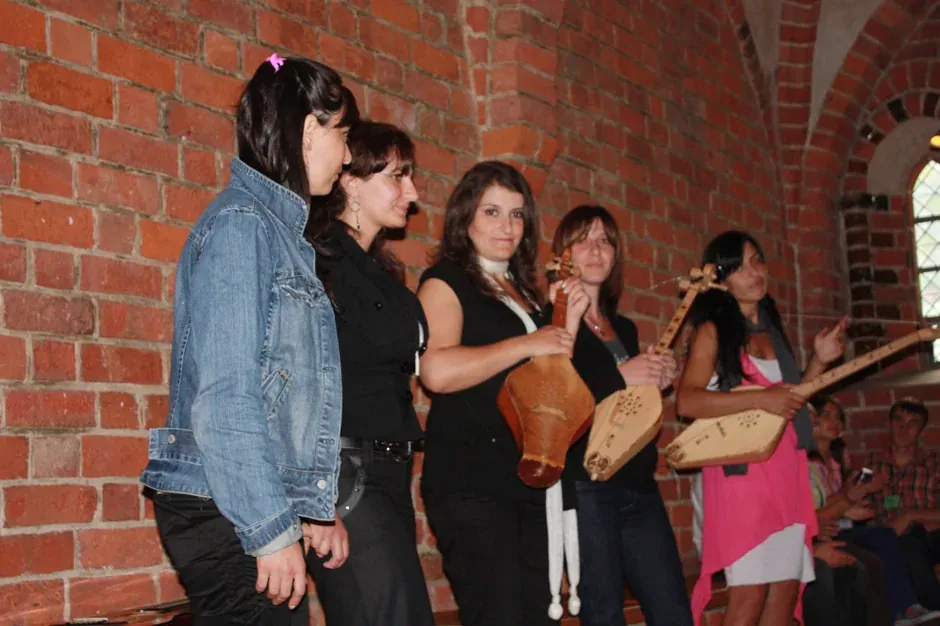
Georgian polyphonic singing
MusicCA0032

Georgian polyphonic singing

Georgia; historical and contemporary multipart singing · Caucasus

Georgian polyphonic singing places distinct vocal parts together rather than assigning everyone the same melody. UNESCO describes several regional forms, including dialogue over a bass and contrasting partly improvised voices. Songs have accompanied field work, ceremonies and other areas of everyday life, while Georgian church singing also developed a strong polyphonic tradition. This entry asks future listeners to hear differences within the national label. The relationship between voices can be as important as a memorable tune. Archival recordings preserve examples, but the ability to balance, enter and respond still requires people who know how to sing with other people.

Why keep it · what to know

Why future people learn something: Multipart singing makes coordination audible and shows why preserving individual melodies is not enough to preserve an ensemble practice.

Keep in mind: Regional and sacred/secular differences should not be flattened. Source classifications are summaries rather than exhaustive music theory.

Specific contextual photograph or object image; not a license to reproduce any musical recording.

Image: [https://www.flickr.com/people/40850931@N04 Climate Camp 2009 L�gumkloster] · CC BY-SA 2.0 · original
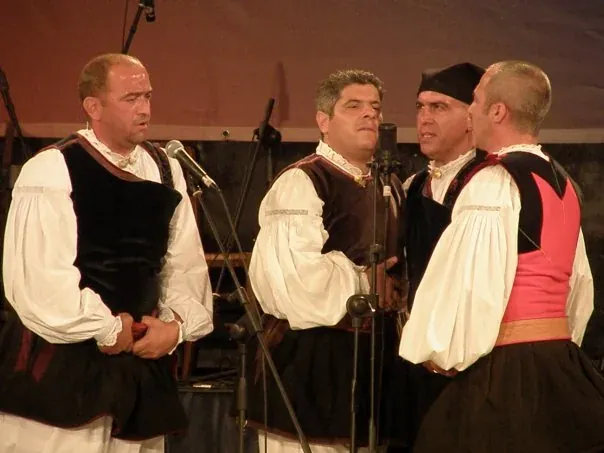
Canto a tenore
MusicCA0033

Canto a tenore

Sardinia, Italy; pastoral and contemporary communal tradition · Europe

Canto a tenore is a Sardinian multipart singing practice commonly performed by four men standing close together. The vocal roles differ, including deep, guttural accompanying sounds around a leading voice. UNESCO connects the tradition with pastoral life but also describes singing in bars, at weddings and during public festivities. Lyrics may draw on older poetry or address current issues such as migration and unemployment. A close circle of singers produces a social encounter as well as a musical texture. The entry therefore emphasizes living commentary and intimate listening rather than suggesting that pastoral music belongs only to an unchanging rural past.

Why keep it · what to know

Why future people learn something: A tradition can retain a distinctive vocal technique while speaking about contemporary problems.

Keep in mind: The source describes a common four-man configuration, not a prohibition on other participation. Stage versions and intimate settings have different social effects.

Specific contextual photograph or object image; not a license to reproduce any musical recording.

Image: Tenores · Public domain · original

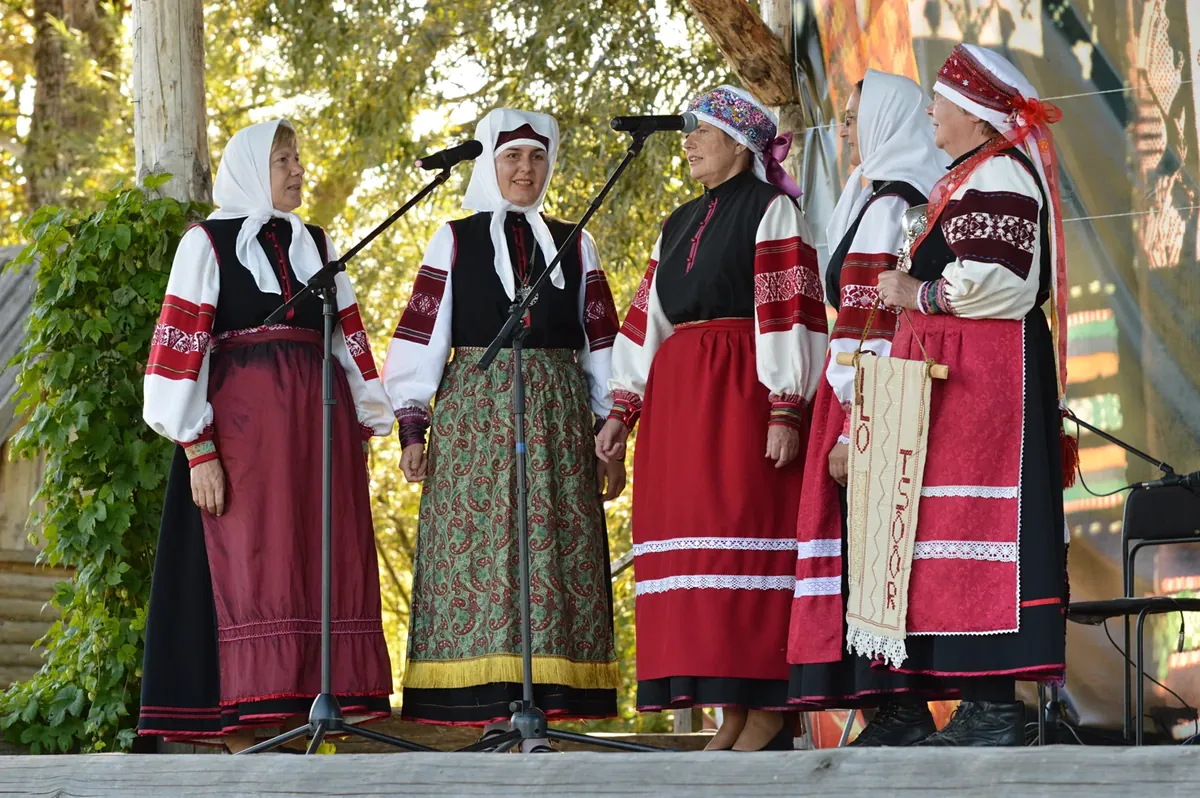
Seto leelo
MusicCA0034

Seto leelo

Southeastern Estonia and Pechory district of Russia; continuing community practice · Europe

Seto leelo is a polyphonic singing tradition in which a lead singer begins a verse and a choir joins and repeats it. UNESCO describes the ability to compose lyrics as an important mark of an accomplished lead singer, so the practice values invention as well as memory. Many choirs are made up of women. Singing once accompanied a wide range of rural activities and remains important at community events even as stage performance has become more prominent. This entry preserves the exchange between individual voice and collective response, together with the role that choirs play as places of local association and identity.

Why keep it · what to know

Why future people learn something: The same musical structure can make room for personal authorship and shared participation.

Keep in mind: The Seto community spans a modern state border. Do not equate stage prominence with the disappearance of community meaning.

Specific contextual photograph or object image; not a license to reproduce any musical recording.

Image: Ivo Kruusamägi · CC BY-SA 4.0 · original

Arirang folk-song tradition
MusicCA0035

Arirang folk-song tradition

Korea; collectively developed folk-song tradition · East Asia

Arirang is not best understood as one fixed recording with one definitive performer. UNESCO describes a Korean folk-song form built through contributions by ordinary people over generations, with regional variation and an accessible structure that invites adaptation. Repetition and short verbal units help make the song available for group singing as well as individual interpretation. Preserving this selection means keeping the idea of a family of variants alongside examples, rather than choosing one arrangement and declaring every other version incorrect. It offers a counterweight to a catalog of commercial releases by making collective creation itself part of the cultural record.

Why keep it · what to know

Why future people learn something: A widely shared song can survive through variation, not only through exact copying.

Keep in mind: This source concerns the Republic of Korea’s inscription; it does not imply that Arirang belongs exclusively to one contemporary state.

An interpretive visual response to distance and separation in Arirang, not an actual Korean landscape, performer, performance or historic event.

Image: AI-generated for Culture Ark using OpenAI image_gen, 2026-11-01 · AI-generated output; not represented as CC-licensed, exclusive, or guaranteed copyrightable · original

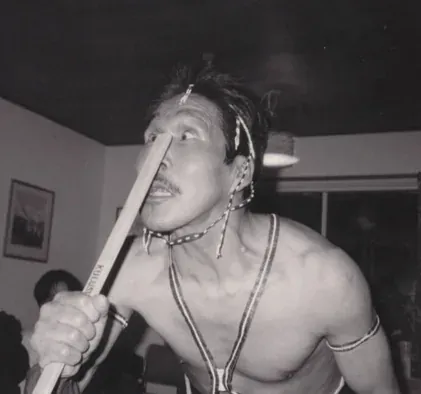
Greenlandic Inuit drum singing
MusicCA0036

Greenlandic Inuit drum singing

Greenland; Indigenous practice continuing today · Arctic

In Greenlandic Inuit drum performance, a singer moves a frame drum called qilaat and strikes its frame with a stick. Song and bodily movement accompany the percussive sound. UNESCO describes performances by individuals and groups at celebrations and social events, with lyrics touching daily life, humor, hunting, love and longing. This selection focuses on musical storytelling within the wider drum-dance practice. It preserves the relationship between an instrument, a moving performer and a community that recognizes the songs. Future audiences should encounter it as a continuing Indigenous art, not as a fossilized specimen from a supposedly vanished way of life.

Why keep it · what to know

Why future people learn something: Daily experience can become durable cultural memory without being separated from bodily movement or communal gathering.

Keep in mind: The entry concerns Greenlandic practice, not all Inuit musical traditions. A public documentation page is not consent to copy every ceremonial performance.

Specific contextual photograph or object image; not a license to reproduce any musical recording.

Image: Rósa Rut Þórisdóttir · CC BY-SA 4.0 · original

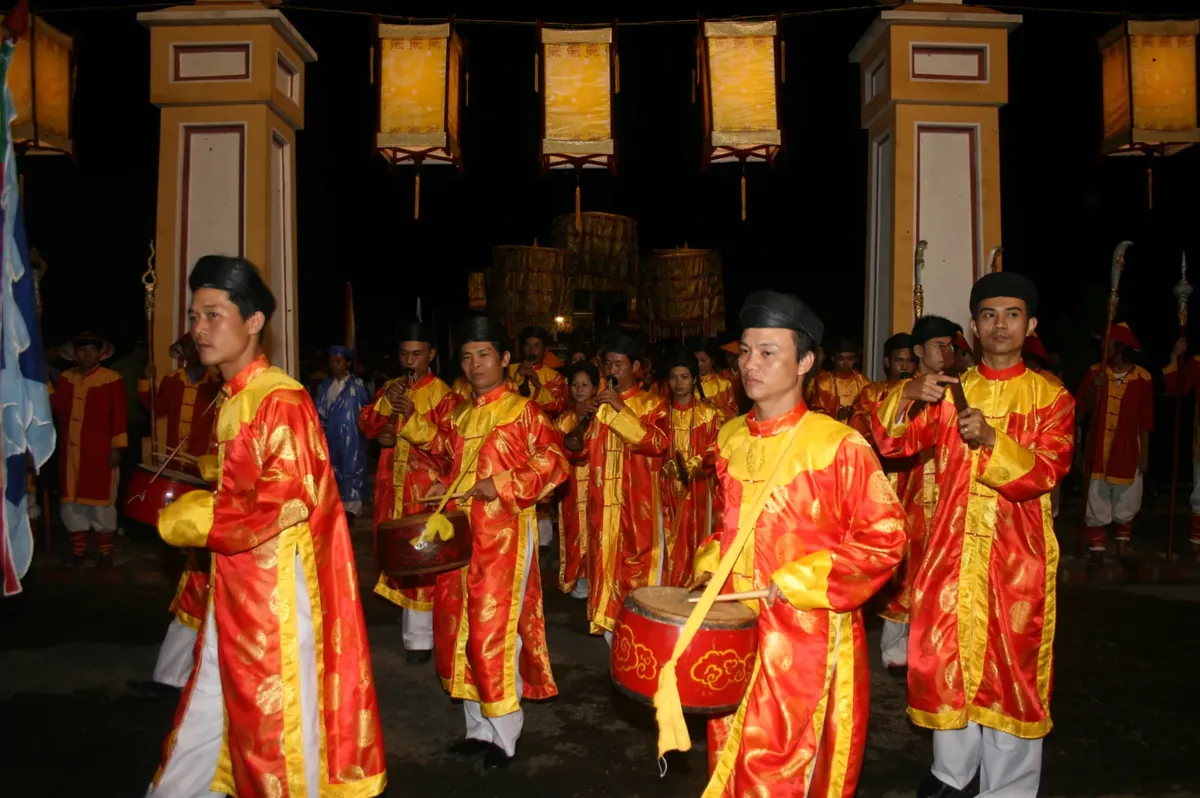
Nha Nhac court music
MusicCA0037

Nha Nhac court music

Vietnam; royal court practice from fifteenth to mid-twentieth century · Southeast Asia

Nha Nhac encompasses musical and dance forms once performed at Vietnam’s royal court. UNESCO describes ceremonial uses including coronations, funerals and official receptions, with percussion, wind and string instruments organized around carefully ordered ritual. The tradition developed under successive dynasties, and its fortunes changed when the monarchy ended and war disrupted cultural life. Former court musicians and later safeguarding efforts helped carry parts of the repertory forward. This entry preserves both sound and function: court music did not merely decorate an occasion but helped express authority, cosmology and a structured relationship between participants, rulers and ancestors.

Why keep it · what to know

Why future people learn something: Music can organize a political and ritual world, then acquire new meanings when the institutions that supported it disappear.

Keep in mind: Present-day heritage performance is not automatically identical to historical court ceremony. Dynastic representation is not endorsement of monarchy.

Specific contextual photograph or object image; not a license to reproduce any musical recording.

Image: Lưu Ly (thảo luận) · Public domain · original

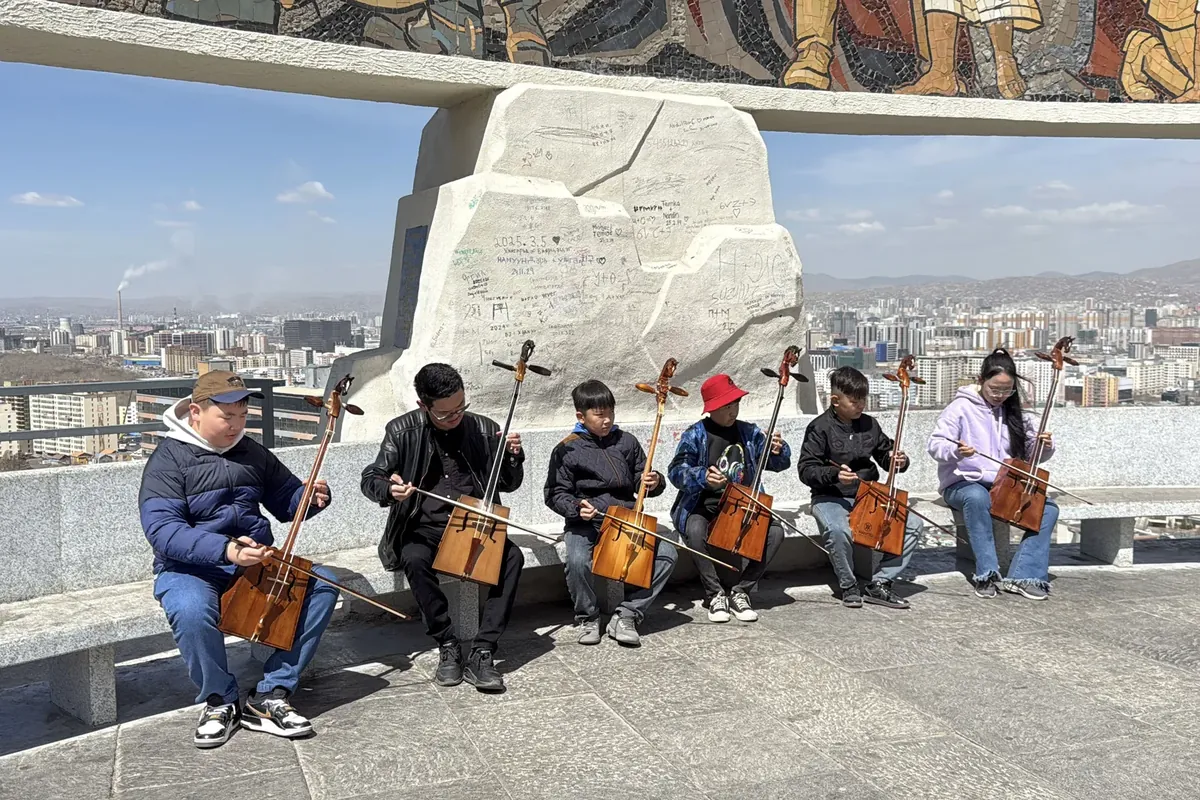
Morin khuur music
MusicCA0038

Morin khuur music

Mongolia; nomadic and contemporary musical contexts · Central and East Asia

The morin khuur is a two-stringed Mongolian fiddle with a carved horse head at the top of its neck. UNESCO connects its significance with nomadic life, ceremonies and activities involving horses, not just with concert performance. Bowing and fingering create melodic and overtone relationships that written notation does not fully convey. The instrument may play alone or accompany other forms, including long songs. This selection keeps those associations beside the object’s recognizable shape. It also makes room for the difference between musical practices embedded in herding life and versions adapted for louder, more formal stage environments.

Why keep it · what to know

Why future people learn something: An instrument can embody relationships with animals and landscapes as well as a musical scale or repertoire.

Keep in mind: Not every contemporary instrument uses historical materials. Avoid presenting urban adaptation as proof of cultural disappearance.

Specific contextual photograph or object image; not a license to reproduce any musical recording.

Image: Quintin Soloviev · CC BY 4.0 · original

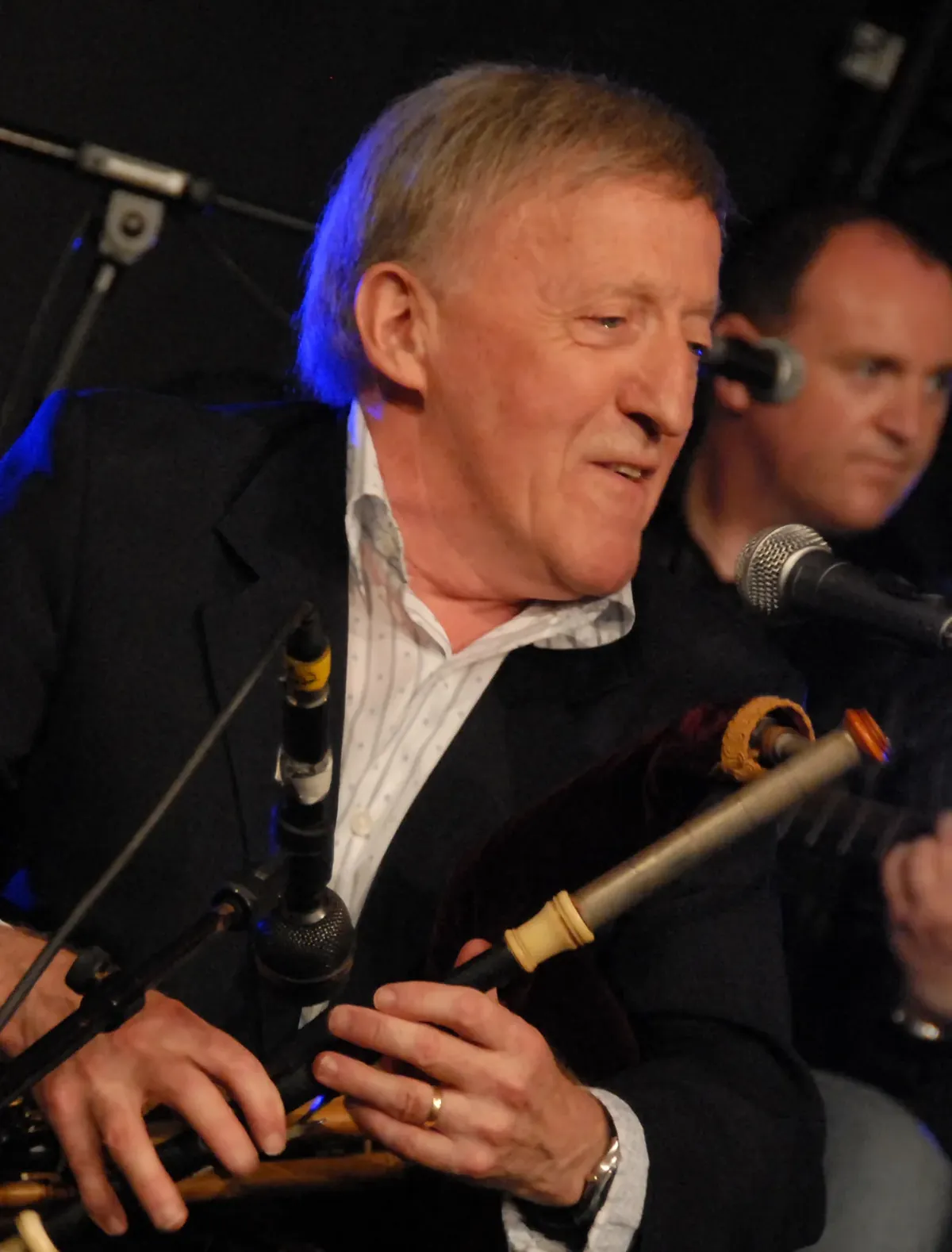
Uilleann piping
MusicCA0039

Uilleann piping

Ireland and international Irish communities; multigenerational tradition · Europe

Uilleann piping uses a particular form of bagpipe associated with Irish music. UNESCO describes a dispersed community of practitioners, concentrated in Ireland and Irish communities abroad, and a practice connected to social life as well as musical accomplishment. Learning directly from a skilled player remains highly valued, while recordings and online instruction can assist transmission. The organization Na Píobairí Uilleann, established by pipers in 1968, is part of the documented safeguarding story. This selection therefore joins the sound of an instrument to the institutions and personal relationships that help people learn it, showing revival as active work rather than accidental survival.

Why keep it · what to know

Why future people learn something: A musical revival can be built through organized teaching, research and peer support.

Keep in mind: Uilleann pipes are not interchangeable with every other bagpipe type. A tutorial’s availability does not establish reuse rights.

Specific contextual photograph or object image; not a license to reproduce any musical recording.

Image: Bryan Ledgard · CC BY 2.0 · original
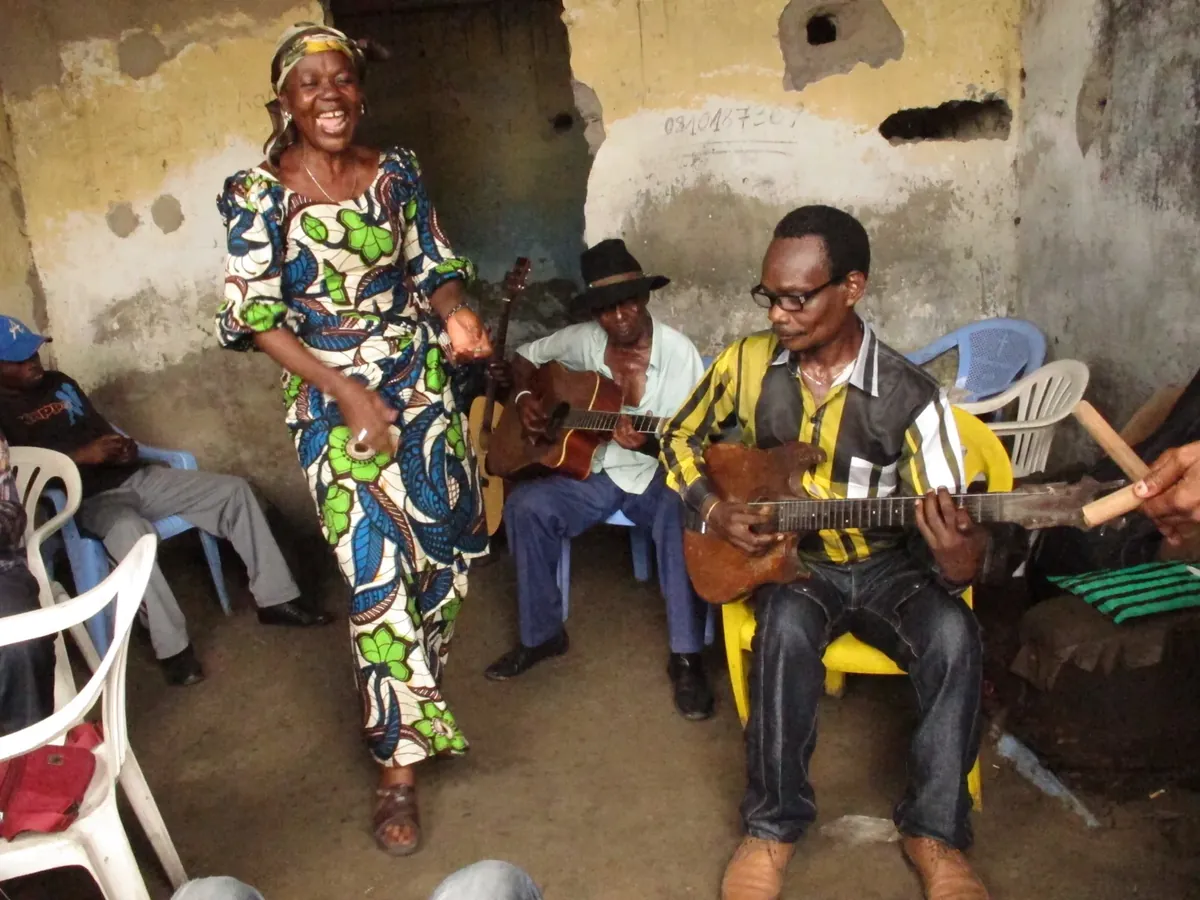
Congolese rumba
MusicCA0040

Congolese rumba

Urban Congo communities; living music and dance tradition · Central Africa

Congolese rumba is a music-and-dance practice shared across the Democratic Republic of the Congo and the Republic of the Congo. UNESCO describes professional and amateur performers, neighborhood clubs, choirs and community teaching rather than only a commercial record industry. Its uses include celebration and mourning in public and private spaces. Women’s contributions to romantic and religious styles are explicitly recognized in the nomination account. This entry preserves a form that can bind generations and diaspora communities while also supporting working musicians. The paired national attribution matters because a cultural network can extend beyond the administrative line used to organize a museum or catalog.

Why keep it · what to know

Why future people learn something: Popular music can be work, social connection and collective memory simultaneously.

Keep in mind: Do not confuse Congolese rumba with Cuban rumba merely because they share a name. This entry is not an exhaustive origin history.

Specific contextual photograph or object image; not a license to reproduce any musical recording.

Image: Jeanne Vu Van · CC BY-SA 4.0 · original
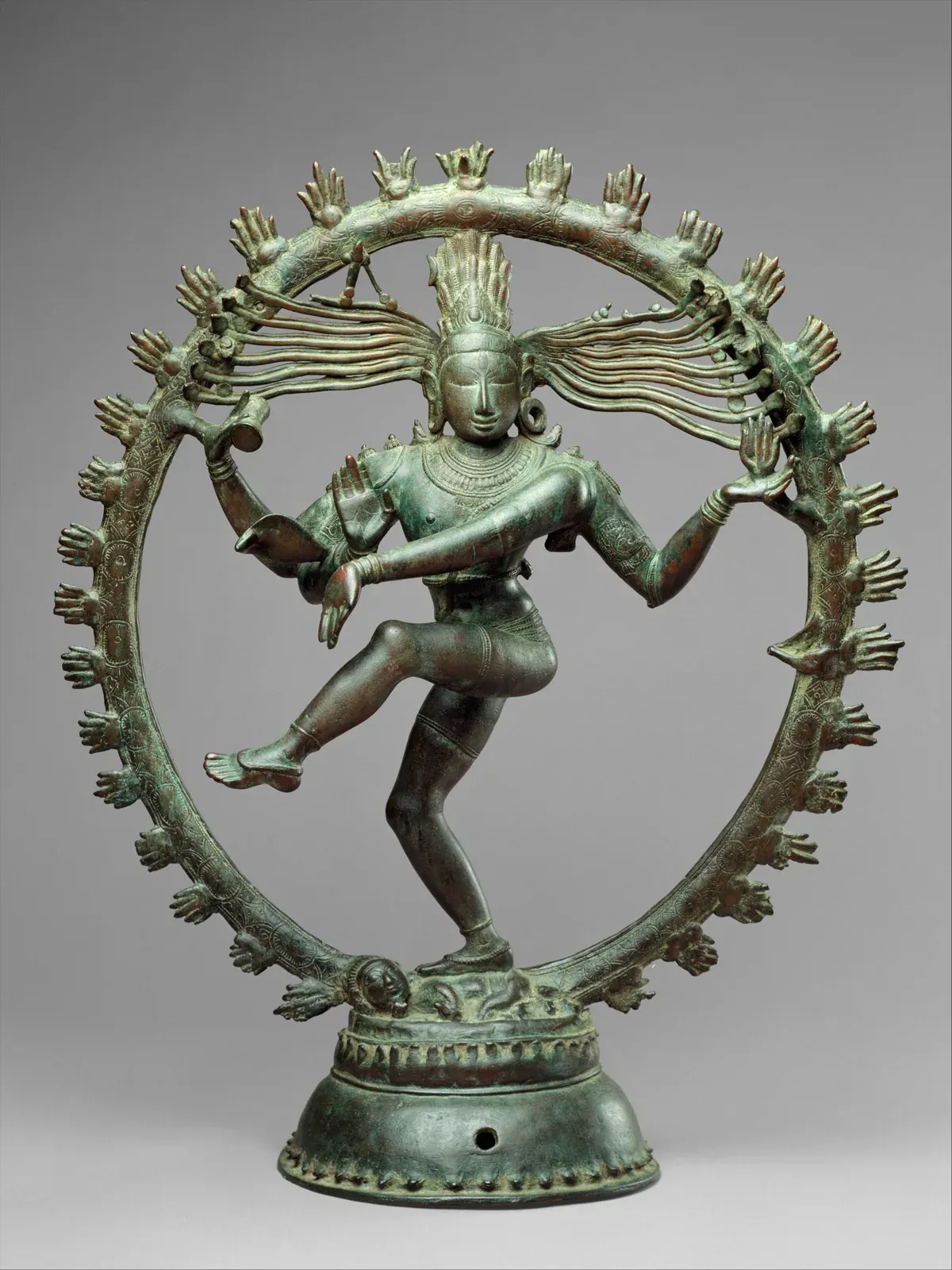
Shiva as Lord of Dance in a Chola-period bronze
Visual artCA0321

Shiva as Lord of Dance in a Chola-period bronze

Tamil Nadu, India; approximately late eleventh century · South Asia

This copper-alloy sculpture presents Shiva dancing within a ring of flame. Its gestures are not arbitrary decoration: the drum, fire, raised foot and reassuring hand form a visual account of creation, destruction and refuge. The Metropolitan Museum identifies the work as Chola-period sculpture from Tamil Nadu and explains the image through Hindu ideas about recurring cosmic time. A future reader can study how a still object makes movement visible, while learning why a religious image cannot be understood only as a pleasing arrangement of shapes. The museum's accession 1987.80.1 identifies this particular sculpture; it is one example of a much wider devotional and artistic tradition.

Why keep it · what to know

Why future people learn something: it connects sculptural balance and bodily gesture to religious ideas about time. The entry can teach readers to ask what an image does for worshippers, not merely what it resembles.

Keep in mind: The date concerns this object, not the beginning of Shiva worship. Hindu traditions differ, and a museum explanation is not every devotee's account. Do not present sacred imagery as an interchangeable decorative motif.

Photograph of the specific selected museum object; identity checked by object ID and accession.

Image: Indian (Tamil Nadu) / The Metropolitan Museum of Art. Gift of R. H. Ellsworth Ltd., in honor of Susan Dillon, 1987 · Public domain; Met Open Access · original
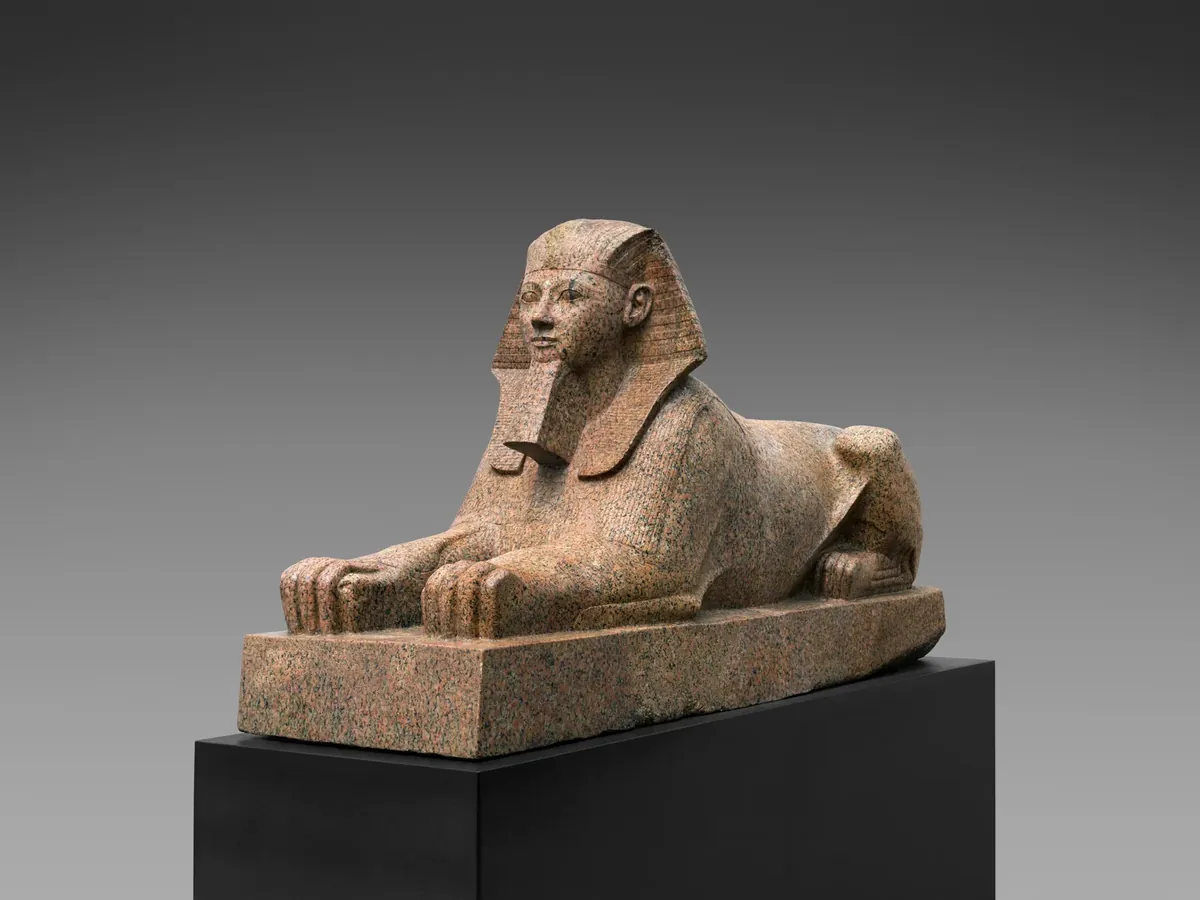
Sphinx of Hatshepsut
Visual artCA0322

Sphinx of Hatshepsut

Deir el-Bahri, Egypt; approximately 1473–1458 BCE, Dynasty 18 · North Africa

A lion's body supports the human head of Hatshepsut in this monumental granite sphinx. The royal headcloth and ceremonial beard communicate kingship rather than offering a straightforward everyday likeness. The Metropolitan Museum identifies it as one of several sphinxes from her mortuary temple at Deir el-Bahri. Its present appearance also tells a later story: excavators recovered broken pieces, and reconstruction brought the figure back into a legible form. A future viewer should therefore distinguish surviving ancient material from modern fills. The object can introduce both the visual language of Egyptian rule and the work by which damaged cultural objects become available to later audiences.

Why keep it · what to know

Why future people learn something: the figure invites discussion of how rulers represent authority, including how a woman could use established signs of kingship. Its reconstruction makes preservation decisions visible rather than concealing them.

Keep in mind: The selected museum object is accession 31.3.166, not the Great Sphinx at Giza. An idealized royal image is not a literal portrait of dress in ordinary life. Museum reconstruction includes missing areas filled with new material.

Photograph of the specific selected museum object; identity checked by object ID and accession.

Image: Unidentified artist / The Metropolitan Museum of Art. Rogers Fund, 1931 · Public domain; Met Open Access · original
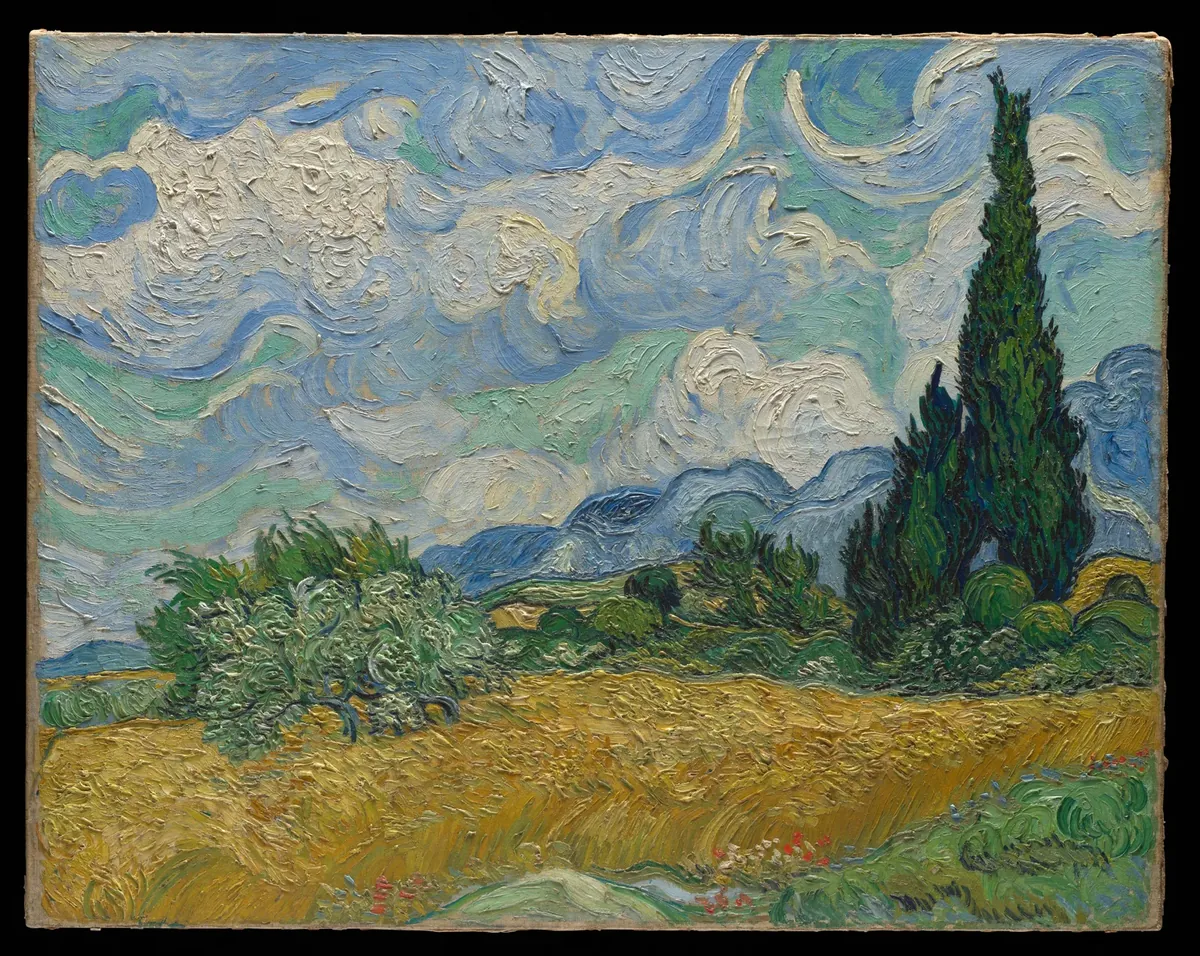
Wheat Field with Cypresses
Visual artCA0323

Wheat Field with Cypresses

Saint-Rémy, France; 1889 · Europe

Van Gogh's landscape places dark cypresses beside a wheat field beneath a sky animated by thick brushwork. The Metropolitan Museum identifies this canvas as an outdoor study from 1889 and distinguishes it from two later studio versions. That distinction matters in an archive: similar compositions may be separate works rather than duplicate photographs of one painting. The visible paint can help a future viewer consider how an artist turns an encounter with weather, trees and cultivated land into a deliberately worked surface. The painting also belongs to a network of correspondence and gifts, since Van Gogh described it to his brother and made a smaller version for family members.

Why keep it · what to know

Why future people learn something: this work offers a way to compare the experience of a landscape with its painted transformation. The related versions and letters show artistic work circulating through personal relationships as well as public collections.

Keep in mind: This entry identifies the Met canvas, accession 1993.132. Do not merge it with the National Gallery version. Expressive brushwork is not evidence from which to diagnose the artist's mental state.

Photograph of the specific selected museum object; identity checked by object ID and accession.

Image: Vincent van Gogh / The Metropolitan Museum of Art. Purchase, The Annenberg Foundation Gift, 1993 · Public domain; Met Open Access · original
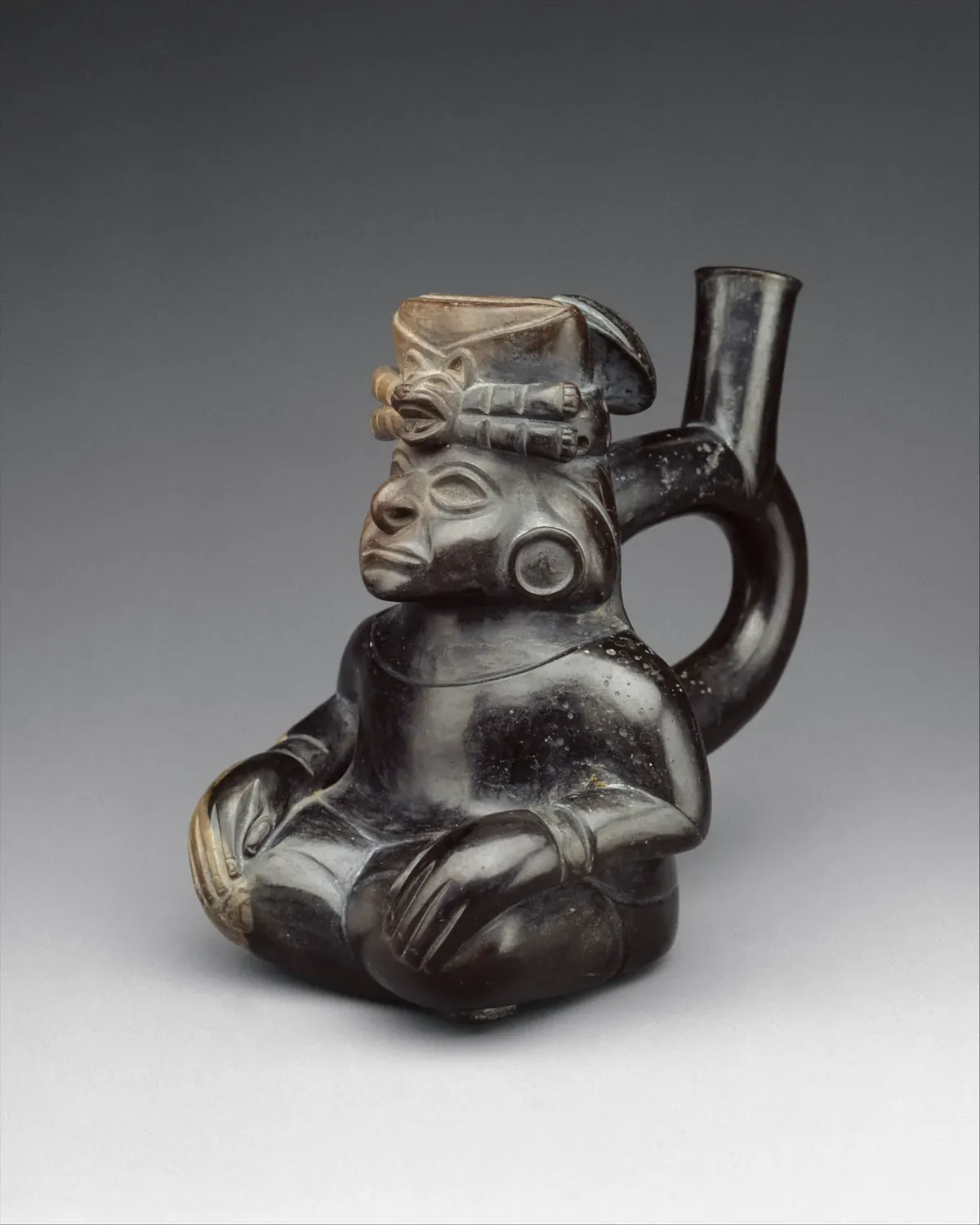
Moche stirrup-spout bottle with seated figure
Visual artCA0324

Moche stirrup-spout bottle with seated figure

Peru; 200–500 CE · South America

A seated person becomes the body of a ceramic bottle, joining a human image to a container. Above the figure, two branches meet in one spout, the form that modern catalogues call a stirrup spout. The figure wears a headdress with a small feline face. The Metropolitan Museum explains that such animal-fronted headgear may have indicated status or occupation, but does not identify this individual. This makes the bottle useful for teaching careful interpretation: visible details, plausible explanations and known names are different kinds of evidence. Preserve its shape and scale as well as its decoration, since the object was not simply a flat picture of a person.

Why keep it · what to know

Why future people learn something: a vessel can combine practical form, skilled modelling and social imagery. It also gives future readers practice in distinguishing what can be seen from what scholars infer.

Keep in mind: The bottle is accession 82.1.30. The meaning of the spout and headdress remains interpretive. Do not state the figure’s identity or an evaporation-prevention function as established fact.

Photograph of the specific selected museum object; identity checked by object ID and accession.

Image: Moche artist(s) / The Metropolitan Museum of Art. Gift of Henry G. Marquand, 1882 · Public domain; Met Open Access · original
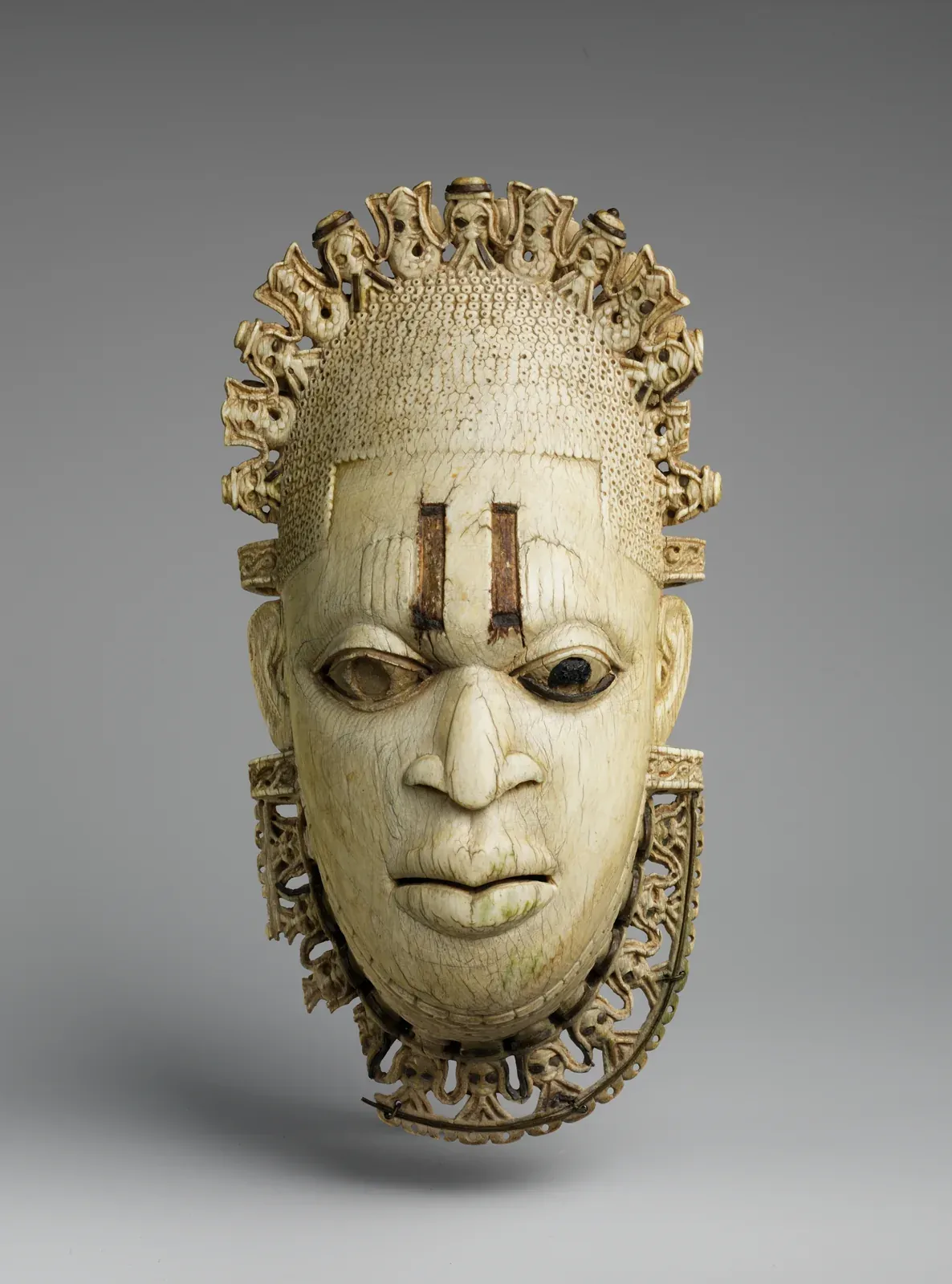
Pendant mask of Ìyọ́bà Idià
Visual artCA0352

Pendant mask of Ìyọ́bà Idià

Kingdom of Benin, present-day Nigeria; sixteenth century · West Africa

An idealised face is framed by carved details that connect a queen mother's memory with courtly and spiritual power. The Metropolitan Museum identifies this ivory pendant with Idia and explains that it was probably made for her son, Oba Esigie. Metal inlays and carved marks distinguish the forehead, while the surrounding ornament includes mudfish and Portuguese faces. These are not incidental decoration: the museum relates them to kingship, wealth and the sea. The object also belongs to a history disrupted by the British invasion of Benin in 1897 and the dispersal of palace art. A future archive should retain those relationships rather than detach the face as an anonymous luxury design.

Why keep it · what to know

Why future people learn something: It links a powerful woman, specialist court artists, symbolic materials and the consequences of colonial dispersal.

Keep in mind: The identification and original wearing occasion are qualified by the museum. Preserve provenance and contemporary Edo perspectives; an open image is not ownership of the culture.
Photograph of the specific selected museum object; identity checked by object ID and accession.

Image: Ìgbèsànmwà (ivory- and wood- carving guild) artists / The Metropolitan Museum of Art. The Michael C. Rockefeller Memorial Collection, Gift of Nelson A. Rockefeller, 1972 · Public domain; Met Open Access · original
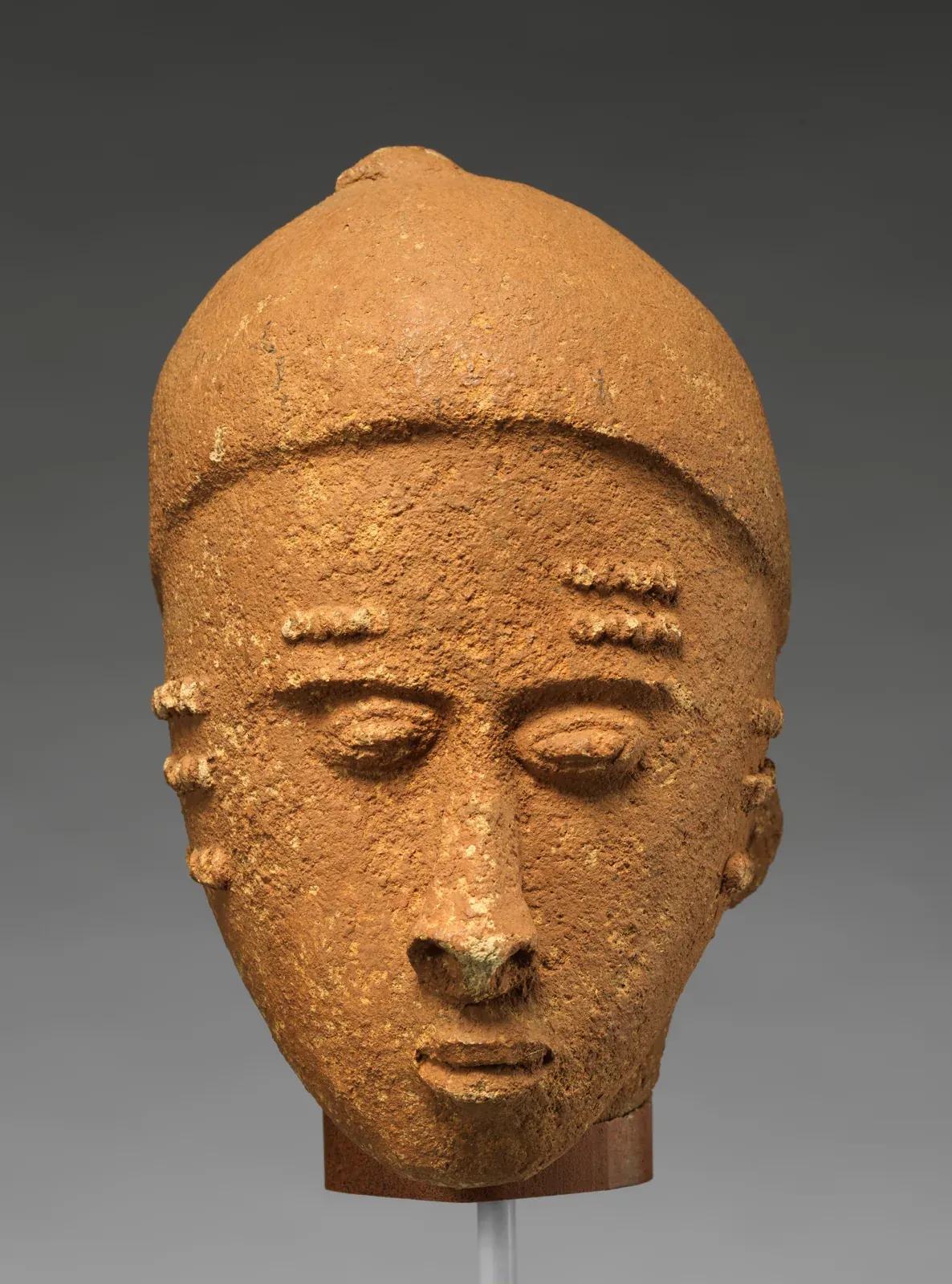
Aowin memorial head
Visual artCA0353

Aowin memorial head

Aowin traditional area, Ghana; eighteenth century · West Africa

A terracotta head presents a composed face, marked temples and a carefully arranged coiffure. The Metropolitan Museum identifies it as an Akan memorial portrait from the Aowin area, made in the eighteenth century. Its account explains that such images could join earlier rulers and attendants in a sacred cemetery, where offerings sustained relationships with ancestors. The portrait therefore needs more than a detached description of shape. Its calm expression belongs to an idealised public memory, not necessarily to a moment caught from life. Selecting this particular head, accession 2018.925.1, gives future audiences an opportunity to consider how communities make the dead present and how clay can carry expectations about exemplary conduct.

Why keep it · what to know

Why future people learn something: It expands portraiture beyond individual likeness to include collective remembrance and continuing relationships with ancestors.

Keep in mind: The maker's name and gender are not established. Do not convert a general history of women making memorial ceramics into a certain attribution for this object.

Photograph of the specific selected museum object; identity checked by object ID and accession.

Image: Akan artist / The Metropolitan Museum of Art. Gift of Samuel and Gabrielle Lurie, in celebration of the Museum's 150th Anniversary, 2018 · Public domain; Met Open Access · original
Mangaaka Power Figure, Met 2008.30
Visual artCA0354

Mangaaka Power Figure, Met 2008.30

Chiloango River region, Republic of the Congo or Cabinda, Angola; approximately 1880–1900 · Central Africa

A standing figure leans forward with hands on hips, its torso carrying many embedded metal elements. The Metropolitan Museum identifies a collaboration between a Yombe-Kongo sculptor and a ritual specialist, not a solitary maker producing decoration. Its account connects Mangaaka with enforcing agreements and addressing serious community disputes. An abdominal cavity once held substances essential to the figure's spiritual role, so the visible wooden body was only part of the work. For a future viewer, this object challenges the assumption that sculpture is primarily something to look at. Its stance, additions and ritual preparation belonged to social relationships and obligations whose meaning cannot be reconstructed from a dramatic photograph alone.
Why keep it · what to know

Why future people learn something: It makes collaborative authorship and the relation between art, law and community responsibility tangible.

Keep in mind: This is accession 2008.30, not every Mangaaka figure. Avoid sensational labels such as fetish or claims that current viewers can activate its original ritual power.
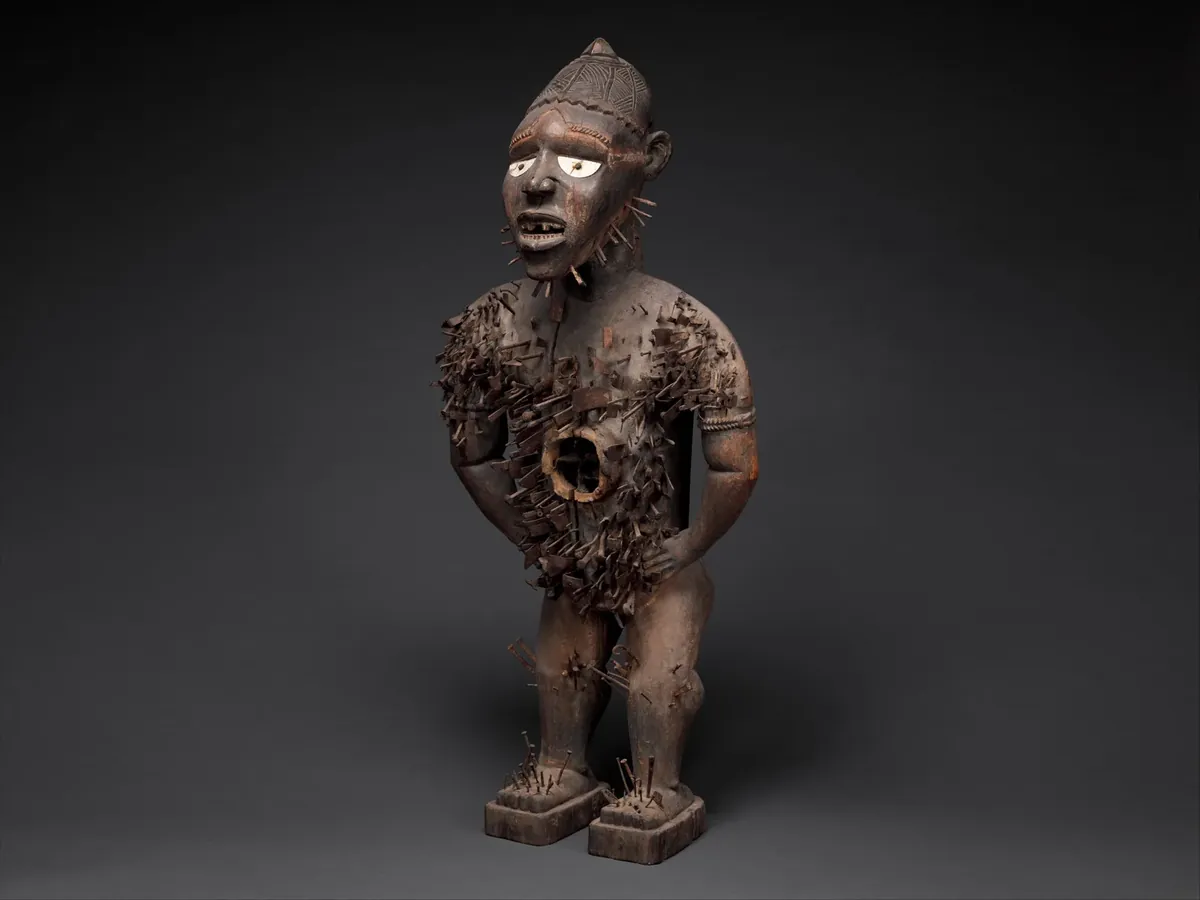
Photograph of the specific selected museum object; identity checked by object ID and accession.

Image: Yombe-Kongo artist and nganga (ritual specialist) / The Metropolitan Museum of Art. Purchase, Lila Acheson Wallace, Drs. Daniel and Marian Malcolm, Laura G. and James J. Ross, Jeffrey B. Soref, The Robert T. Wall Family, Dr. and Mrs. Sidney G. Clyman, and Steven Kossak Gifts, 2008 · Public domain; Met Open Access · original

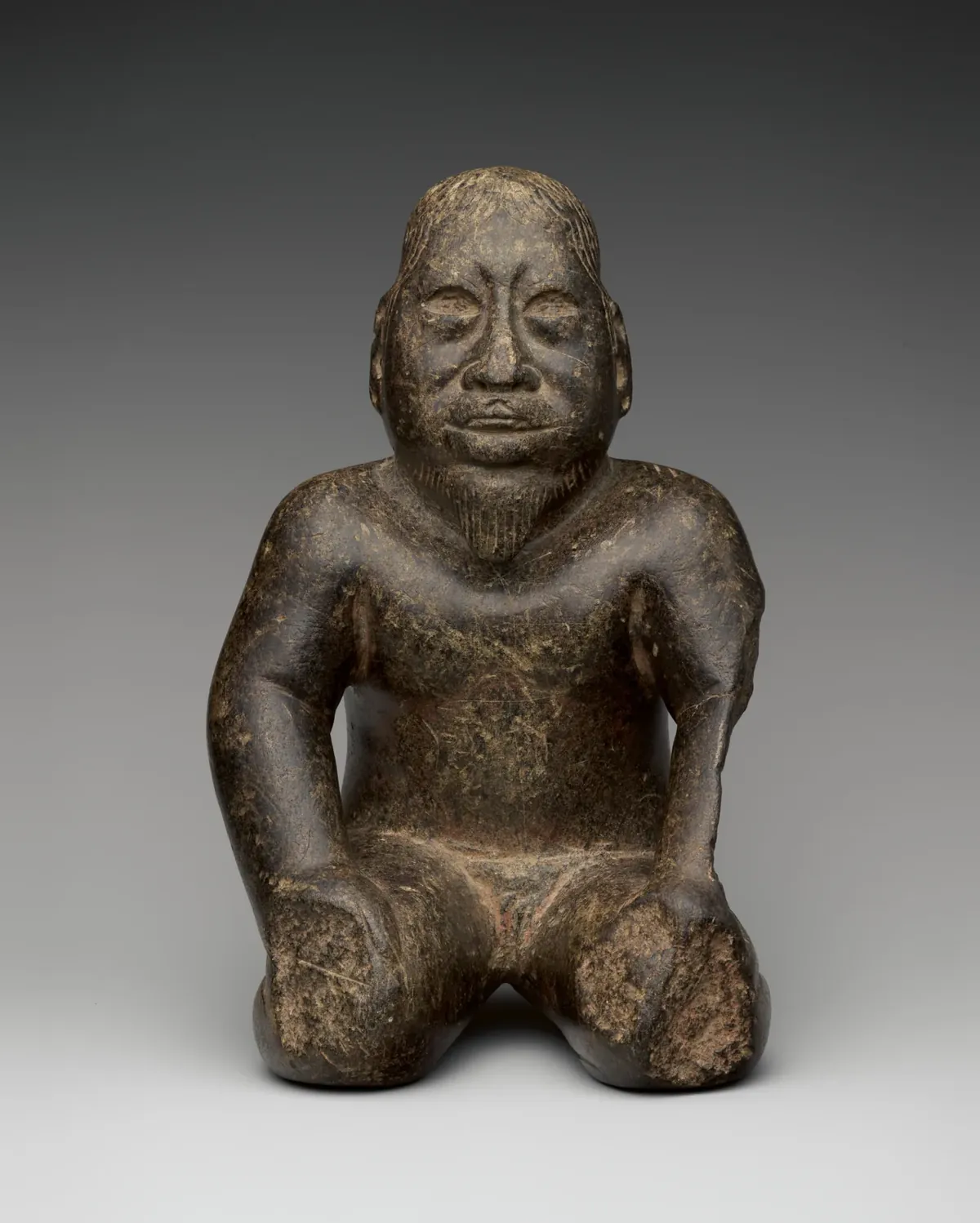
Kneeling bearded figure
Visual artCA0358

Kneeling bearded figure

Mesoamerica; approximately 900–400 BCE · Latin America

A small stone man kneels with his hands placed on his knees. Carefully modelled limbs and a bearded face make the body feel weighty despite the object's modest scale. The Metropolitan Museum identifies the material as serpentine with pigment and dates the work to approximately 900–400 BCE. Those facts distinguish it from the many greenstone objects loosely described as jade. The compact posture invites close looking rather than the distant viewing associated with a colossal monument. Future audiences could use the figure to compare different ways of giving a human body presence in stone, while retaining the important limit that neither the maker's name nor a complete account of the represented person's identity is established here.

Why keep it · what to know

Why future people learn something: It encourages attention to small-scale sculptural skill without requiring a famous named sitter or maker.

Keep in mind: Do not call the material jade or invent a royal, shamanic or portrait identity. Use accession 2017.443 to distinguish this specific figure.

Photograph of the specific selected museum object; identity checked by object ID and accession.

Image: Olmec artist(s) / The Metropolitan Museum of Art. Gift of Stephanie Bernheim, in memory of Leonard H. Bernheim Jr., and in celebration of the Museum's 150th Anniversary, 2017 · Public domain; Met Open Access · original

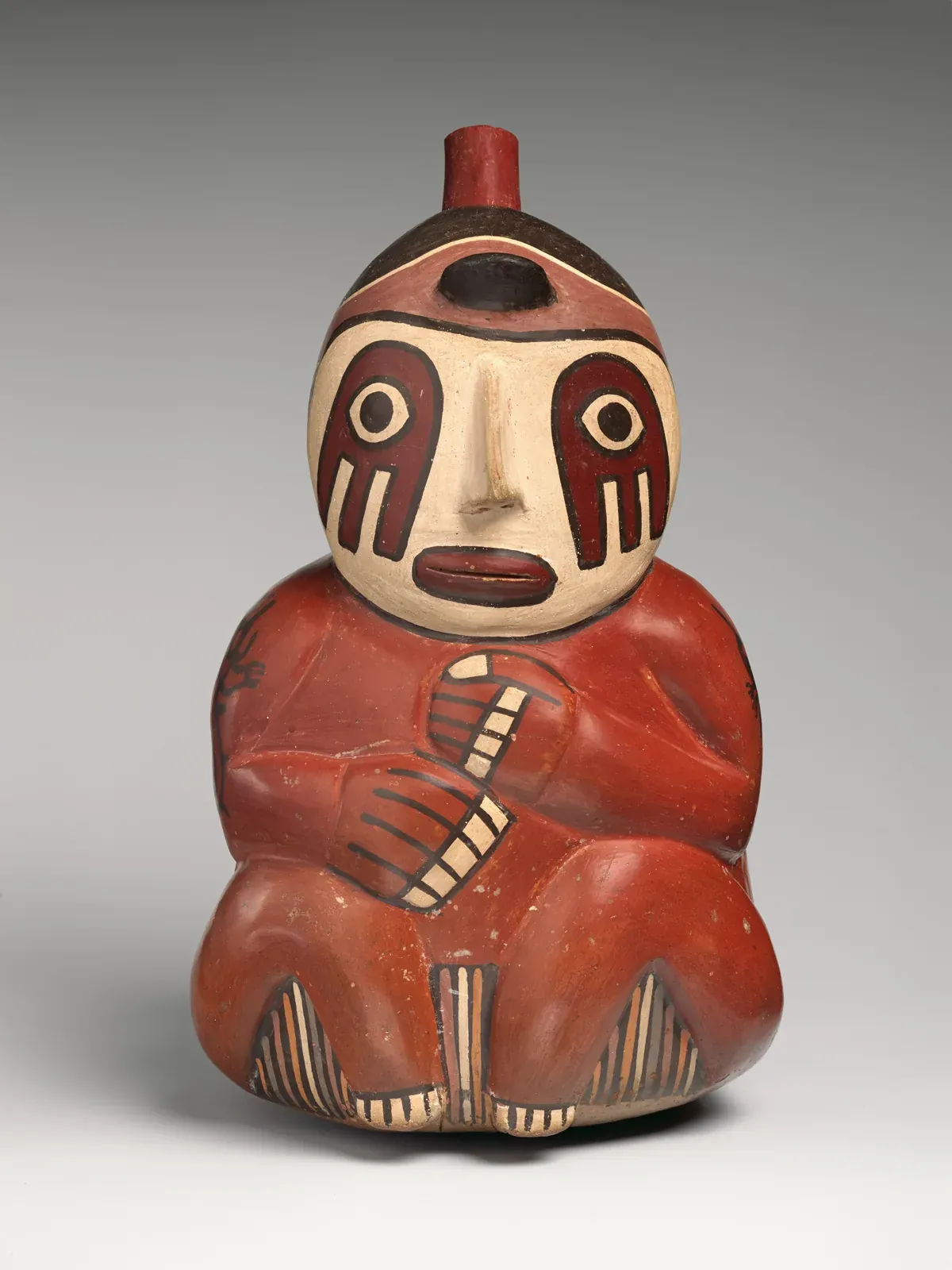
Nasca bottle with seated figure
Visual artCA0360

Nasca bottle with seated figure

South coast of Peru; 1–300 CE · Latin America

A seated human form becomes the body of a ceramic bottle, with a spout and connecting handle rising above it. The Metropolitan Museum explains that the vessel was built through coiling and modelling rather than a mould. Painted details distinguish fingers, toes, clothing and creatures associated with the sea. Its account proposes interpretations for the forehead feature and marine imagery but does not make every identification certain. This combination of container, body and painted surface gives future viewers several ways to approach one object. It can be read as skilled ceramic construction, as an image of a person and as evidence of attention to coastal life, without assuming that those categories were separate for its maker.

Why keep it · what to know

Why future people learn something: It connects practical form and visual storytelling while showing how uncertain iconography should be documented.

Keep in mind: This is Nasca accession 1978.412.53, distinct from the catalog’s Moche seated bottle. Proposed fisherman and marine-species identifications remain tentative.

Photograph of the specific selected museum object; identity checked by object ID and accession.

Image: Nasca artist(s) / The Metropolitan Museum of Art. The Michael C. Rockefeller Memorial Collection, Gift of Mr. and Mrs. Raymond Wielgus, 1960 · Public domain; Met Open Access · original

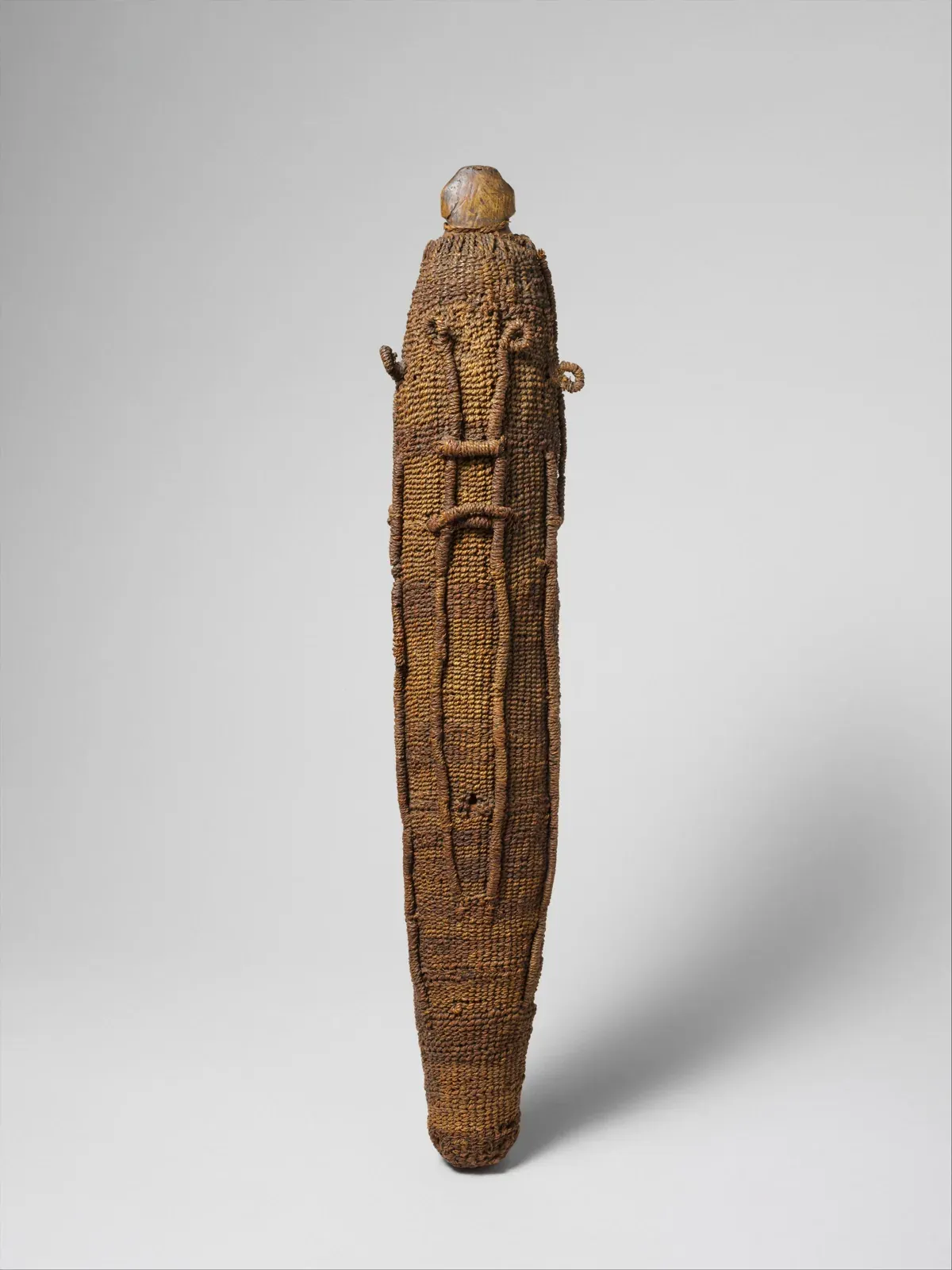
To'o ritual image, Met 1979.206.1481
Visual artCA0362

To'o ritual image, Met 1979.206.1481

Tahiti, Society Islands; eighteenth century · Oceania

A wrapped wooden form presents a body through tightly worked coconut fibre rather than anatomical modelling. The Metropolitan Museum identifies loops that suggest facial features and a depression associated with the navel. Its explanation connects the binding process, accompanied by words and actions, with making a temporary dwelling for a deity. Wood, fibre and feathers therefore belong to a meaningful material relationship, not merely to a list of ingredients. Future viewers can learn from the work's restraint without stripping away its religious significance. The selection challenges an archive to preserve what an object was understood to do as well as what a modern photograph makes visible, especially when the original ceremonial setting is absent.

Why keep it · what to know

Why future people learn something: It shows that a minimally described body can carry dense religious and material meaning.

Keep in mind: This is one eighteenth-century Tahitian object, not a universal Pacific deity image. Do not claim restricted ritual knowledge or treat it only as a precursor of modern abstraction.

Photograph of the specific selected museum object; identity checked by object ID and accession.

Image: Mā'ohi artist / The Metropolitan Museum of Art. The Michael C. Rockefeller Memorial Collection, Bequest of Nelson A. Rockefeller, 1979 · Public domain; Met Open Access · original

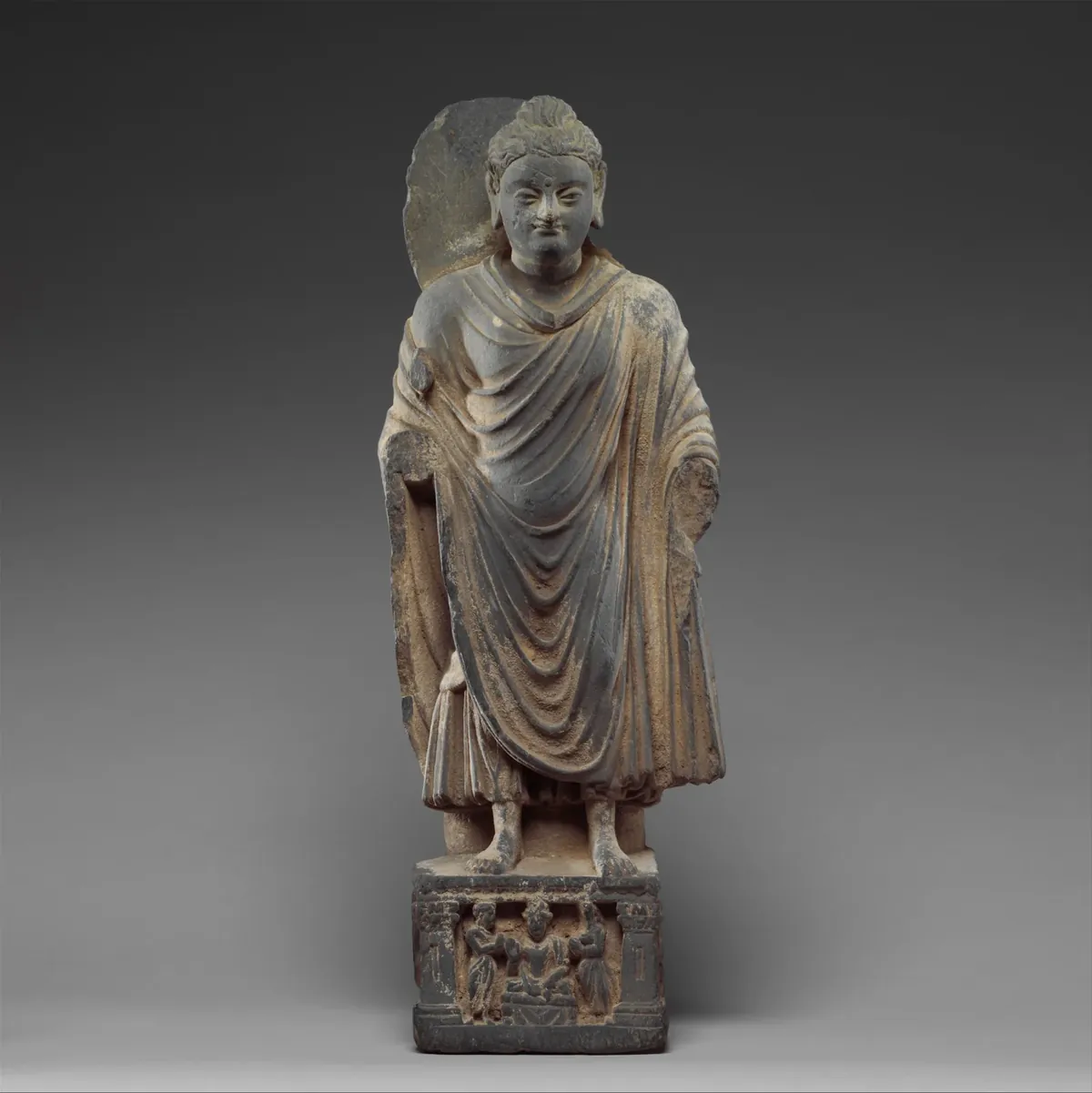
Standing Buddha from Gandhara, Met 67.154.5
Visual artCA0364

Standing Buddha from Gandhara, Met 67.154.5

Present-day Pakistan, ancient Gandhara; approximately third–fourth century CE · South Asia

A robed standing figure carries recognisable signs of the Buddha, including elongated earlobes and a mark on the forehead. The Metropolitan Museum identifies the stone as schist and dates the sculpture to approximately the third or fourth century. Its damaged right hand is interpreted as once making a reassuring gesture, an important distinction between surviving evidence and reconstruction. A smaller scene on the base includes a seated figure and people the museum suggests may be donors. Future viewers should therefore retain the whole sculpture rather than crop it to a face. The lower register and damaged areas reveal that an image can combine devotion, patronage and later physical change in one surviving object.

Why keep it · what to know

Why future people learn something: It teaches viewers to distinguish visible evidence, conventional iconography and cautious reconstruction of missing parts.

Keep in mind: The hand gesture and donor identification are interpretive. This specific Gandharan sculpture should not stand for all Buddhist images or all traditions of the region.

Photograph of the specific selected museum object; identity checked by object ID and accession.

Image: Pakistan (ancient region of Gandhara) / The Metropolitan Museum of Art. Bequest of Adra M. Newell, 1966 · Public domain; Met Open Access · original

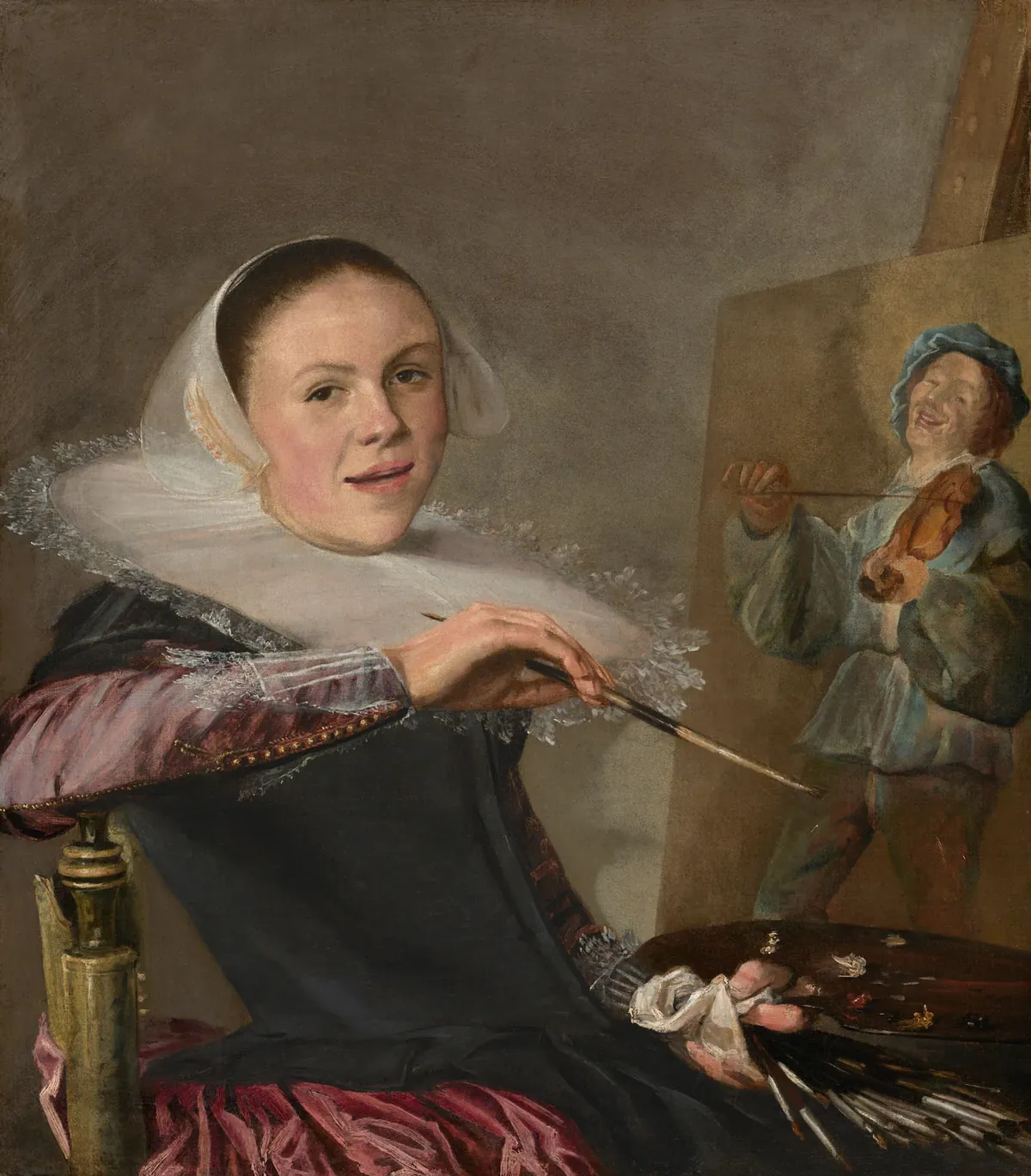
Self-Portrait at the easel
Visual artCA0369

Self-Portrait at the easel

Netherlands; approximately 1630 · Europe

Leyster turns from a painting of a violinist to meet the viewer, with a brush poised and further tools gathered in her other hand. Her relaxed pose suggests an interruption, but the elaborate clothing and skilfully rendered textures make the encounter carefully staged. The National Gallery of Art identifies the work as a self-portrait from around 1630 and connects it with her professional identity. The picture shows not only what she looked like but what she could do: paint figures, cloth, expression and a convincing social presence. Keeping the image within the history of her workshop and recognition helps prevent a future reader from treating a woman at an easel as an inexplicable exception.

Why keep it · what to know

Why future people learn something: It makes artistic work and professional self-presentation visible through a seemingly informal encounter.

Keep in mind: The apparently spontaneous scene is constructed. Attribution history includes confusion with Frans Hals; that history should not displace Leyster's authorship.

Official image of the selected painting, full composition.

Image: Judith Leyster; Courtesy National Gallery of Art, Washington. Gift of Mr. and Mrs. Robert Woods Bliss. · CC0; NGA Open Access · original

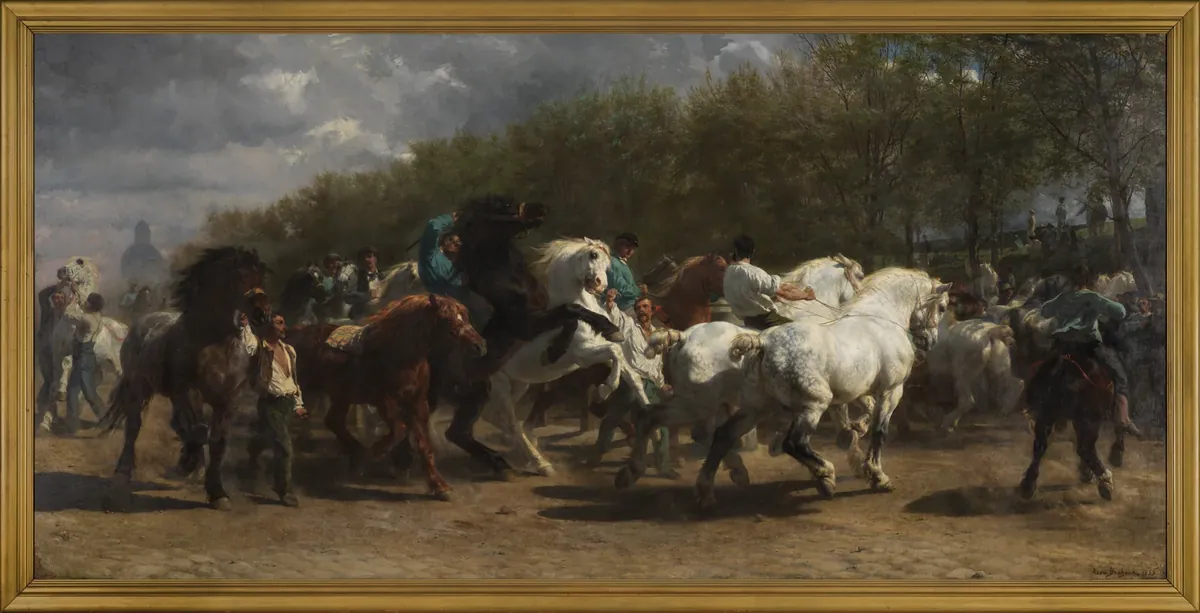
The Horse Fair
Visual artCA0375

The Horse Fair

Paris, France; 1852–1855 · Europe

Horses and handlers move through a broad market scene in which animal bodies dominate the action. The Metropolitan Museum locates the subject on the Boulevard de l'Hôpital in Paris and records Bonheur's repeated visits to sketch there. The painting combines those observations with an ambitious compositional scale and references to earlier art. Bonheur presented it at the Salon in 1853 and later retouched it, which explains the extended dating. For a culture archive, the work preserves more than the appearance of horses. It brings the trade in working animals, the physical labour of handling them and a painter's sustained study into view, while demonstrating that a familiar urban activity could become the subject of monumental painting.

Why keep it · what to know

Why future people learn something: It connects animal observation and ordinary commerce with an artist's claim to ambitious public painting.

Keep in mind: This is Met 87.25, not a smaller later version. The painting is composed from study, not a photograph of a single market moment.

Photograph of the specific selected museum object; identity checked by object ID and accession.

Image: Rosa Bonheur / The Metropolitan Museum of Art. Gift of Cornelius Vanderbilt, 1887 · Public domain; Met Open Access · original

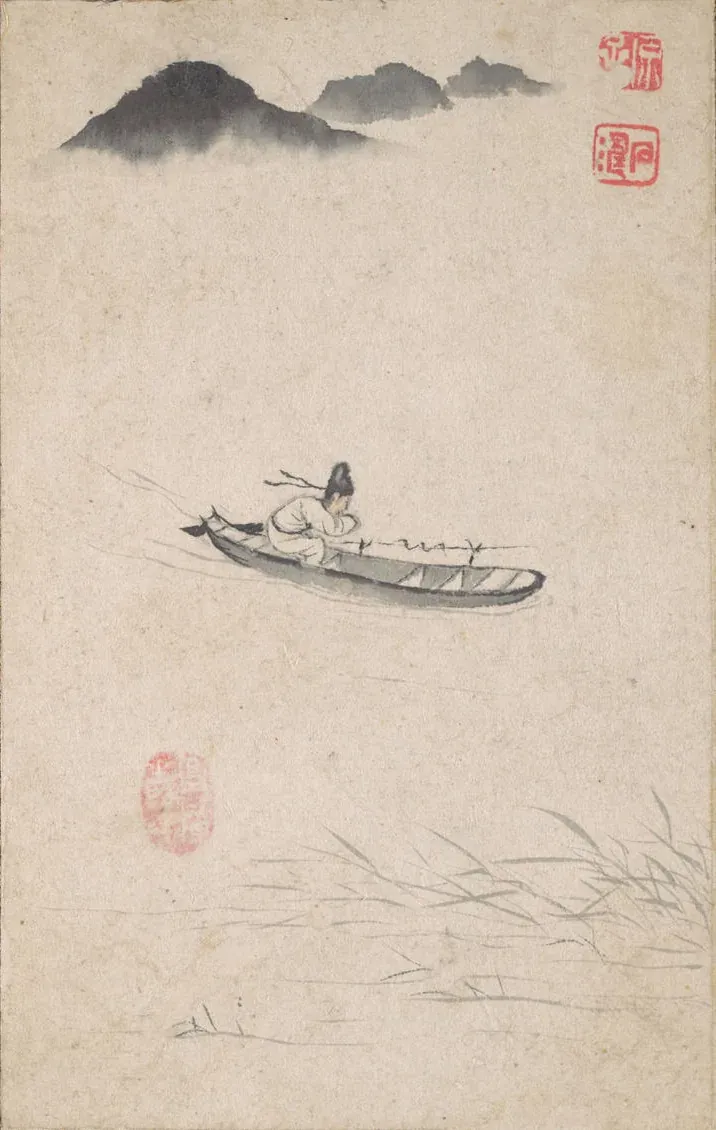
Returning Home
Visual artCA0395

Returning Home

China; Qing dynasty, circa 1695 · East Asia

Shitao’s Returning Home is an album in which landscapes, flowers, poetry, and seals participate in a sequence of encounters. Some pages open outward into terrain; others bring attention close to a plant or a few brushstrokes. Writing does not simply explain pictures from outside them: its rhythm and placement belong to the visual experience. The Metropolitan Museum connects the work with Shitao’s return to Yangzhou after years of movement, including a stay in Beijing. An archive should preserve the album’s order and page relationships rather than extracting only the most dramatic landscape. Its intimate format shows how looking could alternate between reading, remembering, observing nature, and appreciating the physical movement of a brush.

Why keep it · what to know

Why future people learn something: Sequence and page relationships are cultural information; an album can be damaged conceptually even when each isolated image survives.

Keep in mind: Cataloguing may count paired pages and leaves differently; preserve the complete album rather than multiplying its pages into separate selections. The title does not make every scene an autobiographical report.

One source-selected album leaf showing a small boat and figure; not complete preservation of the album or its page order.

Image: Shitao (Zhu Ruoji) / The Metropolitan Museum of Art. From the P. Y. and Kinmay W. Tang Family, Gift of Wen and Constance Fong, in honor of Mr. and Mrs. Douglas Dillon, 1976 · Public domain; Met Open Access · original

The Lovers
Visual artCA0400

The Lovers

Attributed to Isfahan, Iran; dated 1039 AH/1630 CE · West Asia

Riza-yi ‘Abbasi draws an embracing couple so closely together that their bodies seem to occupy one enclosing contour. The small painting uses opaque watercolour, ink, and gold on paper, bringing the precision of line into an intimate encounter rather than a public scene of royal achievement. The Metropolitan Museum dates it to 1630 and places it within the artist’s late career at the Safavid court. Its inclusion helps prevent a future archive from treating historical courtly cultures as concerned only with war, ceremony, or authority. Sensuality, closeness, and the pleasures of looking also belonged to their visual worlds, although one painting cannot tell us how every contemporary viewer understood them.

Why keep it · what to know

Why future people learn something: Historical art preserves intimacy and pleasure alongside official power; the two need not occupy entirely separate cultural worlds.

Keep in mind: The museum’s interpretation of changing attitudes under Shah Safi is not evidence that all people shared a single sexual morality. Avoid assigning identities or private biographies to the depicted couple.

Photograph of the specific selected museum object; identity checked by object ID and accession.

Image: Riza-yi 'Abbasi / The Metropolitan Museum of Art. Purchase, Francis M. Weld Gift, 1950 · Public domain; Met Open Access · original

Qur’an of Ibrahim Sultan
Visual artCA0401

Qur’an of Ibrahim Sultan

Probably Shiraz, Iran; dated 830 AH/1427 CE · West Asia

This Qur’an manuscript joins the visual discipline of naskh calligraphy with ink, colour, gold, and a leather binding. Its calligrapher, Ibrahim Sultan, was also the governor of Shiraz and a grandson of Timur. The Metropolitan Museum identifies the manuscript as signed and dated to 1427, making the ruler a practitioner of a demanding art rather than only its patron. The selection should preserve the book’s religious identity as well as its appearance. To reduce the pages to attractive patterns would erase the words, reading practices, and reverence that shaped their making. The manuscript also reminds future viewers that authority, devotion, and sustained manual skill could meet in the same person.

Why keep it · what to know

Why future people learn something: Patronage and personal artistic labour can overlap, while sacred writing requires preservation of meaning as well as visual form.

Keep in mind: This is Met 13.228.1, not another Qur’an associated with Ibrahim Sultan. Shiraz is probable rather than certain. A public-domain image does not remove the need for respectful handling of sacred text.

A source-selected manuscript page; no complete-book coverage claimed.

Image: Ibrahim Sultan / The Metropolitan Museum of Art. Gift of Alexander Smith Cochran, 1913 · Public domain; Met Open Access · original

Mihrab from the Madrasa Imami, Isfahan
Visual artCA0402

Mihrab from the Madrasa Imami, Isfahan

Isfahan, Iran; dated 755 AH/1354–55 CE · West Asia

Cut pieces of glazed tile form an architectural niche surrounded by calligraphy and interlacing ornament. Originally part of a religious school in Isfahan, this mihrab directed attention toward the direction of prayer rather than functioning as a freestanding sculpture. Its blue, turquoise, and white surfaces bring readable religious language into an elaborate material structure. The Metropolitan Museum dates it to 1354–55 and identifies the technique as mosaic assembled from individually cut tiles. Culture Ark should preserve a view of the whole niche, details of the joins and inscriptions, and an explanation of its original architectural function. Detached from its wall, the object remains visually powerful but no longer supplies its own complete setting.

Why keep it · what to know

Why future people learn something: Architecture, text, skilled fabrication, and bodily orientation can form one artwork; removal changes how that work communicates.

Keep in mind: The museum installation is not the original madrasa setting. Religious inscriptions should be translated accurately and not treated solely as abstract ornament. Do not infer the names or social identities of unrecorded makers.

Photograph of the specific selected museum object; identity checked by object ID and accession.

Image: Unidentified artist / The Metropolitan Museum of Art. Harris Brisbane Dick Fund, 1939 · Public domain; Met Open Access · original

Dish with Peacock Design
Visual artCA0404

Dish with Peacock Design

Iznik, present-day Türkiye; early 17th century · West Asia

A peacock occupies the centre of this painted stonepaste dish from Iznik. Its patterned body and surrounding ornament turn a familiar bird into a design fitted to a circular surface, while the transparent glaze integrates the painted colours with the vessel. The Metropolitan Museum dates the dish to the early seventeenth century and distinguishes it from objects intended for royal use. That modest distinction is a reason to preserve it, not a reason to overlook it. Culture also takes form in vessels that bring skilled decoration into less exalted settings. The dish offers a way to discuss pleasure, repetition, and workshop production without assuming that cultural significance always requires a unique imperial commission.

Why keep it · what to know

Why future people learn something: Everyday or nonroyal decorative objects can reveal a culture’s visual pleasures as clearly as elite commissions.

Keep in mind: The museum’s nonroyal classification does not identify the original owner or prove a specific household use. Do not assign a single fixed symbolic meaning to the peacock without further evidence.

Photograph of the specific selected museum object; identity checked by object ID and accession.

Image: Unidentified artist / The Metropolitan Museum of Art. Gift of Edward J. Wormley, 1965 · Public domain; Met Open Access · original

Fragments of a Carpet — Met 14.40.719
Visual artCA0405

Fragments of a Carpet — Met 14.40.719

Northern India or present-day Pakistan, Kashmir or Lahore; mid-17th century · South Asia

Interwoven flowers and vines remain sharply articulated across these surviving carpet fragments. The Metropolitan Museum identifies a silk foundation and fine wool pile, whose dense knotting permits unusually precise ornamental detail. Its catalogue connects the overall design with Persian carpet traditions while locating the work in a South Asian setting, possibly Kashmir or Lahore. The fragments preserve both accomplishment and incompleteness: what remains can demonstrate technical skill without allowing the entire original furnishing to be reconstructed with certainty. Including them gives Culture Ark a material account of cultural exchange, in which patterns travel but are remade through particular fibres, workshop practices, colour choices, and local circumstances rather than simply copied unchanged.

Why keep it · what to know

Why future people learn something: Fragments can preserve technical knowledge and evidence of exchange even when the complete object and its original setting are lost.

Keep in mind: The production location is uncertain between regions named by the museum. Avoid converting stylistic associations into a claim about the maker’s ethnicity, religion, or exact workshop.

Photograph of the specific selected museum object; identity checked by object ID and accession.

Image: Unidentified artist / The Metropolitan Museum of Art. Bequest of Benjamin Altman, 1913 · Public domain; Met Open Access · original

Moon Jar — Met 1979.413.1
Visual artCA0406

Moon Jar — Met 1979.413.1

Korea; Joseon dynasty, second half of the 18th century · East Asia

This white porcelain jar has a rounded body whose slight asymmetry and changing surface colour reward looking from more than one side. Moon jars were formed by joining two hemispherical sections, a process that helps explain why their contours do not settle into mechanical regularity. The Metropolitan Museum dates this example to the later eighteenth century. Its archive record can place the vessel beside later responses, including artist Lee Ufan’s appreciation of its openness and imperfection, while keeping that modern reading distinct from the unknown maker’s intentions. The jar offers a concentrated encounter with volume, joining, firing, and attention: ordinary material processes become visible through a form that initially seems very simple.

Why keep it · what to know

Why future people learn something: Aesthetic value may emerge from irregularity and making processes, while later artists can give old objects new interpretive lives.

Keep in mind: This is one specific jar, not a generic illustration of all Korean ceramics. Lee Ufan’s comments are a later artist’s interpretation, not direct evidence of eighteenth-century intent or a universal Korean philosophy.

Photograph of the specific selected museum object; identity checked by object ID and accession.

Image: Korea / The Metropolitan Museum of Art. The Harry G. C. Packard Collection of Asian Art, Gift of Harry G. C. Packard, and Purchase, Fletcher, Rogers, Harris Brisbane Dick, and Louis V. Bell Funds, Joseph Pulitzer Bequest, and The Annenberg Fund Inc. Gift, 1975 · Public domain; Met Open Access · original

Every pick has its own page

421 Culture Ark pages on Apiary, one per pick, plus the Noah’s Ark articles.

Noah’s Ark: Knowledge Ark + Culture Ark 10
Architecture & places 41
Craft & material culture 6
Dance 12
Fashion & adornment 53
Festivals & rituals 20
Film & animation 22
Food & drink 62
Games & play 11
Internet & digital culture 41
Literature & writing 21
Music 63
Ordinary life 51
Theatre & performance 4
Visual art 14

How it was made

AI research teams proposed candidates; each pick was checked against the sources linked on its card, and every picture is credited with its license. Picks are a curated starting point, not a ranking of cultures. The full list of 2,000, chosen by a three-judge AI vote, is on Apiary, next to the Knowledge Ark, the practical lists for rebuilding.

🛠 Explore the Knowledge Ark → The full 2,000 culture list →