




Standing Buddha from Gandhara, Met 67.154.5
CA0364 · Visual art · Present-day Pakistan, ancient Gandhara; approximately third–fourth century CE
Historical / contextual reference
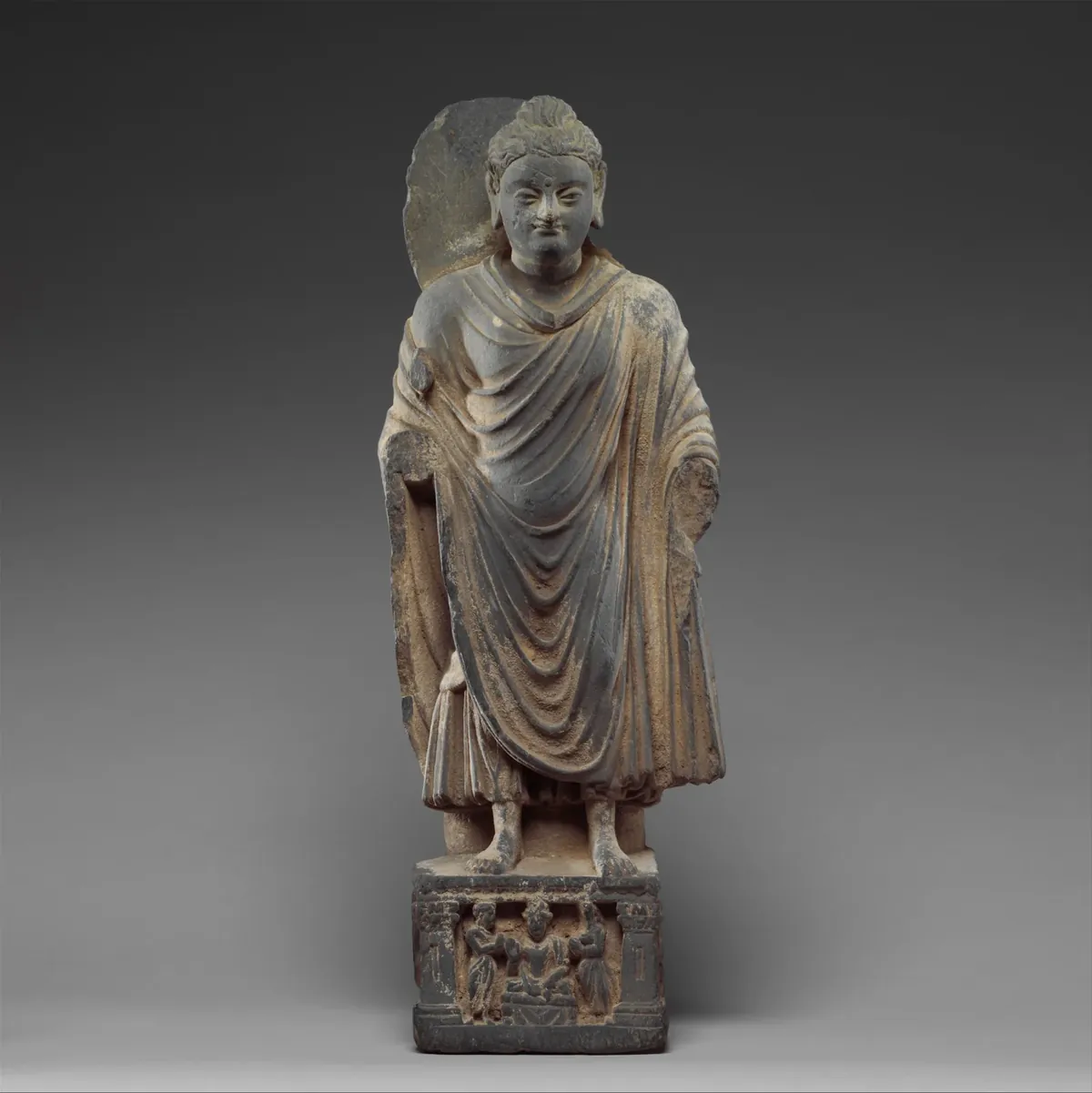
Photograph of the specific selected museum object; identity checked by object ID and accession.
Credit: Pakistan (ancient region of Gandhara) / The Metropolitan Museum of Art. Bequest of Adra M. Newell, 1966
Rights: Public domain; Met Open Access
A robed standing figure carries recognisable signs of the Buddha, including elongated earlobes and a mark on the forehead. The Metropolitan Museum identifies the stone as schist and dates the sculpture to approximately the third or fourth century. Its damaged right hand is interpreted as once making a reassuring gesture, an important distinction between surviving evidence and reconstruction. A smaller scene on the base includes a seated figure and people the museum suggests may be donors. Future viewers should therefore retain the whole sculpture rather than crop it to a face. The lower register and damaged areas reveal that an image can combine devotion, patronage and later physical change in one surviving object.
Why preserve it: Curatorial interpretation: It teaches viewers to distinguish visible evidence, conventional iconography and cautious reconstruction of missing parts.
Keep in mind: The hand gesture and donor identification are interpretive. This specific Gandharan sculpture should not stand for all Buddhist images or all traditions of the region.