



Self-Portrait at the easel
CA0369 · Visual art · Netherlands; approximately 1630
Historical / contextual reference
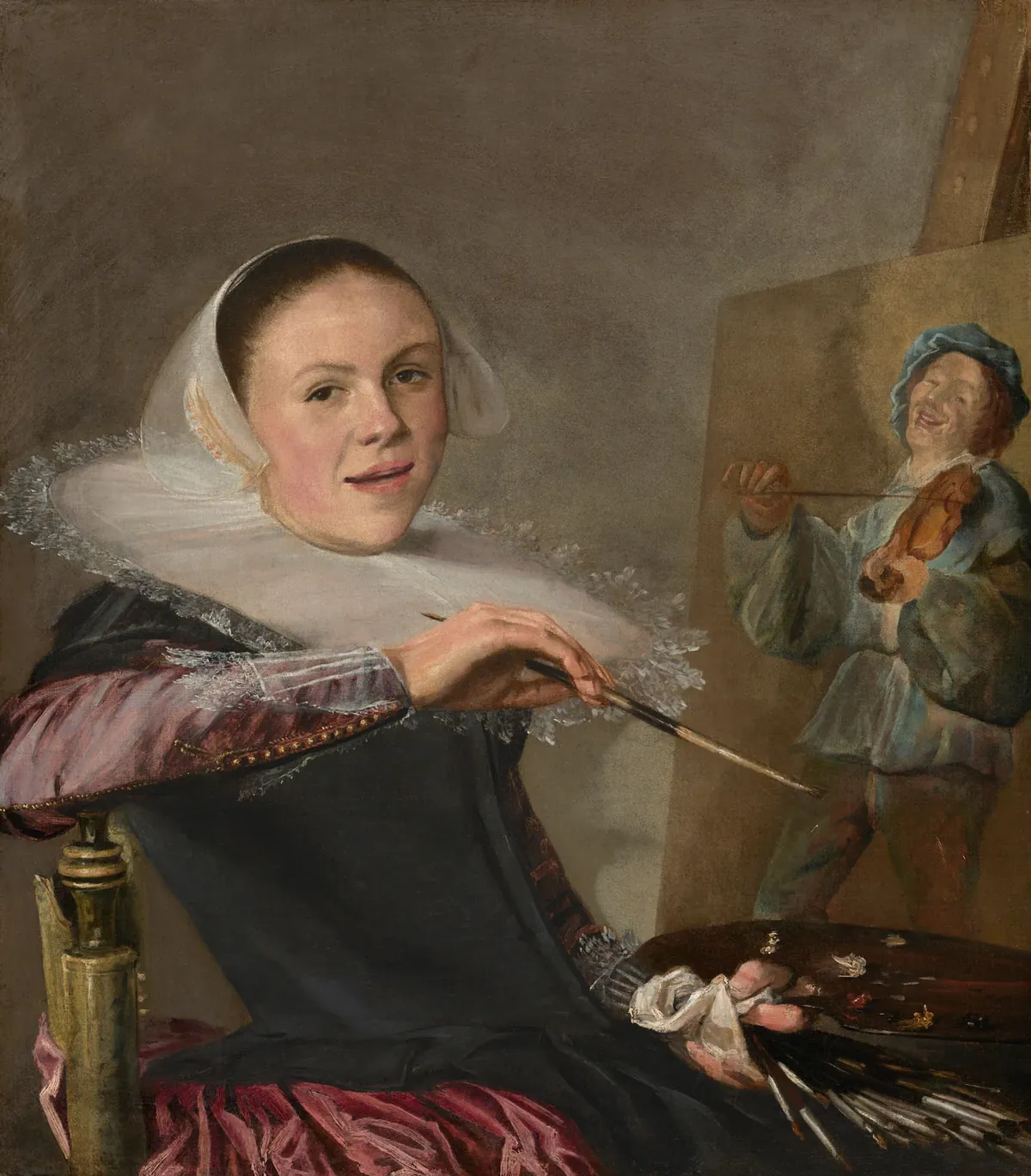
Official image of the selected painting, full composition.
Credit: Judith Leyster; Courtesy National Gallery of Art, Washington. Gift of Mr. and Mrs. Robert Woods Bliss.
Rights: CC0; NGA Open Access
Leyster turns from a painting of a violinist to meet the viewer, with a brush poised and further tools gathered in her other hand. Her relaxed pose suggests an interruption, but the elaborate clothing and skilfully rendered textures make the encounter carefully staged. The National Gallery of Art identifies the work as a self-portrait from around 1630 and connects it with her professional identity. The picture shows not only what she looked like but what she could do: paint figures, cloth, expression and a convincing social presence. Keeping the image within the history of her workshop and recognition helps prevent a future reader from treating a woman at an easel as an inexplicable exception.
Why preserve it: Curatorial interpretation: It makes artistic work and professional self-presentation visible through a seemingly informal encounter.
Keep in mind: The apparently spontaneous scene is constructed. Attribution history includes confusion with Frans Hals; that history should not displace Leyster's authorship.