




Georgian polyphonic singing
CA0032 · Music · Georgia; historical and contemporary multipart singing
Historical / contextual reference
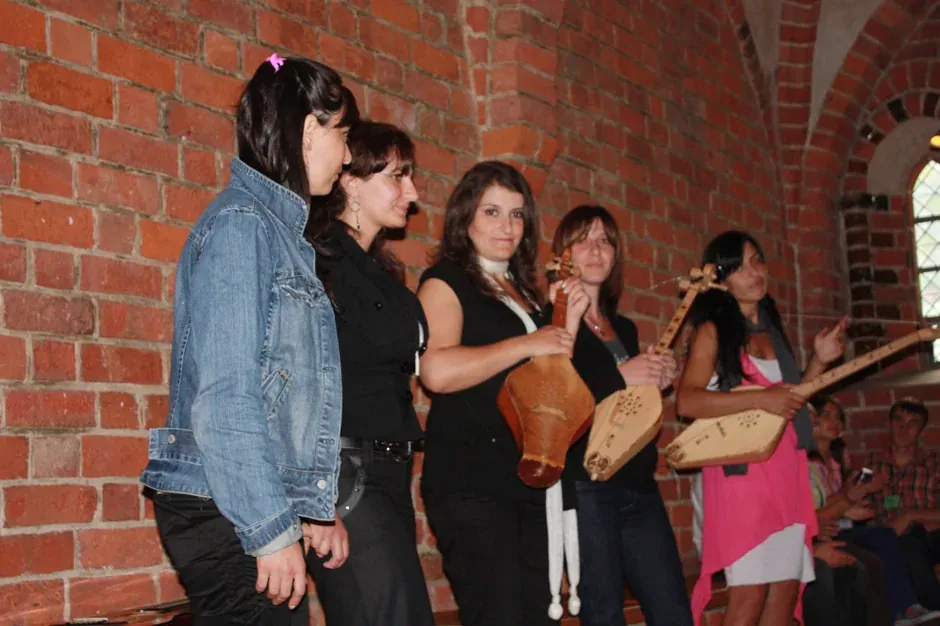
Specific contextual photograph or object image; not a license to reproduce any musical recording.
Credit: [https://www.flickr.com/people/40850931@N04 Climate Camp 2009 L�gumkloster]
Rights: CC BY-SA 2.0
Georgian polyphonic singing places distinct vocal parts together rather than assigning everyone the same melody. UNESCO describes several regional forms, including dialogue over a bass and contrasting partly improvised voices. Songs have accompanied field work, ceremonies and other areas of everyday life, while Georgian church singing also developed a strong polyphonic tradition. This entry asks future listeners to hear differences within the national label. The relationship between voices can be as important as a memorable tune. Archival recordings preserve examples, but the ability to balance, enter and respond still requires people who know how to sing with other people.
Why preserve it: Curatorial interpretation: Multipart singing makes coordination audible and shows why preserving individual melodies is not enough to preserve an ensemble practice.
Keep in mind: Regional and sacred/secular differences should not be flattened. Source classifications are summaries rather than exhaustive music theory.