




Yoga as a cultural and philosophical practice
CA0009 · More culture · India and international transmission; ancient roots and living practices, UNESCO inscription 2016
Historical / contextual reference
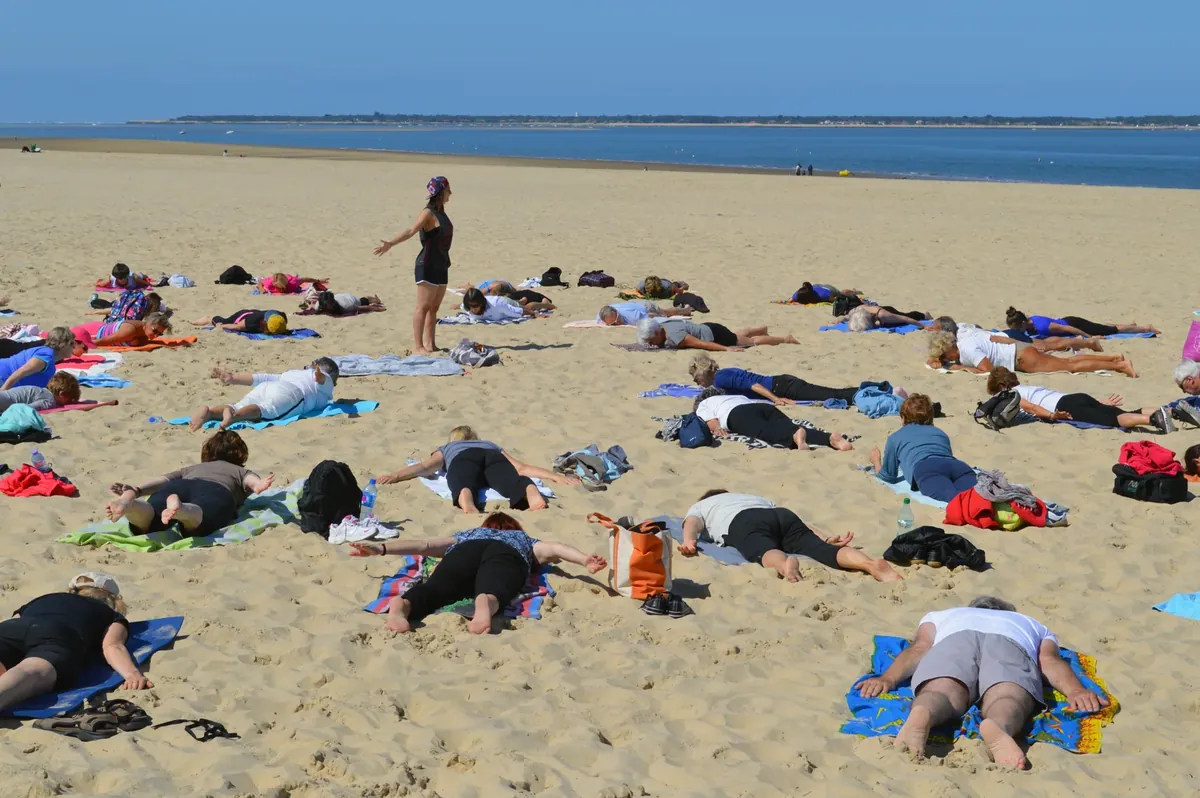
Modern postural-yoga class on a French beach, 2015; illustrates international adaptation, not all Indian yoga traditions.
Credit: DimiTalen
Rights: CC0
Yoga belongs in a cultural archive because it connects ideas about the person with disciplined practice and teaching. UNESCO’s account includes bodily postures, meditation, breathing practices and chanting, together with aims of self-realization and liberation. It also records the importance of relationships between teacher and pupil, alongside learning through ashrams, schools, books and newer media. A photograph of a posture captures only a small portion of this heritage. Future readers should also encounter the language, texts and explanations through which practitioners understood what they were doing. This entry documents yoga as cultural expression and philosophical inquiry, rather than offering a routine to follow or making claims about medical treatment.
Why preserve it: It shows how people joined bodily action, attention, spiritual aspirations and systems of authority in teaching.
Keep in mind: Yoga encompasses differing traditions and modern adaptations; no single pose represents them all. Historical or spiritual aims are not clinical evidence. This is not exercise instruction or health advice.