




Kente weaving
CA0008 · More culture · Ghana; living textile practice, UNESCO inscription 2024
Historical / contextual reference
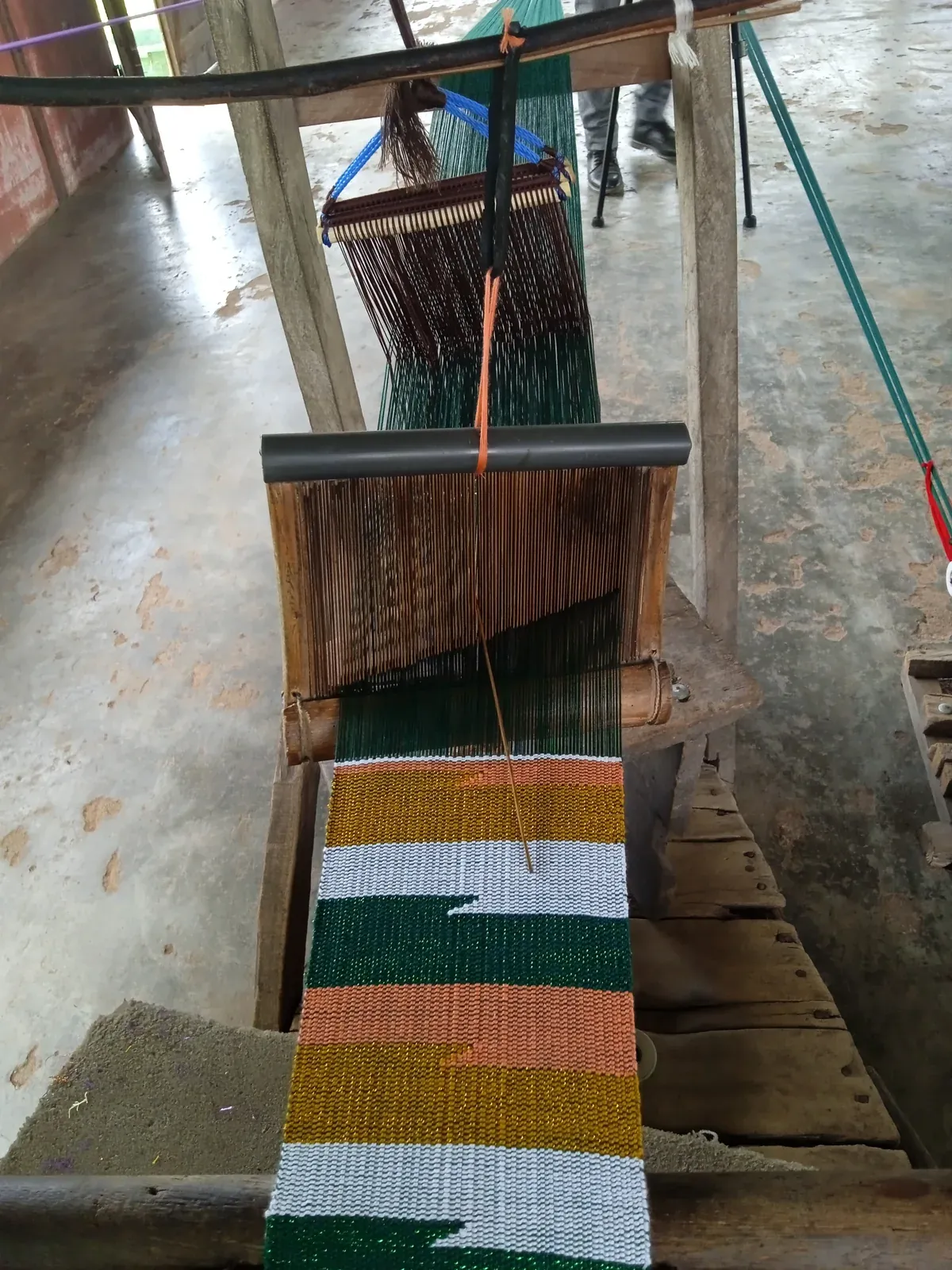
Contextual documentary image, not a reproduction of any linked recording or film.
Credit: Warmglow
Rights: CC0
Kente is a woven textile assembled from narrow strips made on horizontal looms. Its materials may include cotton, silk or rayon, while its colours and designs communicate more than decoration. UNESCO describes named cloths associated with proverbs, sayings and social situations, and choices influenced by the wearer’s circumstances. Learning involves families, apprenticeships, institutions and public cultural events. The cloth therefore records both skilled handwork and systems for passing knowledge between people. A useful future archive would retain a weaver’s explanation alongside a photograph of a finished cloth. Without that explanation, viewers might admire the geometric surface while missing the histories, social relationships and messages that make a particular textile meaningful.
Why preserve it: It makes clothing legible as communication, skilled labour and community history.
Keep in mind: Identify the specific weaving community and cloth whenever possible. Do not assign universal meanings to colours or treat a generic printed pattern as equivalent to handwoven kente.