




Día de los Muertos in Indigenous communities of Mexico
CA0007 · More culture · Mexico; living annual observances around late October and early November
Historical / contextual reference
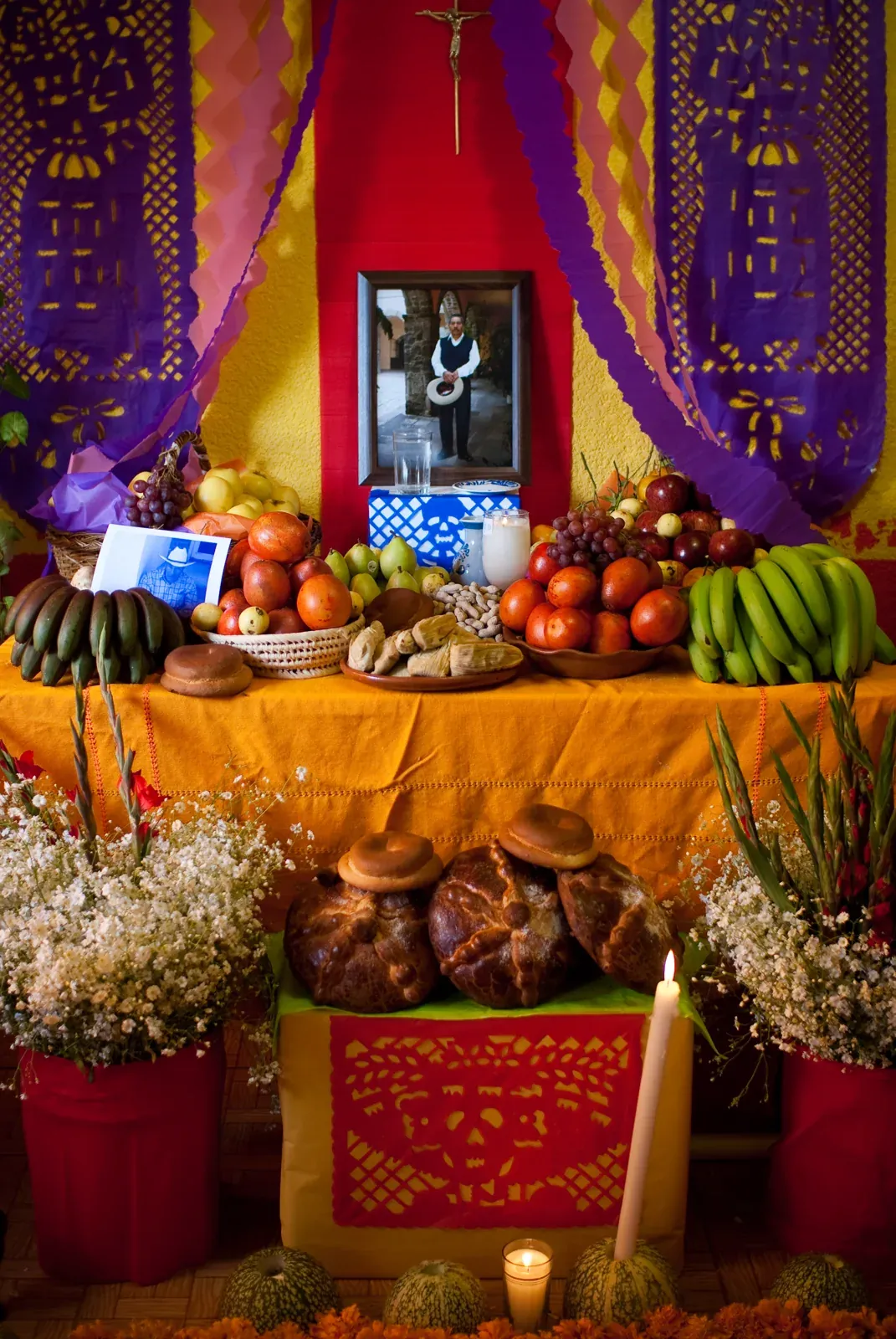
Contextual documentary image, not a reproduction of any linked recording or film.
Credit: Eneas de Troya
Rights: CC BY 2.0
Día de los Muertos joins remembrance to the practical work of preparing food, decorating spaces and receiving loved ones. In the Indigenous celebrations described by UNESCO, families welcome the temporary return of deceased relatives through offerings, flowers, candles and favourite dishes. Activities link homes and cemeteries, while the seasonal setting also connects remembrance to the maize-growing cycle. The celebration brings Indigenous belief systems into relationship with Catholic feast days introduced during colonial rule. Preserving this practice means preserving differences between communities, not only a familiar image of a decorated skull. A future visitor should ask who is remembered, who prepares the offerings and what a family believes its obligations to the dead include.
Why preserve it: It reveals grief and memory as shared cultural work rather than only private emotion.
Keep in mind: This entry concerns diverse Indigenous observances, not a single uniform national ritual. Accounts of origins are debated; do not present the modern festival as an unchanged pre-Hispanic survival.