




Washoku and Japanese New Year food traditions
CA0006 · More culture · Japan; living food tradition, UNESCO inscription 2013
Historical / contextual reference
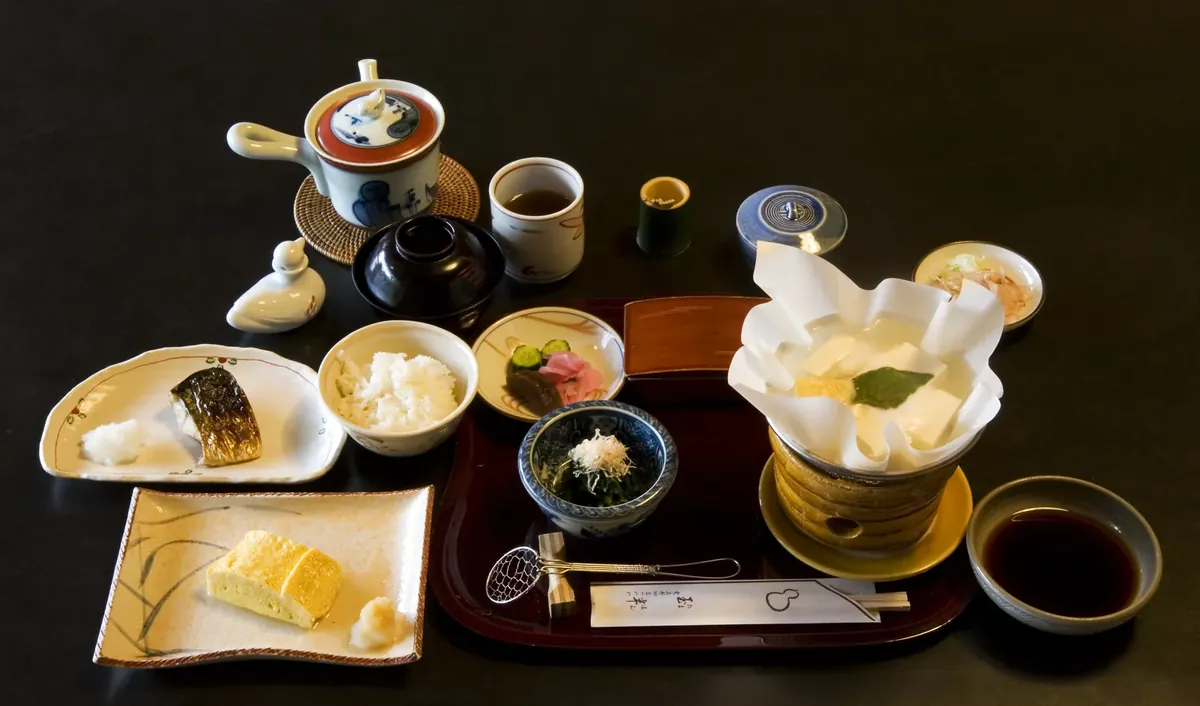
Contextual ryokan breakfast, not a depiction of every washoku tradition.
Credit: MichaelMaggs
Rights: CC BY-SA 3.0
Washoku is more than a menu of famous Japanese dishes. It includes the knowledge used to select ingredients, prepare meals, arrange food and share it with others. New Year celebrations make these relationships particularly visible: rice is pounded into cakes, symbolic foods are prepared, and special tableware helps turn eating into a shared occasion. The UNESCO account emphasizes locally available ingredients, including rice, fish, vegetables and wild plants, and the passing of skills through family meals and education. A future reader should look at the arrangement of a table as well as the contents of a bowl. Both can reveal how people connected seasonal change, hospitality, family relationships and ideas about nature.
Why preserve it: It shows how an everyday necessity could also carry seasonal symbolism and intergenerational teaching.
Keep in mind: Washoku does not describe every meal eaten in Japan. Regional and household practices differ; heritage recognition is not proof that a tradition is unchanging or that all its foods are sustainable.