




Sphinx of Hatshepsut
CA0322 · Visual art · Deir el-Bahri, Egypt; approximately 1473–1458 BCE, Dynasty 18
Historical / contextual reference
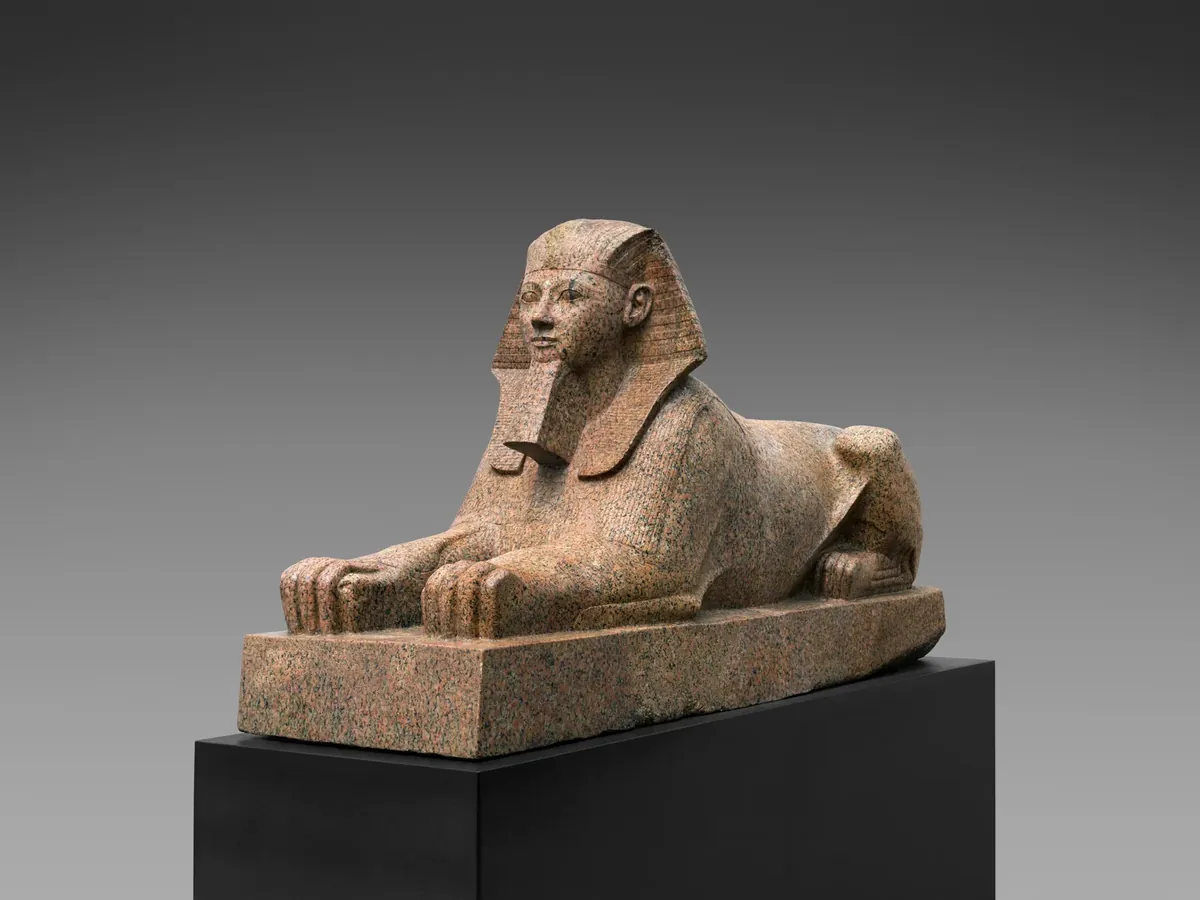
Photograph of the specific selected museum object; identity checked by object ID and accession.
Credit: Unidentified artist / The Metropolitan Museum of Art. Rogers Fund, 1931
Rights: Public domain; Met Open Access
A lion's body supports the human head of Hatshepsut in this monumental granite sphinx. The royal headcloth and ceremonial beard communicate kingship rather than offering a straightforward everyday likeness. The Metropolitan Museum identifies it as one of several sphinxes from her mortuary temple at Deir el-Bahri. Its present appearance also tells a later story: excavators recovered broken pieces, and reconstruction brought the figure back into a legible form. A future viewer should therefore distinguish surviving ancient material from modern fills. The object can introduce both the visual language of Egyptian rule and the work by which damaged cultural objects become available to later audiences.
Why preserve it: Curatorial interpretation: the figure invites discussion of how rulers represent authority, including how a woman could use established signs of kingship. Its reconstruction makes preservation decisions visible rather than concealing them.
Keep in mind: The selected museum object is accession 31.3.166, not the Great Sphinx at Giza. An idealized royal image is not a literal portrait of dress in ordinary life. Museum reconstruction includes missing areas filled with new material.