




Shiva as Lord of Dance in a Chola-period bronze
CA0321 · Visual art · Tamil Nadu, India; approximately late eleventh century
Historical / contextual reference
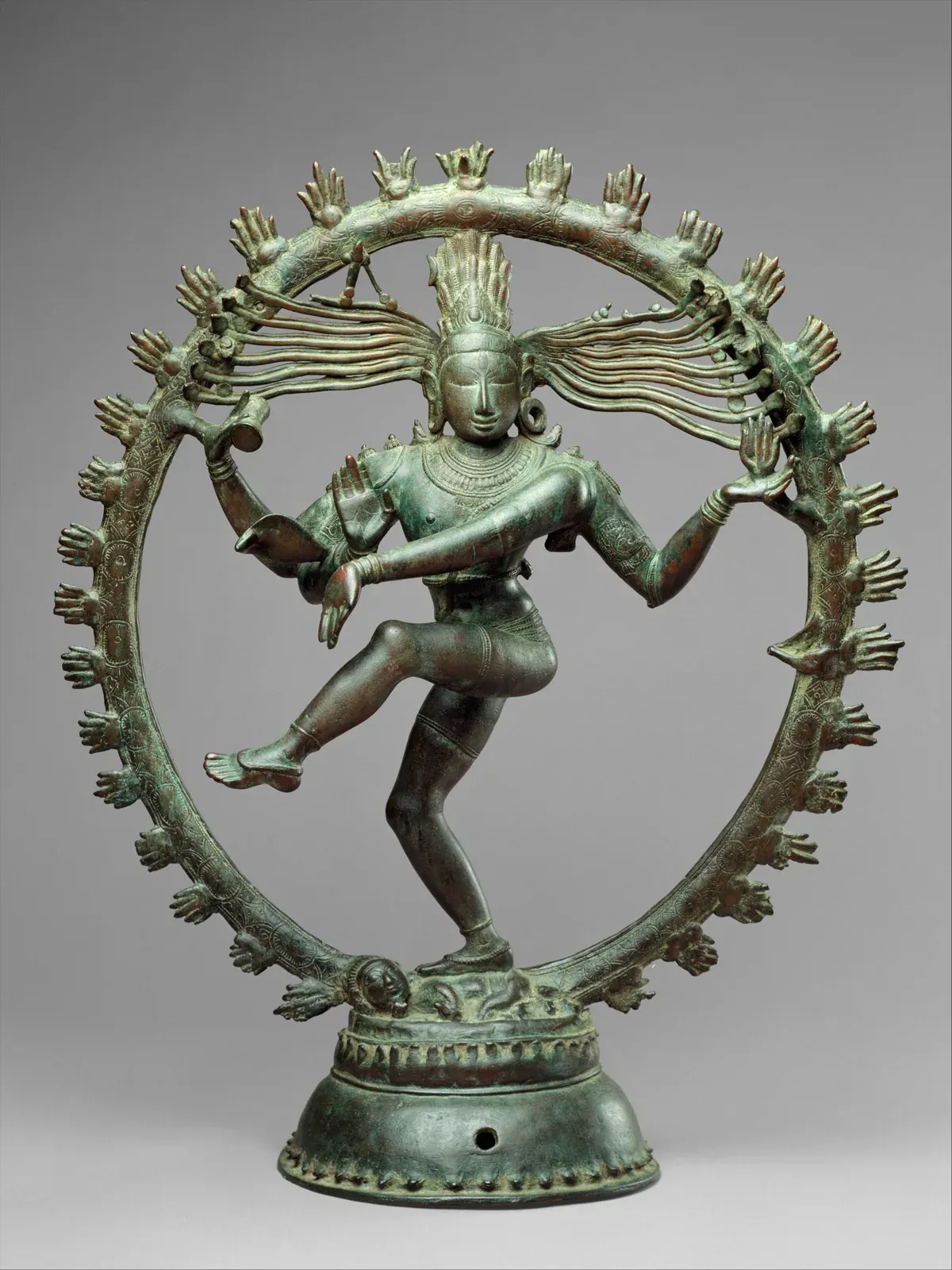
Photograph of the specific selected museum object; identity checked by object ID and accession.
Credit: Indian (Tamil Nadu) / The Metropolitan Museum of Art. Gift of R. H. Ellsworth Ltd., in honor of Susan Dillon, 1987
Rights: Public domain; Met Open Access
This copper-alloy sculpture presents Shiva dancing within a ring of flame. Its gestures are not arbitrary decoration: the drum, fire, raised foot and reassuring hand form a visual account of creation, destruction and refuge. The Metropolitan Museum identifies the work as Chola-period sculpture from Tamil Nadu and explains the image through Hindu ideas about recurring cosmic time. A future reader can study how a still object makes movement visible, while learning why a religious image cannot be understood only as a pleasing arrangement of shapes. The museum's accession 1987.80.1 identifies this particular sculpture; it is one example of a much wider devotional and artistic tradition.
Why preserve it: Curatorial interpretation: it connects sculptural balance and bodily gesture to religious ideas about time. The entry can teach readers to ask what an image does for worshippers, not merely what it resembles.
Keep in mind: The date concerns this object, not the beginning of Shiva worship. Hindu traditions differ, and a museum explanation is not every devotee's account. Do not present sacred imagery as an interchangeable decorative motif.