




Great Mosque of Djenné
CA0017 · More culture · Djenné, Mali; present mosque reconstructed in 1906–1907 within a much older urban and religious setting
Historical / contextual reference
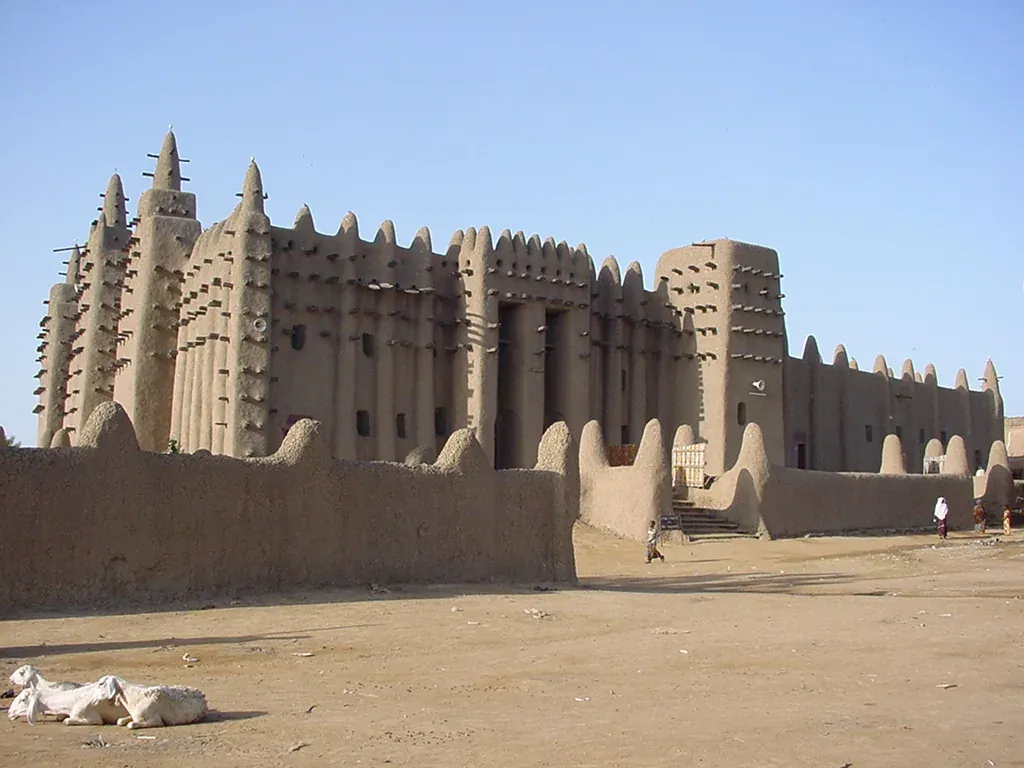
Photograph of the selected building.
Credit: Andy Gilham
Rights: CC BY-SA 3.0
The Great Mosque belongs to Djenné’s living townscape, not an isolated collection of ruins. UNESCO’s account places the town within trans-Saharan trade and the regional spread of Islam, and identifies the mosque’s 1906–1907 reconstruction as an expression of local religious architecture. Earthen buildings connect its monumental forms with the materials and skilled work of the surrounding settlement. The useful cultural object is therefore both a building and its relationship to a town. Preserve photographs with dates, architectural explanations and local accounts of care, rather than reducing the mosque to an exotic silhouette. Its history also reminds future readers that reconstruction can form part of heritage rather than automatically erase it.
Why preserve it: It demonstrates that architectural value can lie in earth, skilled upkeep, religious use and a coherent urban setting, not only in expensive permanent materials or isolated masterpieces.
Keep in mind: Do not date the current mosque to antiquity merely because Djenné has an ancient history. Accounts of the reconstruction’s colonial context differ; avoid an unsupported single-person authorship claim. This is a religious place, not a public stage.