




Go, also called Weiqi and Baduk
CA0016 · More culture · Originating in ancient China; long-established East Asian and modern global practice
Historical / contextual reference
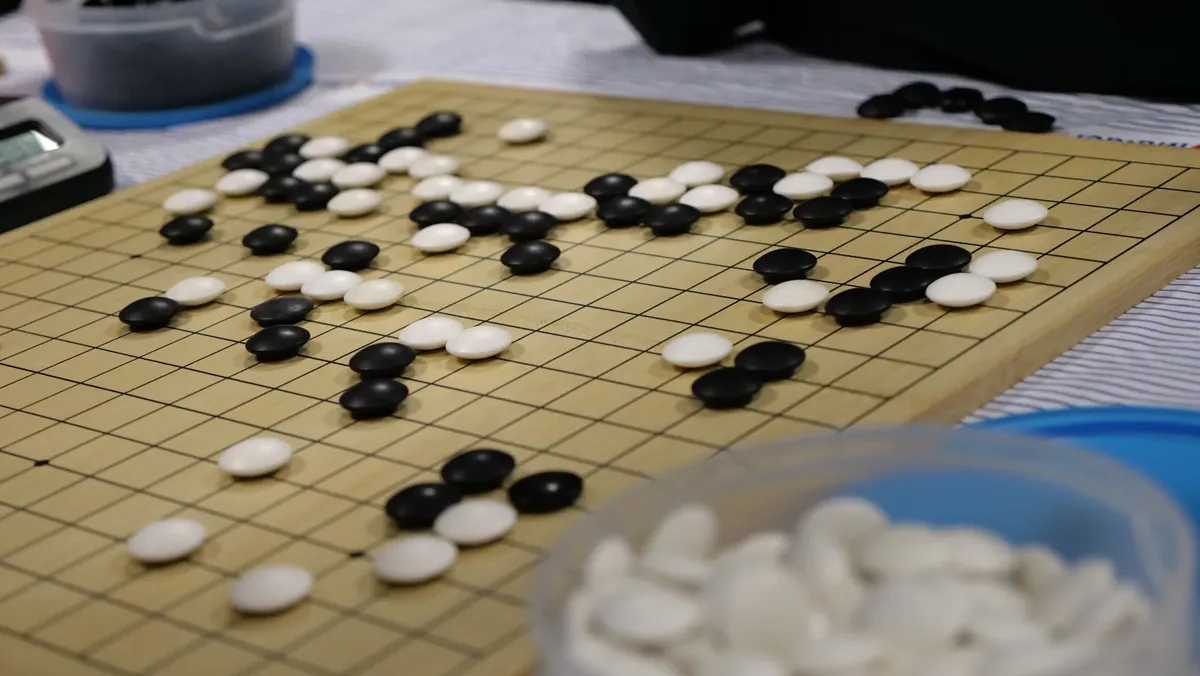
Material example of the board game.
Credit: Culture Japon
Rights: CC BY-SA 4.0
Go is a board-game tradition whose long history links China, Korea and Japan. The Japanese name Go is widely used in English; Weiqi and Baduk are the Chinese and Korean names. The British Go Association describes the game’s precise origins as unknown, separating historical uncertainty from legends that attribute its invention to an emperor. Its account traces the game’s movement through East Asia and later growth in Europe and elsewhere. For a cultural ark, preserve more than a picture of stones on a board: include a clear rules reference, names in several languages and examples of how communities teach and discuss play. A game is a repeatable social activity, not merely its equipment.
Why preserve it: Go provides a way to experience inherited culture directly by playing. Comparing local names and organized communities reveals how a shared activity can travel without becoming culturally uniform.
Keep in mind: Do not present a legendary inventor or a precise ancient founding year as established fact. Historical estimates are approximate. Later rulesets and scoring conventions should be documented explicitly if game records are added.