




Tango of Argentina and Uruguay
CA0004 · More culture · Buenos Aires and Montevideo; urban tradition continuing into the present
Historical / contextual reference
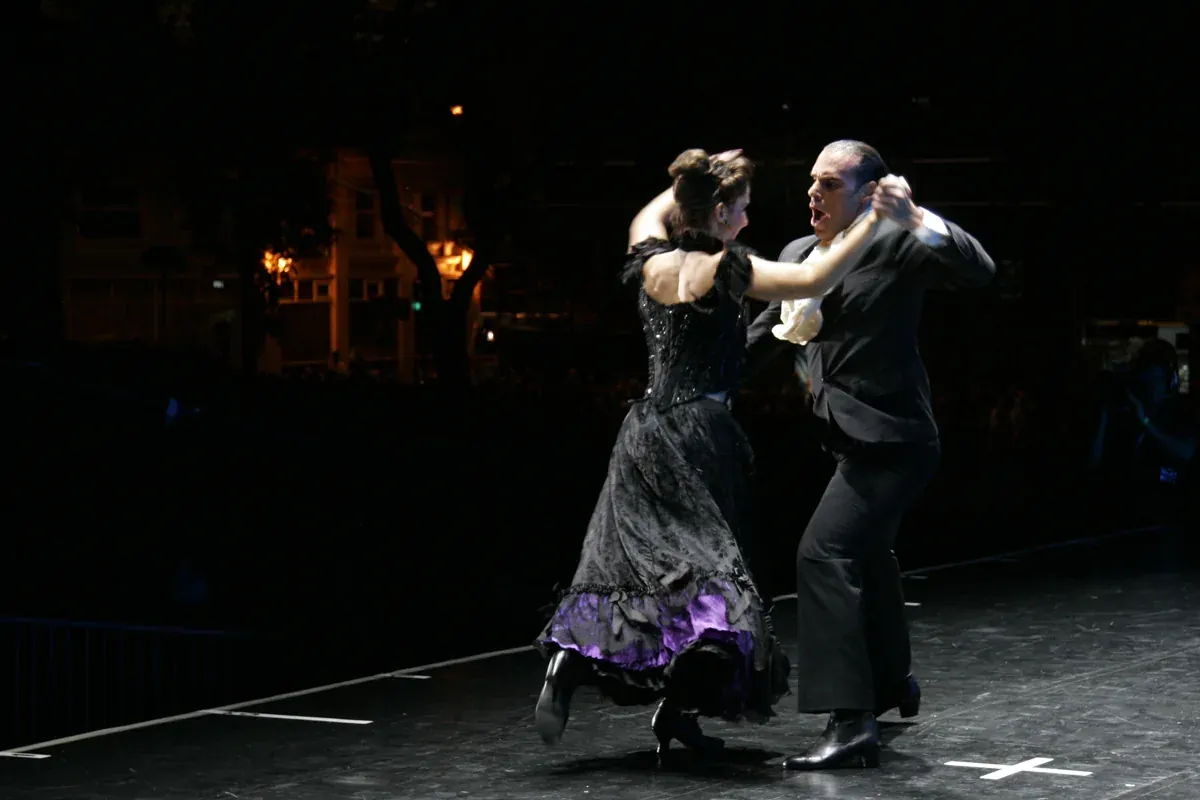
Contextual documentary image, not a reproduction of any linked recording or film.
Credit: Gobierno de la Ciudad de Buenos Aires
Rights: CC BY 2.0
Tango brings music, dance and poetry into a shared urban tradition of Argentina and Uruguay. UNESCO locates its formation among popular communities in Buenos Aires and Montevideo, where European migrants, descendants of enslaved Africans and local-born populations lived together. It is therefore better understood as a cultural meeting and continuing practice than as the invention of one person. Social dance settings known as milongas are part of that story, alongside professional performance, teaching and composition. The catalog preserves both countries in the title because a border-only label would obscure the connected Río de la Plata world in which the tradition developed and continues to be renewed.
Why preserve it: Curatorial interpretation: tango can help future readers examine migration, mixed cultural inheritance, urban sociability and the difference between dancing with others and performing for spectators.
Keep in mind: Do not reduce tango to a single stage pose or treat one choreography as universal. Its histories include African-descended communities. UNESCO inscription in 2009 is not its origin date.