How the tree nodes work
A strap, a hook, and a two-minute flight.
No trench, no pole, no tower permit, no crew on the cliff. A drone hangs a sealed solar relay on the highest branch and flies home.
01Pick the branch from the groundHighest solid limb with sky to the next ridge. The pilot marks it on the map before the drone leaves the case.
02Fly it up on a lineThe relay hangs a metre under the airframe so the props never touch foliage. Under Part 107, inside the park's flight window.
03Let the crown catch itA spike crown under the shell bites into the branch as the line pays out — an inverted deterrent strip, so it grips rather than slides.
04Release and fly homeThe strap cinches, the line releases, the whip antenna stands up above the crown. The drone is back in the case in two minutes.
05It joins the mesh by itselfFirst beacon names its neighbours. If it can't hear two, the pilot moves it before leaving the grove.
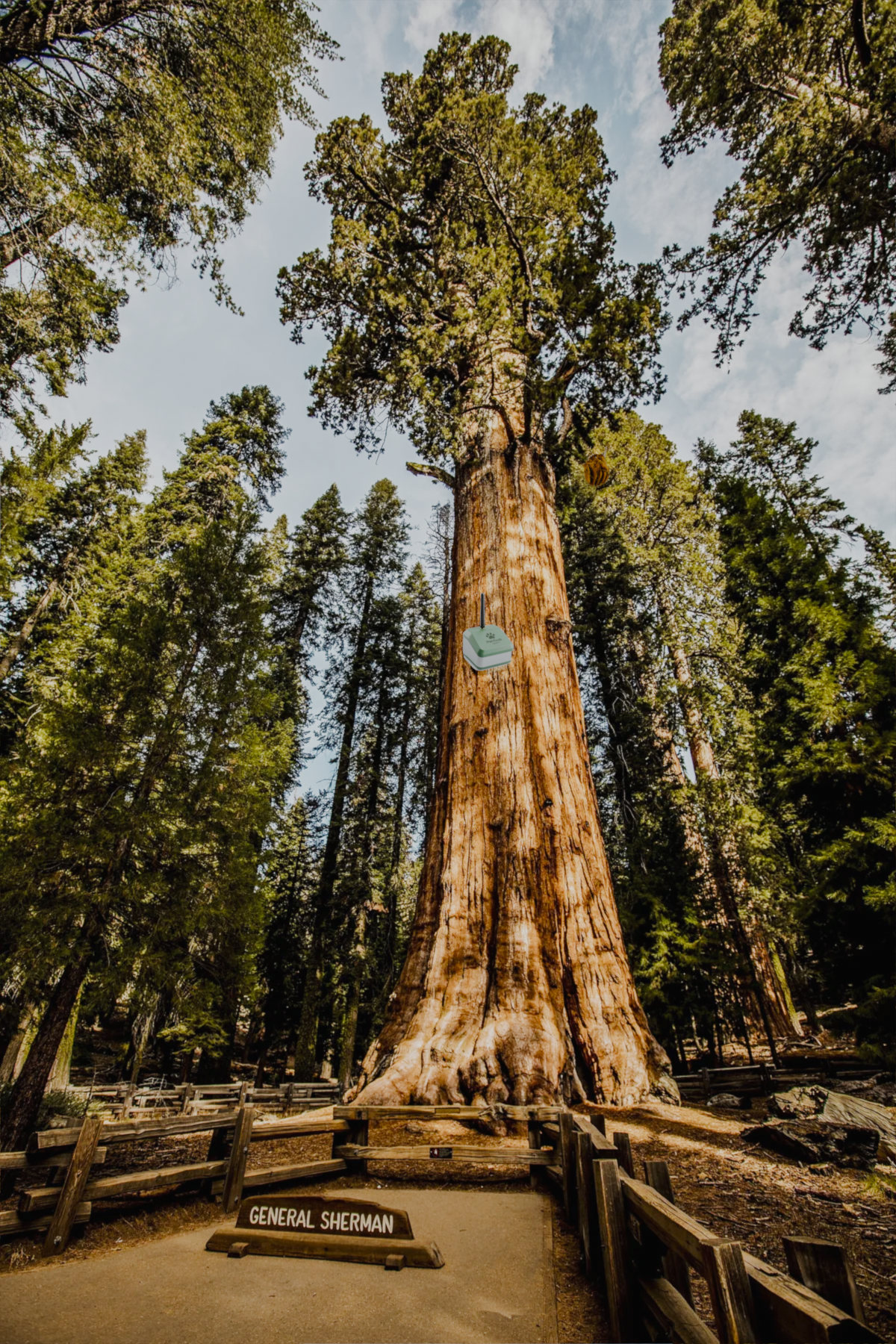
Solar topyears of service; the cell is only a buffer2 W
LoRa radioMeshtastic router — hears every collar and tag below915 MHz
Whip antennastands above the crown for line of sight to the next node¼ wave
Climate sensortemp, humidity, pressure at canopy height — the park's lapse rate, measuredBME280
Mountcarabiner hook, strap and spike crown. No bolts in the tree.strap
Self-reportingbattery · yield · uptime
A quiet node is a ticket before it's a gap. The dashboard names the neighbours each node can still hear, so a dead relay shows up as a shrinking circle, not a silent one.
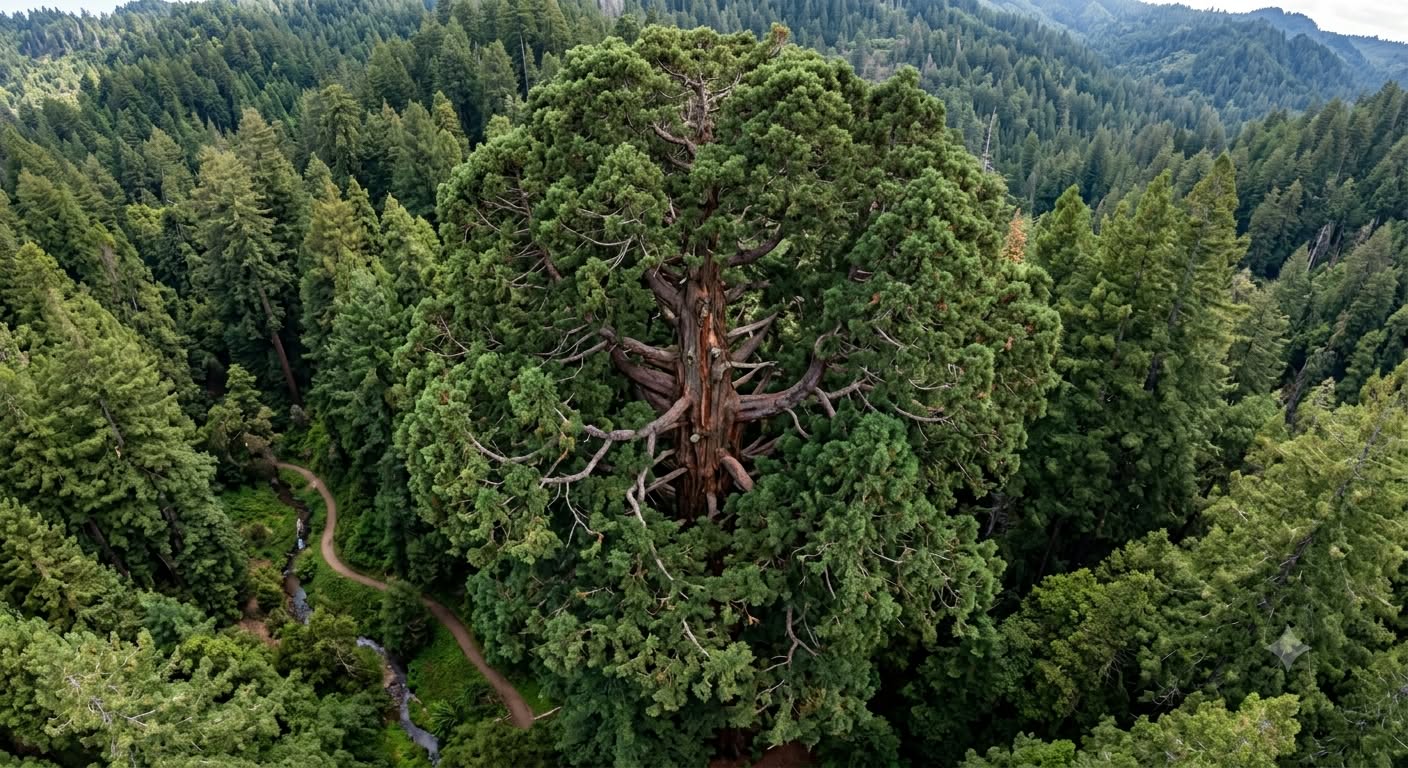
CROWNFrom the top of a giant sequoia a relay holds line of sight for kilometres — the tallest thing in the grove was already standing.
RIDGERidge nodes carry the valleys the canopy can't see into, and cover the hours the flock doesn't fly.
TRAILNodes follow the corridors and the trailheads, because that is where the collars and the free hiker tags actually are.
HANDOFFEvery node relays for every other and drops the log at the ranger station over Wi-Fi. Nothing needs cell service.
$60–90per node, parts. est.
2 minflight time to place one
1 weekto pin a park's corridors and ridges
0trenches, poles, bolts or tower permits
One search-and-rescue call-out costs more than a park's worth of nodes. Everything marked est. stays an estimate until there are real quotes — we don't put a number in front of a park we can't back.
The park or state contract pays per trailhead-year: hardware, the battery rounds, the dashboard and the pilot. The animals, the permits and the collars stay with the park's biologists.
Coverage follows the nodesWhere there is no relay and no ridge node, there is no mesh. This is a search-starter and a deterrent, not a rescue guarantee.
Flights are the park's callPart 107, inside the park's flight window, never over people or nesting season closures. If the park says no fly, nodes go up by climber instead.
Nothing is bolted to a treeStrap and hook only, on a branch the park's arborist signs off. Nodes come down the same way they went up.
Raw positions stay with the parkPublic views are aggregated. Den sites, nests and collar locations are not ours to publish.
We never touch the animalHarnesses are fitted and checked by the park's biologists under their permits, on their schedule.