




Arirang folk-song tradition
CA0035 · Music · Korea; collectively developed folk-song tradition
Historical / contextual reference
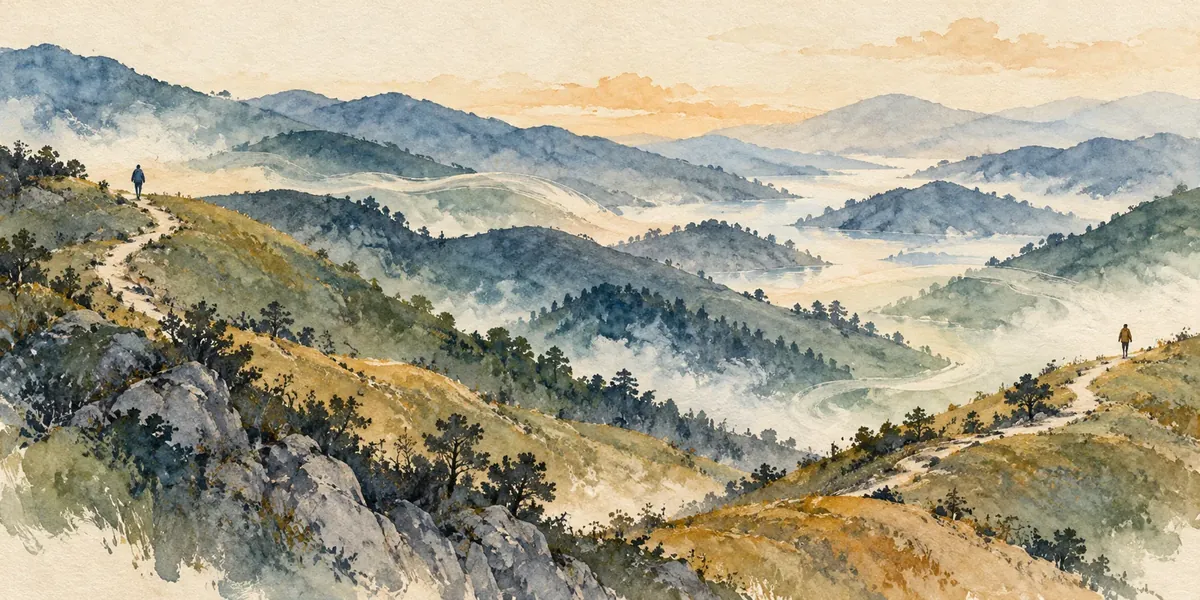
An interpretive visual response to distance and separation in Arirang, not an actual Korean landscape, performer, performance or historic event.
Credit: AI-generated for Culture Ark using OpenAI image_gen, 2026-11-01
Rights: AI-generated output; not represented as CC-licensed, exclusive, or guaranteed copyrightable
Arirang is not best understood as one fixed recording with one definitive performer. UNESCO describes a Korean folk-song form built through contributions by ordinary people over generations, with regional variation and an accessible structure that invites adaptation. Repetition and short verbal units help make the song available for group singing as well as individual interpretation. Preserving this selection means keeping the idea of a family of variants alongside examples, rather than choosing one arrangement and declaring every other version incorrect. It offers a counterweight to a catalog of commercial releases by making collective creation itself part of the cultural record.
Why preserve it: Curatorial interpretation: A widely shared song can survive through variation, not only through exact copying.
Keep in mind: This source concerns the Republic of Korea’s inscription; it does not imply that Arirang belongs exclusively to one contemporary state.