




Chopi Timbila
CA0028 · Music · Southern Inhambane, Mozambique; intergenerational practice
Historical / contextual reference
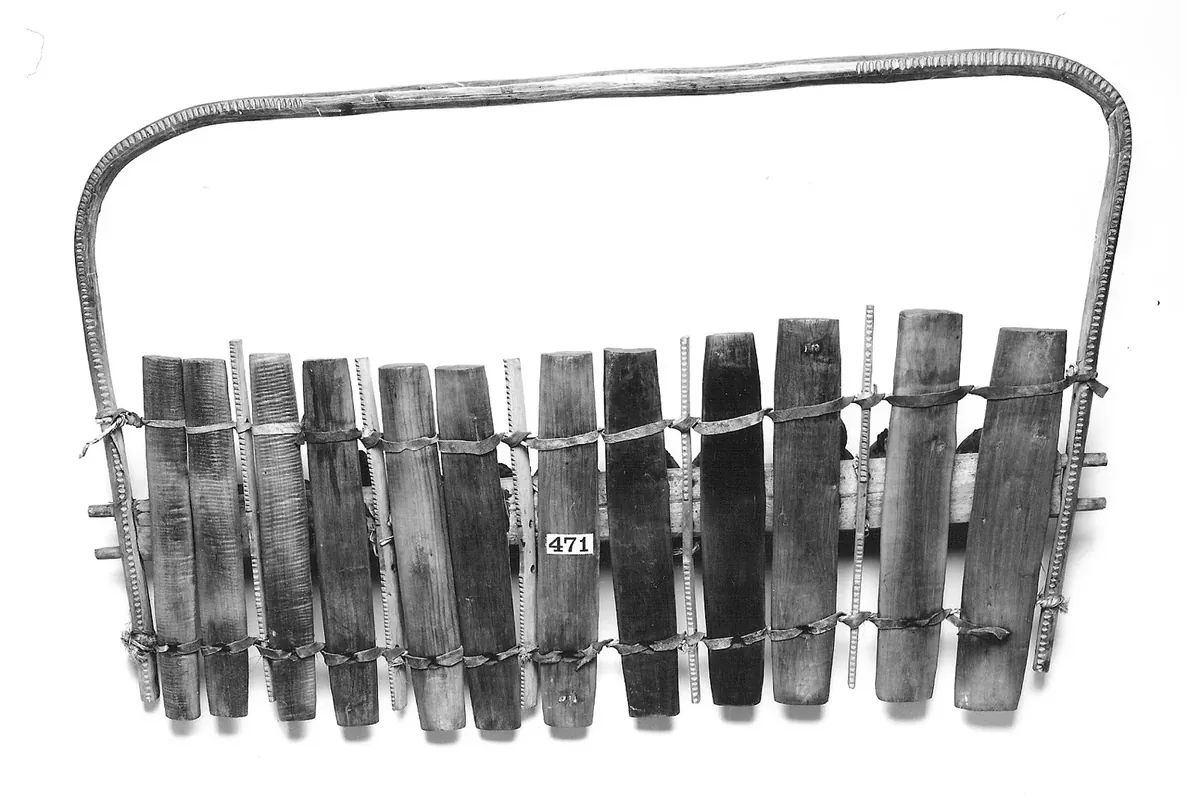
Specific contextual photograph or object image; not a license to reproduce any musical recording.
Credit: The Metropolitan Museum of Art; The Crosby Brown Collection of Musical Instruments, 1889
Rights: Public domain; Met Open Access
Chopi timbila orchestras bring together wooden xylophones of different sizes and pitches. UNESCO describes finely made instruments with resonators beneath the wooden keys and ensembles containing both experienced players and learners. The repertory is not frozen: new compositions address community life, and songs can use humor or sarcasm to comment on social issues. Music and dance are closely connected, with passages that give singers space to be heard. This entry foregrounds local composition and public commentary rather than presenting the instruments as an anonymous traditional sound. It also preserves the dependence of musical materials on particular woods and the environments in which makers obtain them.
Why preserve it: Curatorial interpretation: An orchestra can function as a community chronicle, combining aesthetic skill with the right to comment on shared affairs.
Keep in mind: The indexed UNESCO URL has a mismatched textual slug; the displayed title and nomination number 00133 identify Chopi Timbila. Do not infer image permissions.