




Duduk and its music
CA0022 · Music · Armenia; historical tradition continuing today
Historical / contextual reference
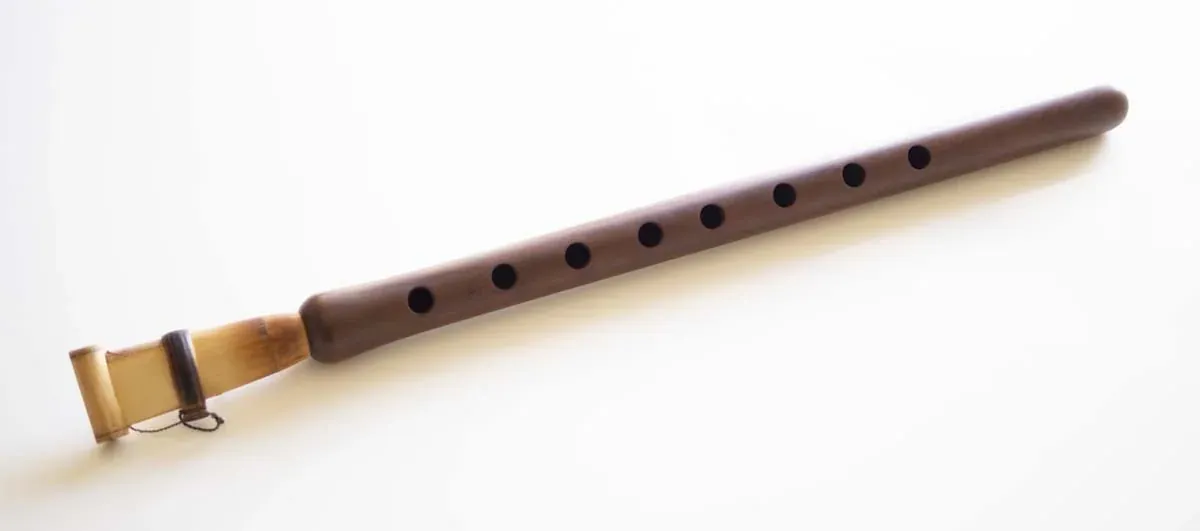
Specific contextual photograph or object image; not a license to reproduce any musical recording.
Credit: DudukFromJapan
Rights: CC0
The duduk is an Armenian double-reed wind instrument whose wooden body is commonly made from apricot wood. Its music accompanies songs, dances and occasions including weddings and funerals. UNESCO describes a frequent pairing in which one musician sustains a drone while another shapes a melody and improvises. Circular breathing helps the accompanying player sustain the musical background. Such an arrangement makes cooperation audible: the foreground line depends on another person maintaining continuity. Different instrument lengths support different registers and moods. Keeping the instrument together with its social settings avoids reducing a living musical practice to a vaguely melancholy sound used outside its context.
Why preserve it: Curatorial interpretation: A two-player performance demonstrates how an apparently solo melody can depend on another musician’s less conspicuous labor.
Keep in mind: Related regional wind instruments should not be collapsed into one national category. The source’s old estimates of decline are not presented as current statistics.