




The capoeira roda
CA0012 · More culture · Brazil; living practice with international communities, UNESCO inscription 2014
Historical / contextual reference
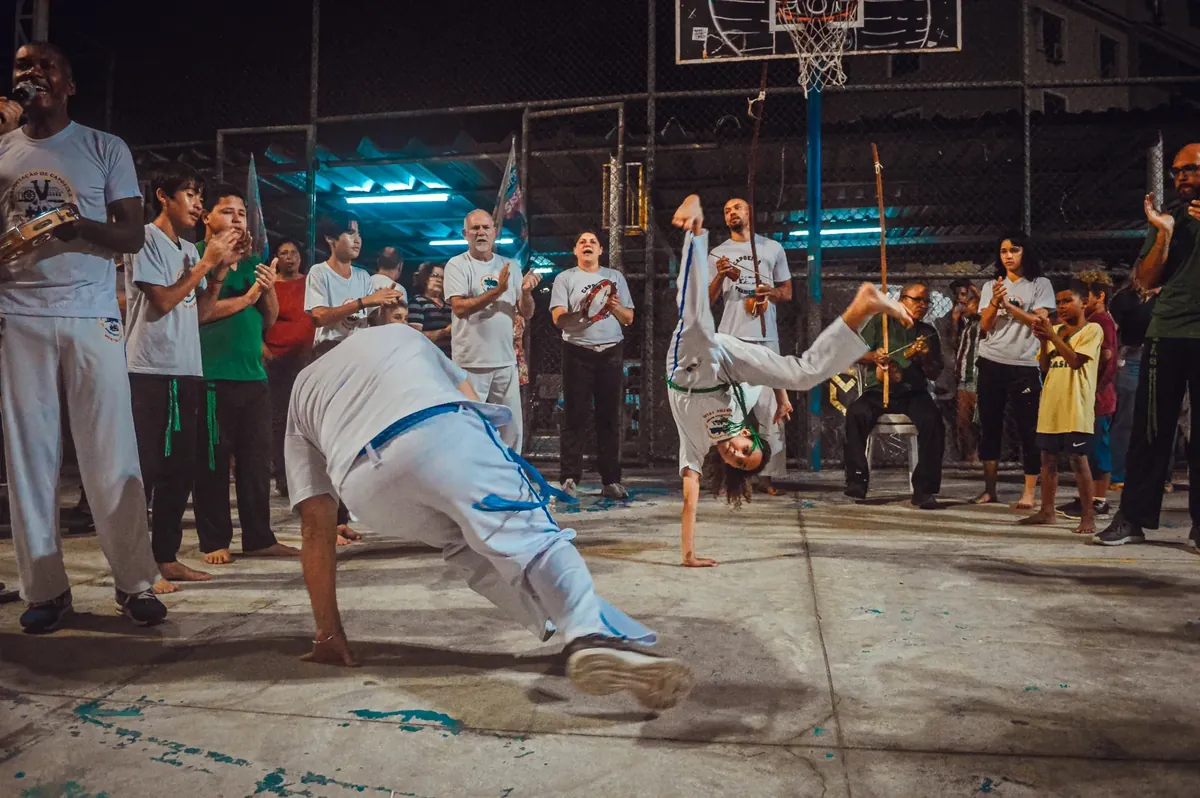
Contextual documentary image, not a reproduction of any linked recording or film.
Credit: Estela Neto
Rights: CC BY-SA 4.0
In a capoeira roda, two players move in relationship at the centre of a circle while others sing, clap and play instruments. The activity cannot be fully separated into dance, combat, music or sport: its meaning emerges from their combination. UNESCO describes the master’s responsibility for transmitting knowledge, setting rhythm and maintaining a shared code of conduct. Participants learn by observing and joining the circle, including its songs and instruments as well as movements. For future readers, an isolated photograph of an acrobatic pose would leave out much of the event. The surrounding people, musical leadership and expectations of respect explain how individual skill becomes a communal cultural practice.
Why preserve it: It reveals embodied teaching and the memory of resistance through an art sustained collectively.
Keep in mind: Keep its Afro-Brazilian history and memory of oppression visible. Styles and groups differ. This descriptive entry is not a combat or acrobatic training guide.